Musk v. OpenAI trial begins: the AI industry's backroom secrets are headed for the public record
The trial between Elon Musk and OpenAI has officially begun. The two sides will argue over who did what in the company's early years, and who deserves the credit and the money for building one of the AI industry's biggest players. The coming weeks promise loud revelations: secrets of key figures in the AI industry may become public. Some believe that is exactly what Musk is after.
AI-processed from The Verge; edited by Hamidun News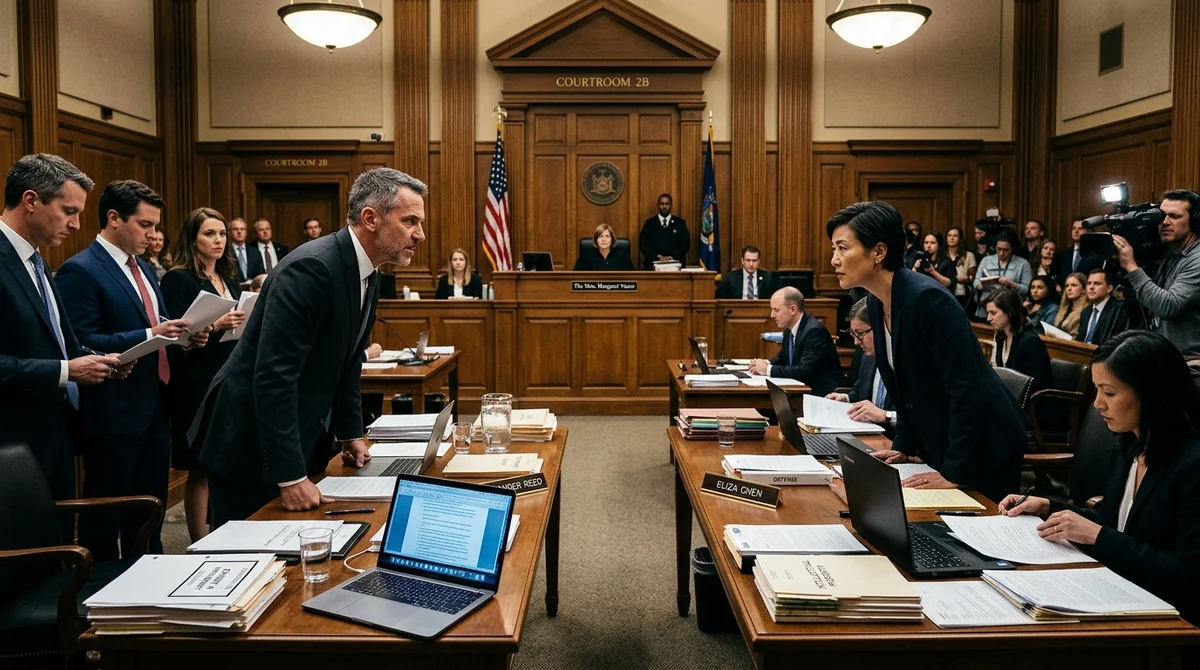
The trial between Elon Musk and OpenAI has officially kicked off. The coming weeks will turn into a public post-mortem: who did what in the company's first years, who deserves the credit, who should get how much, and how one of the world's most influential AI organizations went from a nonprofit lab to a corporate giant with a valuation in the trillions.
How it got to court
Musk co-founded OpenAI in 2015. He put in tens of millions of dollars and, together with Sam Altman, shaped the organization's mission: to develop artificial intelligence for the benefit of all humanity, openly and without commercial motives. In 2018 he left the board, officially because of a conflict of interest with Tesla, which was moving aggressively into its own AI development. Since then, however, Musk's relationship with OpenAI has grown steadily more hostile.
In 2024 he filed a lawsuit alleging that the company broke the founders' fundamental agreements: it became a closed commercial entity, gave Microsoft privileged access to its technology and, in effect, betrayed its original public mission.
OpenAI rejects all of the claims. According to the company, it was Musk who at various times proposed taking the organization under his sole control or merging it with Tesla, and both times he was turned down. Altman insists that Musk's departure was voluntary and that OpenAI has operated in full accordance with its mission ever since.
What will become public
The trial promises to be highly uncomfortable for many people at once. Documents and testimony that normally stay strictly behind closed doors may become publicly available:
- Internal correspondence among OpenAI's founders from 2015–2018
- Financial details of Musk's early investments and agreements
- Strategy discussions from closed board meetings
- Details of the Microsoft partnership and the terms of multibillion-dollar deals
- Sworn testimony from Altman, Brockman and other key figures
Journalists at The Verge note that maximum publicity may well be the main goal of the lawsuit. An open trial lets Musk bring into the media spotlight secrets and conflicts that would otherwise never have reached a wide audience.
The parties' positions
OpenAI maintains that the company fully adheres to its mission. The shift to a more closed model and the partnership with Microsoft were a forced step, without which it is impossible to fund research at today's scale. GPT-4, GPT-5, o3: all of these require computing power costing tens of billions of dollars. Without a commercial partner, these projects are simply not possible.
Musk, for his part, launched his own AI company, xAI, and released a competing model, Grok. Critics point out that the lawsuit appeared just as his own AI project began to compete seriously with OpenAI. That raises doubts about his motives: is this a stand on principle or a competitive war?
What it means
Whatever the outcome, the trial has already become a mirror of the AI industry's inner workings. While Musk and Altman settle scores in the courtroom, competitors such as Google, Anthropic and Meta* keep expanding their capabilities without pause. For investors and regulators worldwide, the case matters as a precedent: how should AI organizations be governed when they began with a nonprofit mission but now demand commercial scale? There is no answer yet, but staying silent on the question will get considerably harder.
*Meta has been designated an extremist organization and is banned in Russia.
- Nov 2, 2026Meta's Muse assistant keeps dossiers on loved ones and gets root on Ubuntu by default
- Nov 1, 2026Local models lose to Opus and Codex: 0.21 on a MacBook versus 1.00 for Codex
- Nov 1, 2026Kimi scores 96.2% on a 1C database analytics test and emerges as a fallback if Claude access is blocked
- Nov 1, 2026OpenAI Rewrites GPT Behavior Rules: Five Values and a Chain of Command
Key Questions Answered
How it got to court?
Musk co-founded OpenAI in 2015. He put in tens of millions of dollars and, together with Sam Altman, shaped the organization's mission: to develop artificial intelligence for the benefit of all humanity, openly and without commercial motives. In 2018 he left the board, officially because of a conflict of interest with Tesla, which was moving aggressively into its own AI development. Since then, however, Musk's relationship with OpenAI has grown steadily more hostile. In 2024 he filed a lawsuit alleging that the company broke the founders' fundamental agreements: it became a
What will become public?
The trial promises to be highly uncomfortable for many people at once. Documents and testimony that normally stay strictly behind closed doors may become publicly available: Internal correspondence among OpenAI's founders from 2015–2018 Financial details of Musk's early investments and agreements Strategy discussions from closed board meetings Details of the Microsoft partnership and the terms of multibillion-dollar deals Sworn testimony from Altman, Brockman and other key figures Journalists at The Verge note that maximum publicity may well be the main goal of the lawsuit.
What are the key details on The parties' positions?
OpenAI maintains that the company fully adheres to its mission. The shift to a more closed model and the partnership with Microsoft were a forced step, without which it is impossible to fund research at today's scale. GPT-4, GPT-5, o3: all of these require computing power costing tens of billions of dollars. Without a commercial partner, these projects are simply not possible. Musk, for his part, launched his own AI company, xAI, and released a competing model, Grok. Critics point out that the lawsuit appeared just as his own AI project began to compete seriously with OpenA
Ship AI Faster with Founders, Engineers & Weekly Architecture Reviews
Inside Vibe Club (hamidun.com/club) — weekly live masterminds with Zhemal Khamidun, Tech Radar, full LMS access, and 370+ production Claude Code skills.
The AI world, distilled — once a week
Seven stories that actually mattered, hand-picked. No noise, no reposts, no press releases.
Done! Check your inbox for a confirmation.