Musk tells court OpenAI abandoned its public mission for profit
Elon Musk testified in his lawsuit against OpenAI, Sam Altman and Greg Brockman. He argues that a company conceived as an organization with a public mission has turned into a for-profit business. This is no longer just a dispute between co-founders. The outcome could shape how AI companies balance grand promises of benefit to humanity against commercial interests.
AI-processed from Bloomberg Tech; edited by Hamidun News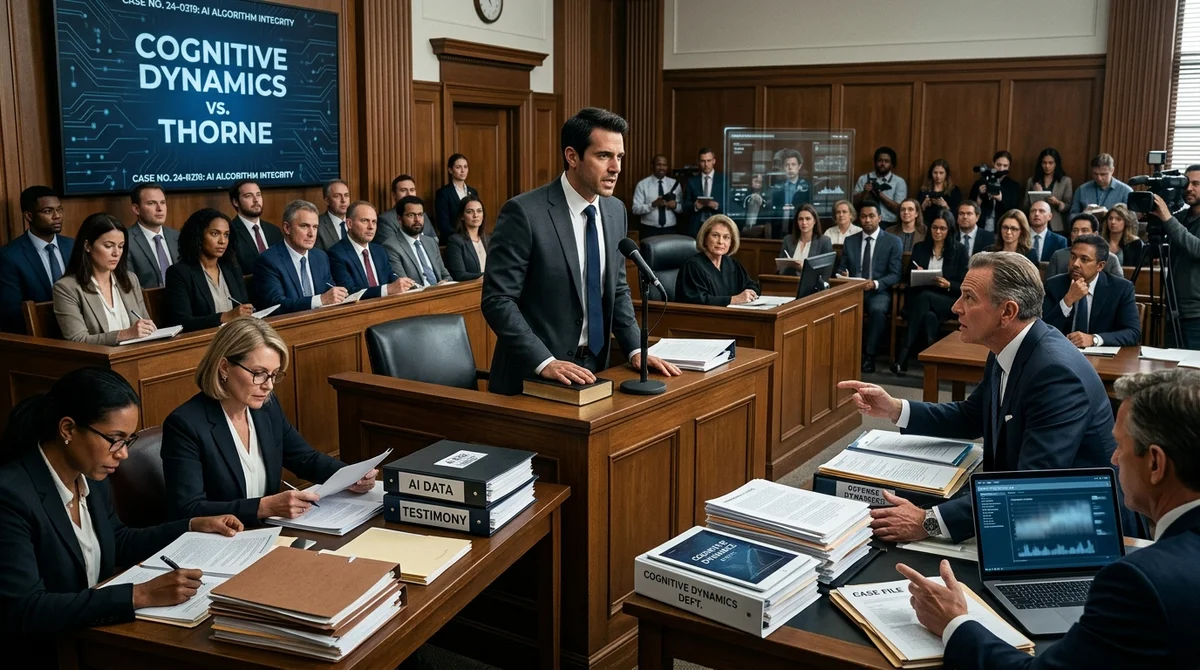
Elon Musk spoke in court in the case against OpenAI, Sam Altman and Greg Brockman, saying he filed the lawsuit to stop the company's departure from its original public mission. In his account, an organization created with charitable goals has become a commercial project, and that reversal sets a dangerous benchmark for the entire artificial intelligence market.
The substance of the lawsuit
At the hearing, Musk said plainly that he considers OpenAI's move from a model tied to the public good to a for-profit business wrong. The suit targets not only the company itself but also two of its co-founders, Sam Altman and Greg Brockman.
At the center of the dispute is whether an organization's fundamental logic can be changed after it won trust, talent and influence by promising to work in the interests of society rather than shareholders. That makes the case more significant than an ordinary corporate quarrel. OpenAI has long held a special place in the AI ecosystem: its decisions affect the market, safety standards, and the way other labs explain their own missions.
So the dispute is not only about who is right inside one company. It is about how seriously the industry should take words about "benefit to humanity" if the structure and incentives then change radically.
Why the dispute reaches further
Musk's complaint runs into a problem that has long hung over generative AI: building powerful models demands enormous sums of money, computing resources and partnerships, yet many companies still speak publicly in the language of open science, safety and social responsibility. When a gap opens between these two modes, conflict is almost inevitable. In that case the court examines not only formal documents but also the meaning of the promises on which early reputation and public trust were built.
- the company's legal status and its obligations to a public mission
- control over key developments and who gets the economic benefit
- the line between a charitable shell and commercial monetization of the technology
- a precedent for other AI startups that begin with idealistic rhetoric
That is why the case is being watched closely well beyond the circle of former co-founders. If such a transformation is deemed acceptable without serious consequences, the market receives a simple signal: a public mission can be a convenient starting frame and later give way to ordinary corporate logic. If the court finds such promises meaningful, investors, regulators and partners will have to scrutinize the charters, agreements and public statements of AI companies more strictly, even at an early stage.
What is at stake
For OpenAI and its leadership, the dispute carries reputational as well as legal risks. When a conflict goes public and one of the best-known figures of the company's early history says under oath that it took a wrong turn, the question is no longer about personal grievance or a fight for control. It touches the legitimacy of an entire model in which a public goal is declared first, and an increasingly profitable business machine is then built around it.
"Looting" of a charitable organization.
The harsh wording from the lawsuit's title shows how Musk is trying to frame this conflict: not as a dispute over stakes or ambitions, but as a matter of principle about the substitution of a mission.
Even if the court does not accept this interpretation in full, the testimony itself raises pressure on the major players in the AI market. They will have to explain more clearly whom they answer to, where the line falls between a public promise and a commercial goal, and who makes the final decisions when those interests diverge.
What this means
This trial could become one of the first major tests of how binding AI companies' public promises to work "for the benefit of humanity" really are. For the market the takeaway is simple: a mission no longer looks like a neutral slogan. It increasingly becomes a subject for courts, politics and questions about who actually ends up with the technology that was built.
- Nov 2, 2026Arca gives AI agents finance tasks lasting up to 10 days, but leaves the trades to humans
- Nov 2, 2026Meta's Muse assistant keeps dossiers on loved ones and gets root on Ubuntu by default
- Nov 1, 2026Local models lose to Opus and Codex: 0.21 on a MacBook versus 1.00 for Codex
- Nov 1, 2026Kimi scores 96.2% on a 1C database analytics test and emerges as a fallback if Claude access is blocked
Key Questions Answered
What are the key details on The substance of the lawsuit?
At the hearing, Musk said plainly that he considers OpenAI's move from a model tied to the public good to a for-profit business wrong. The suit targets not only the company itself but also two of its co-founders, Sam Altman and Greg Brockman. At the center of the dispute is whether an organization's fundamental logic can be changed after it won trust, talent and influence by promising to work in the interests of society rather than shareholders. That makes the case more significant than an ordinary corporate quarrel. OpenAI has long held a special place in the AI ecosystem:
Why the dispute reaches further?
Musk's complaint runs into a problem that has long hung over generative AI: building powerful models demands enormous sums of money, computing resources and partnerships, yet many companies still speak publicly in the language of open science, safety and social responsibility. When a gap opens between these two modes, conflict is almost inevitable. In that case the court examines not only formal documents but also the meaning of the promises on which early reputation and public trust were built. the company's legal status and its obligations to a public mission control over
What is at stake?
For OpenAI and its leadership, the dispute carries reputational as well as legal risks. When a conflict goes public and one of the best-known figures of the company's early history says under oath that it took a wrong turn, the question is no longer about personal grievance or a fight for control. It touches the legitimacy of an entire model in which a public goal is declared first, and an increasingly profitable business machine is then built around it. "Looting" of a charitable organization. The harsh wording from the lawsuit's title shows how Musk is trying to frame this
Ship AI Faster with Founders, Engineers & Weekly Architecture Reviews
Inside Vibe Club (hamidun.com/club) — weekly live masterminds with Zhemal Khamidun, Tech Radar, full LMS access, and 370+ production Claude Code skills.
The AI world, distilled — once a week
Seven stories that actually mattered, hand-picked. No noise, no reposts, no press releases.
Done! Check your inbox for a confirmation.