Judge in OpenAI case calls on Elon Musk and Sam Altman to stop public quarrels on X
The judge in the Musk-OpenAI dispute has asked the conflicting parties to reduce public quarreling on social media. The trigger: a series of recent Musk posts on X attacking ChatGPT's creator and leadership. The court signaled that public attacks could hamper proceedings and fuel the dispute beyond the courtroom.
AI-processed from Bloomberg Tech; edited by Hamidun News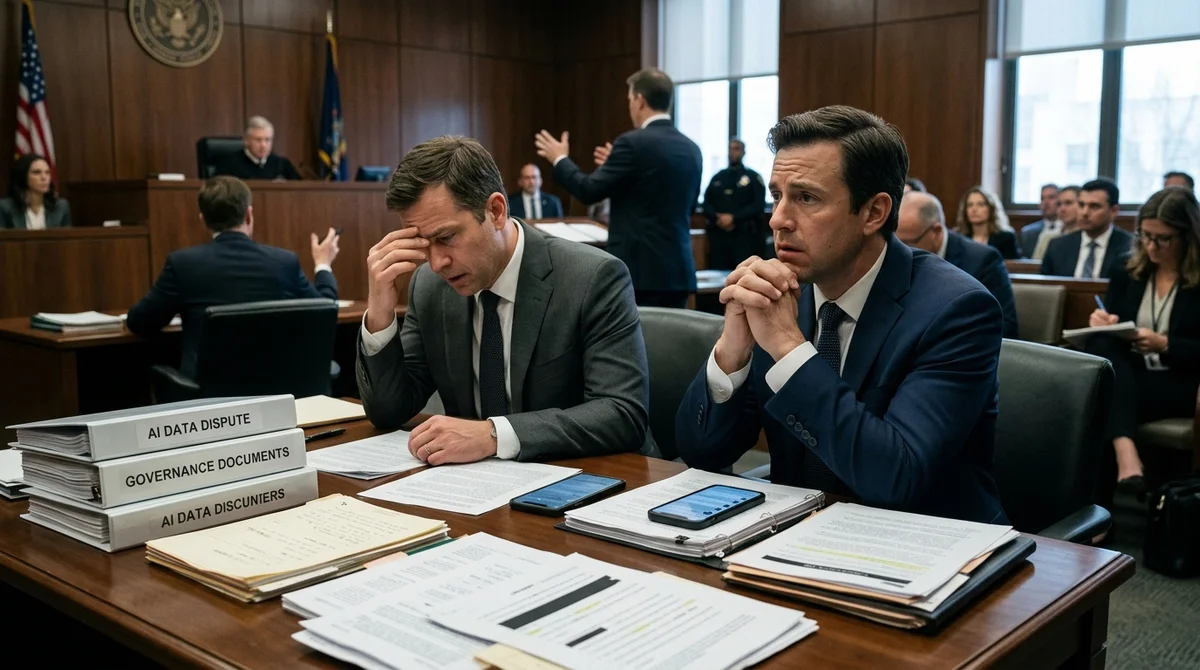
The judge overseeing the high-profile dispute between Elon Musk and OpenAI has asked the conflict's participants to reduce their social media activity. The catalyst was a series of new attacks from Musk on X directed at the leadership of the company behind ChatGPT.
What Happened
At a hearing, the judge separately addressed the executives involved in the case and asked them not to turn the lawsuit into an endless stream of posts. This came the day after Musk published several sharp messages about OpenAI's leadership.
The signal was addressed not only to Musk, but also to Sam Altman: the court clearly wants the parties to dispute in procedural documents and in the courtroom, not through public comments. For a case of this magnitude, this is an important detail.
The conflict between Musk and OpenAI has long transcended a purely legal dispute and become part of a larger public drama surrounding control of one of the most influential AI companies. Any new post instantly becomes a separate news story, and each pointed remark raises the temperature of the discussion. This is why even a brief request from the judge sounds like an attempt to return the conversation to more formal boundaries.
Why the Court Intervened
When participants in a proceeding comment on the dispute in real time, they essentially continue the fight outside the courtroom. This affects not only the news agenda but also how the public perceives the conflict itself, its motives, and the positions of the parties. For the judge, this is extra noise around an already resonant case.
Social media accelerates any escalation: a single sarcastic post easily triggers a chain of responses, retellings, and new interpretations that exist separately from the case materials.
- Public attacks intensify pressure on the opponent outside the courtroom
- Each comment instantly becomes part of the media agenda
- Online back-and-forth provokes new responses and shifts the dispute into PR territory
- It becomes harder for the court to maintain focus on facts and procedural arguments
According to the published account, this is specifically a call for restraint, not an outright ban on speaking publicly. But even such a soft signal is usually interpreted unambiguously: the judge is unhappy that the dispute is being fueled in front of millions of users. For the parties, it's a reminder that every post on X is now perceived not as a regular comment but as part of overall conduct in the proceeding.
What This Changes for the Parties
For Musk, this is particularly sensitive because his style of public communication itself often becomes an extension of business and legal conflicts. In the case of OpenAI, such a style has an instant news impact, but simultaneously increases the risk that the court will see unnecessary theatricality and unwillingness to tone down.
For Altman, the logic is the same: the fewer personal responses and sharp comments, the easier it is to keep focus on the official position and not expand the scope of the dispute.
For OpenAI itself, this story is also telling. The company is already under constant scrutiny from the market, regulators, and users, and any conflict with Musk automatically receives global coverage. When the judge asks participants to argue less on social media, he is essentially trying to cut off a parallel media process. This doesn't resolve the dispute itself, but it reduces the likelihood that the next viral post will influence public perception of the case more than the actual arguments of the parties.
What It Means
Major AI conflicts now unfold simultaneously in two dimensions: legal and media. The judge's request to Musk and Altman shows that courts are already forced to respond not only to documents and statements, but also to how participants conduct themselves in the public feed.
- Oct 28, 2026Keystone removes the model name from code: open-source LLM gateway adds 0.64 ms
- Oct 28, 2026Wired Tested 6 AI Agents in a Day: Dots Leads, Gemini Spark Fails at Lunch
- Oct 28, 2026Anthropic Turns Claude Code Into a Platform: Claude Mods Flip the Agent Harness
- Oct 28, 2026Liquid AI releases LFM2.5-24B-A2B: an agent model with 2B active parameters
Key Questions Answered
What Happened?
At a hearing, the judge separately addressed the executives involved in the case and asked them not to turn the lawsuit into an endless stream of posts. This came the day after Musk published several sharp messages about OpenAI's leadership. The signal was addressed not only to Musk, but also to Sam Altman: the court clearly wants the parties to dispute in procedural documents and in the courtroom, not through public comments. For a case of this magnitude, this is an important detail. The conflict between Musk and OpenAI has long transcended a purely legal dispute and becom
Why the Court Intervened?
When participants in a proceeding comment on the dispute in real time, they essentially continue the fight outside the courtroom. This affects not only the news agenda but also how the public perceives the conflict itself, its motives, and the positions of the parties. For the judge, this is extra noise around an already resonant case. Social media accelerates any escalation: a single sarcastic post easily triggers a chain of responses, retellings, and new interpretations that exist separately from the case materials. Public attacks intensify pressure on the opponent outsid
What This Changes for the Parties?
For Musk, this is particularly sensitive because his style of public communication itself often becomes an extension of business and legal conflicts. In the case of OpenAI, such a style has an instant news impact, but simultaneously increases the risk that the court will see unnecessary theatricality and unwillingness to tone down. For Altman, the logic is the same: the fewer personal responses and sharp comments, the easier it is to keep focus on the official position and not expand the scope of the dispute. For OpenAI itself, this story is also telling. The company is alr
Ship AI Faster with Founders, Engineers & Weekly Architecture Reviews
Inside Vibe Club (hamidun.com/club) — weekly live masterminds with Zhemal Khamidun, Tech Radar, full LMS access, and 370+ production Claude Code skills.
The AI world, distilled — once a week
Seven stories that actually mattered, hand-picked. No noise, no reposts, no press releases.
Done! Check your inbox for a confirmation.