Musk v. OpenAI trial: a dispute over AI safety turns into a personal war
Elon Musk's trial against OpenAI has opened in Oakland, and it already looks more like a personal war than a debate over AI safety principles. Musk wants Sam Altman and Greg Brockman removed and is seeking more than $134 billion, but the proceedings increasingly boil down to a fight over influence, money and control of OpenAI's future. The case raises an uncomfortable question: can a lab that promised to work for humanity's benefit also build hugely expensive infrastructure, raise tens of billions of dollars and keep its original mission? In practice, that big question is quickly getting lost. Neither outcome promises a new, more publicly minded model of AI governance.
AI-processed from Guardian; edited by Hamidun News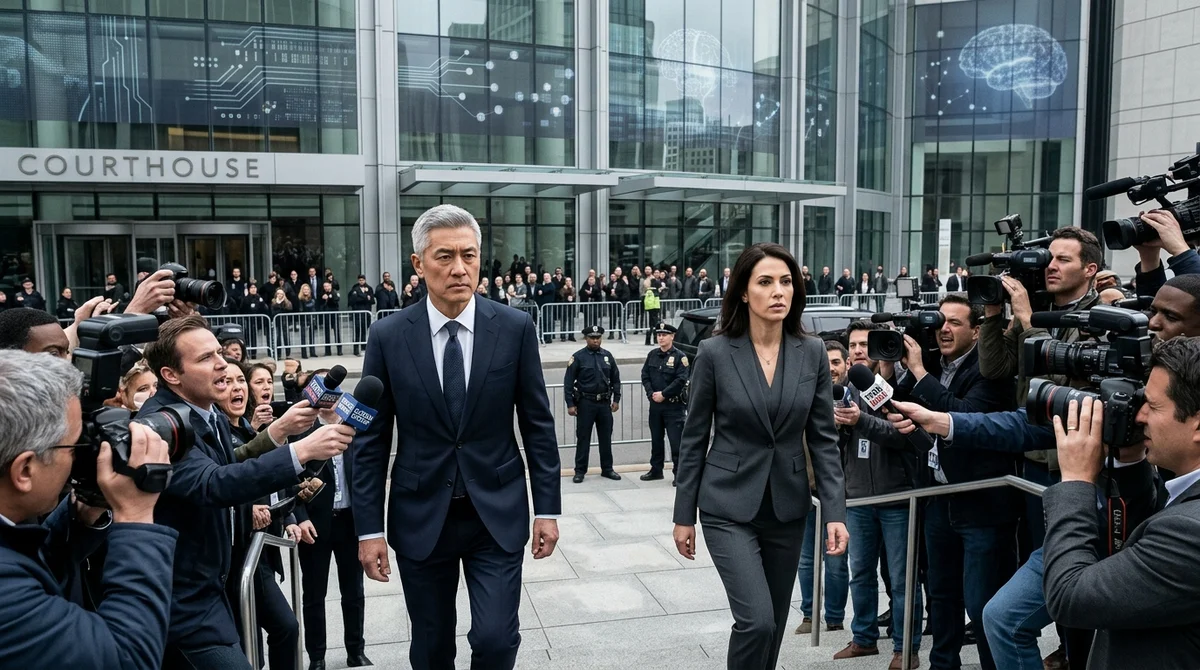
The trial between Elon Musk and OpenAI, which began on April 27, 2026 in Oakland, could have become a landmark case about who the artificial intelligence industry should serve and why. So far, though, it looks more like a drawn-out fight over control, money and old grudges among people who once launched OpenAI together.
What Musk is demanding
Musk sued OpenAI and Sam Altman, arguing that the company drifted from its original purpose and broke the founders' agreements when it restructured around a commercial business. In his telling, a project created as an organization for the benefit of humanity has become a player focused on scaling profits and chasing investment.
Among Musk's demands are the removal of Altman and OpenAI president Greg Brockman, plus compensation of more than $134 billion. According to the plaintiff's side, that money should go not to Musk personally but to OpenAI's nonprofit arm. The defense rejects the claims and responds that Musk left the project back in 2018 after internal conflicts, and is now trying to weaken a competitor while building his own AI company, xAI.
Judged only by the wording of the lawsuit, the case does seem historic. It raises an awkward question: can a lab that promised to work in humanity's interest also build enormously expensive infrastructure, raise tens of billions of dollars and keep its original mission? But in the course of the trial itself, that big question quickly gets lost.
Why this is not a dispute about safety
The main takeaway from the first days of the trial is simple: it is less about AI safety than about competition and personal enmity. Musk is trying to present himself as the defender of OpenAI's founding principles, but his own record on the subject is far from spotless.
The Grok chatbot, tied to his ecosystem, has already featured in one of the most disturbing scandals in generative AI, when users employed it to "undress" real women and underage girls in images. There is another argument against the image of Musk as a champion of the public good: accusations against xAI over environmental pollution near its data centers.
So the claim that a Musk victory would automatically return OpenAI to a more ethical path looks weak. Even if the lawsuit is formally built around the company's mission, the practical effect would be very earthly: a blow to the business model of one of xAI's main rivals.
Several things are at stake in this trial at once:
- a possible change of leadership at OpenAI;
- pressure on the company's commercial structure;
- a dispute over who owns the founders' original agreements;
- more than $134 billion in potential claims;
- the strategic weakening of one of the AI market's leaders.
If OpenAI wins, Altman and Brockman effectively get confirmation of the current course: growth through the commercial arm, massive investment and a stronger position in the model race. In other words, neither outcome by itself promises a new, more publicly oriented model of AI governance.
What has surfaced in the trial
A separate strand of the case is the documents and testimony that turn the lawsuit into a public airing of relations between former allies. Entries from Greg Brockman's 2017 diary surfaced in the materials, in which he directly tied events to future billions and warned that moving OpenAI to a commercial format would almost inevitably trigger a harsh conflict with Musk.
"Without a very nasty fight, we can't move into commerce."
This part of the trial looks likely to give the public the most to feast on: not new insight into how to regulate AI, but corporate and personal dirty laundry. During discovery, questions have already been raised about Musk's private correspondence, his conduct outside business and his relationships with people in OpenAI's inner circle.
A trial that could have been a forum for discussing the limits and goals of artificial intelligence increasingly resembles an expensive and very public showdown between tech heavyweights.
What this means
For now, Musk's trial against OpenAI does not look like a turning point for AI safety. It shows instead that the fate of key AI companies is still determined by a mix of ideology, ego, capital and the fight for influence. That means real rules for the industry will have to be worked out separately from the personal wars of its most prominent players.
- Nov 2, 2026Arca gives AI agents finance tasks lasting up to 10 days, but leaves the trades to humans
- Nov 2, 2026Meta's Muse assistant keeps dossiers on loved ones and gets root on Ubuntu by default
- Nov 1, 2026Local models lose to Opus and Codex: 0.21 on a MacBook versus 1.00 for Codex
- Nov 1, 2026Kimi scores 96.2% on a 1C database analytics test and emerges as a fallback if Claude access is blocked
Key Questions Answered
What Musk is demanding?
Musk sued OpenAI and Sam Altman, arguing that the company drifted from its original purpose and broke the founders' agreements when it restructured around a commercial business. In his telling, a project created as an organization for the benefit of humanity has become a player focused on scaling profits and chasing investment. Among Musk's demands are the removal of Altman and OpenAI president Greg Brockman, plus compensation of more than $134 billion. According to the plaintiff's side, that money should go not to Musk personally but to OpenAI's nonprofit arm. The defense
Why this is not a dispute about safety?
The main takeaway from the first days of the trial is simple: it is less about AI safety than about competition and personal enmity. Musk is trying to present himself as the defender of OpenAI's founding principles, but his own record on the subject is far from spotless. The Grok chatbot, tied to his ecosystem, has already featured in one of the most disturbing scandals in generative AI, when users employed it to "undress" real women and underage girls in images. There is another argument against the image of Musk as a champion of the public good: accusations against xAI ov
What has surfaced in the trial?
A separate strand of the case is the documents and testimony that turn the lawsuit into a public airing of relations between former allies. Entries from Greg Brockman's 2017 diary surfaced in the materials, in which he directly tied events to future billions and warned that moving OpenAI to a commercial format would almost inevitably trigger a harsh conflict with Musk. "Without a very nasty fight, we can't move into commerce." This part of the trial looks likely to give the public the most to feast on: not new insight into how to regulate AI, but corporate and personal dirt
Test Frontier LLMs & Autonomous Agents in One Workspace
Run Claude Opus 5.5, GPT-6, Gemini 3.1, and DeepSeek side-by-side in Nomad AI (nomadnet.ai) — unified model routing, deep research, and multimodal workflows under one subscription.
The AI world, distilled — once a week
Seven stories that actually mattered, hand-picked. No noise, no reposts, no press releases.
Done! Check your inbox for a confirmation.