Patronus raises €11 million to turn emergency watches for seniors into an everyday device
Berlin-based startup Patronus has raised €11 million to develop its emergency smartwatch for seniors. The company already has 25,000 users, 85% of whom wear the device every day, and its service has handled more than 500,000 emergency calls. The next step is an AI companion meant to help not only in emergencies but also to ease loneliness when family members are not around.
AI-processed from TNW; edited by Hamidun News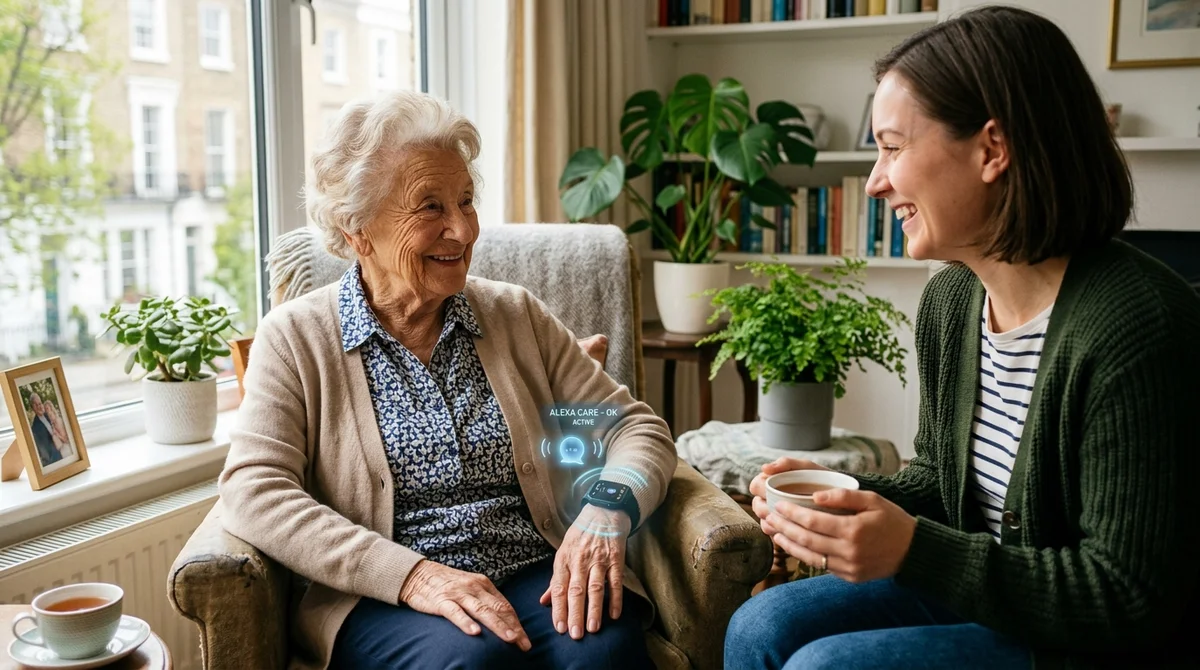
Berlin-based startup Patronus has raised €11 million to develop its emergency smartwatch for seniors. The company wants to fix the category's central problem: making sure these devices don't sit by the bed "just in case" but are actually worn every day.
The category's problem
The market for emergency alert devices for seniors has long been held back not only by hardware but by user behavior. If a watch or an emergency call button stays on the nightstand, it is useless at exactly the moment a person feels unwell, falls, or cannot reach a phone. For such products, the key metric is therefore not the sale itself but the habit of wearing the device all the time.
That is exactly what Patronus is betting on. The phrase "a decoration by the bed" neatly describes the weak spot of many medical gadgets for older people: they are bought for peace of mind but never become part of daily life. The German startup is trying to flip that logic and turn an emergency accessory into a straightforward daily device that works in a crisis and stays useful between such episodes.
What the model has already shown
The new €11 million round was led by 3TS Capital Partners. Grazia Equity and existing investors also took part. For an early-stage European project at the intersection of devices and care services, this is an important signal: the company raised money not on an attractive idea but on a model that already has operating metrics. In the senior-device segment, those metrics usually separate a real product from yet another "smart" gadget that is hard to fit into a daily routine.
- €11 million in new funding
- 25,000 users
- 85% daily wear rate
- More than 500,000 emergency calls handled
These figures show that Patronus has already moved beyond the pilot stage. The daily wear rate stands out in particular: 85% is not merely an activated user base but a sign that the device is actually on the wrist for most of the day. The volume of handled calls matters just as much. More than half a million emergency requests mean the service has gone through a large number of real incidents and built up practical experience in the most sensitive scenario: helping a person who needs help immediately.
The bet on an AI companion
Patronus's next step is an AI companion for the watch. The company is developing it as a response not to medical anxiety but to loneliness during hours when relatives are not around. This is an important shift: a safety product is starting to claim a broader role in the user's life.
If a device is useful only during an emergency, it is easy to take off and set aside. If it also helps during ordinary hours of the day, the likelihood of constant wear rises. Details of the AI assistant's features have not yet been disclosed, but the idea is clear. For older users, the value may lie not only in calling for help but also in regular contact, reminders, a sense of presence, and quick access to support. Here, artificial intelligence works not as a showcase feature for investors but as a tool for retention and engagement. In essence, Patronus is trying to make the watch associated not only with risk but with everyday comfort.
What it means
The Patronus story shows where the market for senior technology is heading: the winners are not those who simply add sensors and an SOS button, but those who can build the device into a daily routine. If the AI companion genuinely increases wear frequency and reduces loneliness, the segment gets a new working formula: safety plus constant usefulness, rather than safety as a rare, last-resort scenario.
Key Questions Answered
What are the key details on The category's problem?
The market for emergency alert devices for seniors has long been held back not only by hardware but by user behavior. If a watch or an emergency call button stays on the nightstand, it is useless at exactly the moment a person feels unwell, falls, or cannot reach a phone. For such products, the key metric is therefore not the sale itself but the habit of wearing the device all the time. That is exactly what Patronus is betting on. The phrase "a decoration by the bed" neatly describes the weak spot of many medical gadgets for older people: they are bought for peace of mind b
What the model has already shown?
The new €11 million round was led by 3TS Capital Partners. Grazia Equity and existing investors also took part. For an early-stage European project at the intersection of devices and care services, this is an important signal: the company raised money not on an attractive idea but on a model that already has operating metrics. In the senior-device segment, those metrics usually separate a real product from yet another "smart" gadget that is hard to fit into a daily routine. €11 million in new funding 25,000 users 85% daily wear rate More than 500,000 emergency calls handled
What are the key details on The bet on an AI companion?
Patronus's next step is an AI companion for the watch. The company is developing it as a response not to medical anxiety but to loneliness during hours when relatives are not around. This is an important shift: a safety product is starting to claim a broader role in the user's life. If a device is useful only during an emergency, it is easy to take off and set aside. If it also helps during ordinary hours of the day, the likelihood of constant wear rises. Details of the AI assistant's features have not yet been disclosed, but the idea is clear. For older users, the value ma
Ship AI Faster with Founders, Engineers & Weekly Architecture Reviews
Inside Vibe Club (hamidun.com/club) — weekly live masterminds with Zhemal Khamidun, Tech Radar, full LMS access, and 370+ production Claude Code skills.
The AI world, distilled — once a week
Seven stories that actually mattered, hand-picked. No noise, no reposts, no press releases.
Done! Check your inbox for a confirmation.