Oracle bets on AI and data centers for OpenAI, and the market is checking whether the boom is deflating
Oracle, long associated with databases and enterprise software, is now making one of the riskiest bets in AI. The company is not building its own foundation models. It sells infrastructure and bare-metal capacity to meet demand from OpenAI and other players. If the market cools, Oracle's numbers may show before anyone else's where the hype ends and the real economics begin.
AI-processed from The Verge; edited by Hamidun News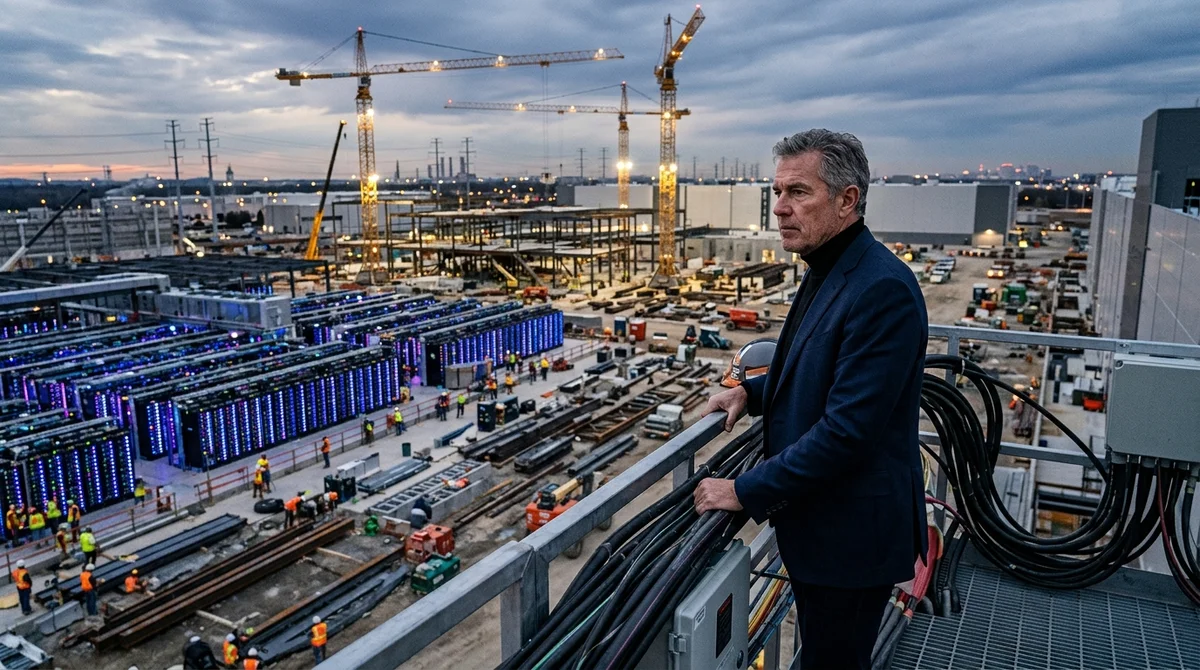
Oracle is trying to redefine its role in the AI economy. For decades the market saw it as a supplier of databases and enterprise software. Now it is becoming one of the most telling indicators of how durable the current artificial intelligence boom is.
An unexpected market barometer
Investors are being urged to look at Oracle not as just another AI winner but as a public stress test for the whole sector. The logic is simple: if demand for compute, data centers and AI infrastructure really stays high, Oracle can quickly turn that trend into revenue. If enterprise customers start slowing purchases and model developers start cutting costs, the hit to the company will come almost immediately and show up clearly in its earnings.
"If you want to know whether the AI bubble is deflating, there is only one public company that will show you:
Oracle."
That is the paradox. Oracle is far older than almost all of today's AI stars and was long tied to a different technology cycle: databases, enterprise software and big contracts with traditional businesses. That is exactly why its pivot is so revealing. The company is not building a new legend from scratch. It is reworking a mature business for a market that has no stable rules yet, and where estimates of demand and payback can change very quickly.
A bet on infrastructure
Oracle is not trying to play the role of OpenAI or Anthropic, and it does not compete with them in building foundation models. Its bet lies elsewhere: selling the foundation without which AI companies cannot scale, that is, compute, server capacity, infrastructure and services around data centers. That makes Oracle not a typical SaaS vendor of the past decade but a hybrid of an old enterprise company and a new infrastructure player.
In essence, its current market position looks like this:
- it is not a creator of foundation models
- it is not a classic hyperscaler in the mold of the biggest clouds
- it is no longer just an enterprise software vendor
- the company has entered the bare-metal segment, where hardware and direct access to capacity matter
- its growth is increasingly tied to the future of AI workloads and large customers
The pivot looks logical given that the market no longer sees Oracle's traditional business as its main growth engine. The company is effectively betting on a specific future: AI demand will be so large and last so long that the infrastructure layer becomes one of the most profitable spots in the entire chain. If that scenario plays out, Oracle can move from the category of "reliable old vendor" to that of a key supplier of the compute base for a new cycle.
Where Oracle's risk lies
The problem is that this bet is very narrow, and therefore especially risky. Oracle is not diversifying its AI story across a dozen directions. It is concentrating on a version of the market in which the winners are infrastructure providers for heavy models and giant data centers. That is closer to the logic of CoreWeave and other players who earn money on scarce capacity than to the strategy of companies that earn revenue from subscriptions, applications or their own application-level AI models.
Because of this, Oracle may become the first company in which investors see a real gap between AI expectations and AI money. As long as the market believes in endless demand for compute, building data centers and renting out capacity looks almost risk-free. But if generative AI starts growing more slowly than forecast, if large customers trim budgets, or if utilization of new sites falls short of promises, the blow will land first on those who invested in infrastructure early and at scale.
This shift matters for OpenAI and other model companies too. If a whole layer of partners is forming around them, ready to rebuild their businesses for AI infrastructure, that strengthens the whole sector and speeds its growth. But systemic risk is rising at the same time: more and more companies depend on current demand turning out to be a lasting market rather than a short-lived spike. That is why Oracle is now watched as an early signal for the whole sector.
What it means
Oracle is becoming a litmus test for the AI market. Not because it leads in models or consumer products, but because its success now depends on the most expensive and vulnerable layer of the industry: compute and data centers. If Oracle shows steady growth on this bet, the thesis of a long AI boom gets stronger. If not, talk of an overheated market will quickly shift from abstract to financial within the next few quarters.
- Nov 2, 2026Arca gives AI agents finance tasks lasting up to 10 days, but leaves the trades to humans
- Nov 2, 2026Meta's Muse assistant keeps dossiers on loved ones and gets root on Ubuntu by default
- Nov 1, 2026Local models lose to Opus and Codex: 0.21 on a MacBook versus 1.00 for Codex
- Nov 1, 2026Kimi scores 96.2% on a 1C database analytics test and emerges as a fallback if Claude access is blocked
Key Questions Answered
What are the key details on An unexpected market barometer?
Investors are being urged to look at Oracle not as just another AI winner but as a public stress test for the whole sector. The logic is simple: if demand for compute, data centers and AI infrastructure really stays high, Oracle can quickly turn that trend into revenue. If enterprise customers start slowing purchases and model developers start cutting costs, the hit to the company will come almost immediately and show up clearly in its earnings. "If you want to know whether the AI bubble is deflating, there is only one public company that will show you: Oracle." That is the
What are the key details on A bet on infrastructure?
Oracle is not trying to play the role of OpenAI or Anthropic, and it does not compete with them in building foundation models. Its bet lies elsewhere: selling the foundation without which AI companies cannot scale, that is, compute, server capacity, infrastructure and services around data centers. That makes Oracle not a typical SaaS vendor of the past decade but a hybrid of an old enterprise company and a new infrastructure player. In essence, its current market position looks like this: it is not a creator of foundation models it is not a classic hyperscaler in the mold o
Where Oracle's risk lies?
The problem is that this bet is very narrow, and therefore especially risky. Oracle is not diversifying its AI story across a dozen directions. It is concentrating on a version of the market in which the winners are infrastructure providers for heavy models and giant data centers. That is closer to the logic of CoreWeave and other players who earn money on scarce capacity than to the strategy of companies that earn revenue from subscriptions, applications or their own application-level AI models. Because of this, Oracle may become the first company in which investors see a
Test Frontier LLMs & Autonomous Agents in One Workspace
Run Claude Opus 5.5, GPT-6, Gemini 3.1, and DeepSeek side-by-side in Nomad AI (nomadnet.ai) — unified model routing, deep research, and multimodal workflows under one subscription.
The AI world, distilled — once a week
Seven stories that actually mattered, hand-picked. No noise, no reposts, no press releases.
Done! Check your inbox for a confirmation.