Musk v. Altman trial exposes emails, documents and OpenAI's early architecture
The first exhibits in Elon Musk's lawsuit against Sam Altman are out: emails, photos and corporate documents from OpenAI's early history. They indicate that Musk strongly shaped the lab's mission and structure, that Nvidia supplied a scarce supercomputer, and that people inside the team worried about how much influence one of the founders held. The material is only part of the evidence, and the court has not yet given it a final assessment. Still, the published fragments already hint at how roles were divided among the participants.
AI-processed from The Verge; edited by Hamidun News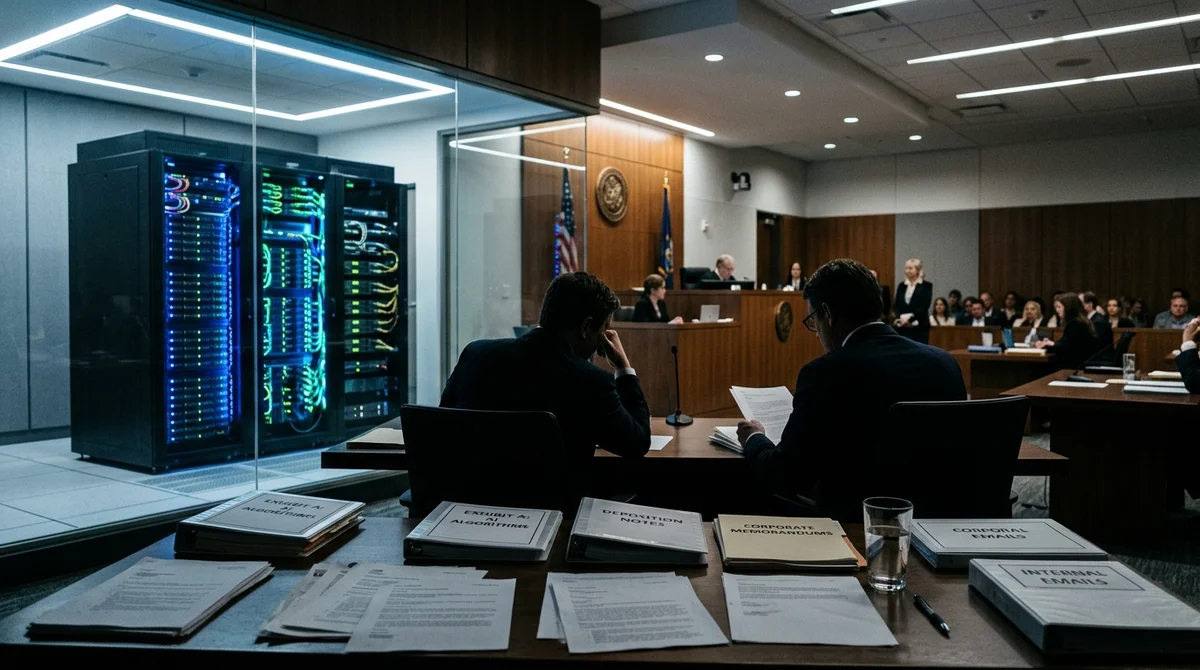
Court exhibits from the trial between Elon Musk and Sam Altman are being published, and they already reveal many details about OpenAI's first days. The material includes early emails, photographs and corporate documents showing who drafted the company's mission, where it looked for resources and how control of the lab was discussed.
What the documents show
The court materials date from the period when OpenAI was only taking shape as an organization and, judging by the documents, had not yet even formed the identity familiar today. The case file already includes correspondence, internal papers and photographs from the project's starting phase.
The point is not isolated sensational quotes but context: the documents show that OpenAI's structure, its original mission and its model of support were discussed in far more concrete and personal terms than it appeared from the outside during the lab's first years.
This is only part of the body of evidence, and the court has not yet given it a final assessment. But even the published fragments hint at how roles were distributed among the participants. They show that Musk was not merely a prominent donor or public ally of the project: he took an active part in formulating OpenAI's mission and noticeably influenced its early organizational design. For the current dispute, this is one of the key storylines.
Who shaped the launch
Several important threads emerge from the exhibits disclosed so far. They concern not only the personal conflict between Musk and Altman but also how one of the decade's most influential AI projects was put together. In brief, the materials so far point to these moments:
- Nvidia chief Jensen Huang gave OpenAI a scarce supercomputer
- Musk was heavily involved in drafting OpenAI's mission
- the team considered relying on Y Combinator as an important early resource
- Greg Brockman and Ilya Sutskever, judging by the materials, were concerned about the degree of Musk's influence
The Nvidia episode is especially telling. If compute is one of an AI lab's main scarce resources, a gift of a supercomputer shows the scale of support at the earliest stage. The Y Combinator thread matters just as much: the documents give the impression that Altman saw the accelerator not merely as a familiar network of contacts but as a potential foundation for launching and legitimizing OpenAI. This helps explain how questions of infrastructure, money and a management center stood alongside idealistic rhetoric from the very beginning.
Why it matters
These materials are of interest beyond fans of corporate drama. The exhibits turn long-running public arguments into a dispute over concrete facts: who wrote the basic wording, who supplied the hardware, who sought institutional backing and who feared too great a concentration of influence.
This is a sensitive topic for OpenAI, because today's company has moved far from its original image as a nonprofit research organization. So any document from the early period automatically becomes an argument in the debate over what exactly the founders promised and how the course changed afterward.
There is another layer. OpenAI's story has often been told as a story of ideas, people and breakthrough models. The trial shows that organizational details that usually stay off-stage matter just as much: charter principles, the balance of power, sources of compute and how participants saw one another's roles. Such details later determine who gets the right to speak for the original mission and who is accused of abandoning it.
What it means
The Musk v. Altman trial is gradually becoming not only a legal conflict but also a public reconstruction of OpenAI's birth. The more documents come out, the clearer it gets that the dispute is not just about personal relationships but about who set the rules, values and levers of control from the start at one of the world's most important AI companies.
- Nov 2, 2026Arca gives AI agents finance tasks lasting up to 10 days, but leaves the trades to humans
- Nov 2, 2026Meta's Muse assistant keeps dossiers on loved ones and gets root on Ubuntu by default
- Nov 1, 2026Local models lose to Opus and Codex: 0.21 on a MacBook versus 1.00 for Codex
- Nov 1, 2026Kimi scores 96.2% on a 1C database analytics test and emerges as a fallback if Claude access is blocked
Key Questions Answered
What the documents show?
The court materials date from the period when OpenAI was only taking shape as an organization and, judging by the documents, had not yet even formed the identity familiar today. The case file already includes correspondence, internal papers and photographs from the project's starting phase. The point is not isolated sensational quotes but context: the documents show that OpenAI's structure, its original mission and its model of support were discussed in far more concrete and personal terms than it appeared from the outside during the lab's first years. This is only part of
Who shaped the launch?
Several important threads emerge from the exhibits disclosed so far. They concern not only the personal conflict between Musk and Altman but also how one of the decade's most influential AI projects was put together. In brief, the materials so far point to these moments: Nvidia chief Jensen Huang gave OpenAI a scarce supercomputer Musk was heavily involved in drafting OpenAI's mission the team considered relying on Y Combinator as an important early resource Greg Brockman and Ilya Sutskever, judging by the materials, were concerned about the degree of Musk's influence The N
Why it matters?
These materials are of interest beyond fans of corporate drama. The exhibits turn long-running public arguments into a dispute over concrete facts: who wrote the basic wording, who supplied the hardware, who sought institutional backing and who feared too great a concentration of influence. This is a sensitive topic for OpenAI, because today's company has moved far from its original image as a nonprofit research organization. So any document from the early period automatically becomes an argument in the debate over what exactly the founders promised and how the course chang
Test Frontier LLMs & Autonomous Agents in One Workspace
Run Claude Opus 5.5, GPT-6, Gemini 3.1, and DeepSeek side-by-side in Nomad AI (nomadnet.ai) — unified model routing, deep research, and multimodal workflows under one subscription.
The AI world, distilled — once a week
Seven stories that actually mattered, hand-picked. No noise, no reposts, no press releases.
Done! Check your inbox for a confirmation.