Meta shares fall after raising 2026 AI spending forecast to $145 billion
Meta delivered a strong quarter: revenue grew 33% to $56.3 billion, and its advertising business accelerated again. But the market wasn't focused on that. The company raised its 2026 capital expenditure forecast from $115–135 billion to $125–145 billion, attributing this to more expensive components and data center expansion. After-hours, shares fell more than 6%.
AI-processed from Bloomberg Tech; edited by Hamidun News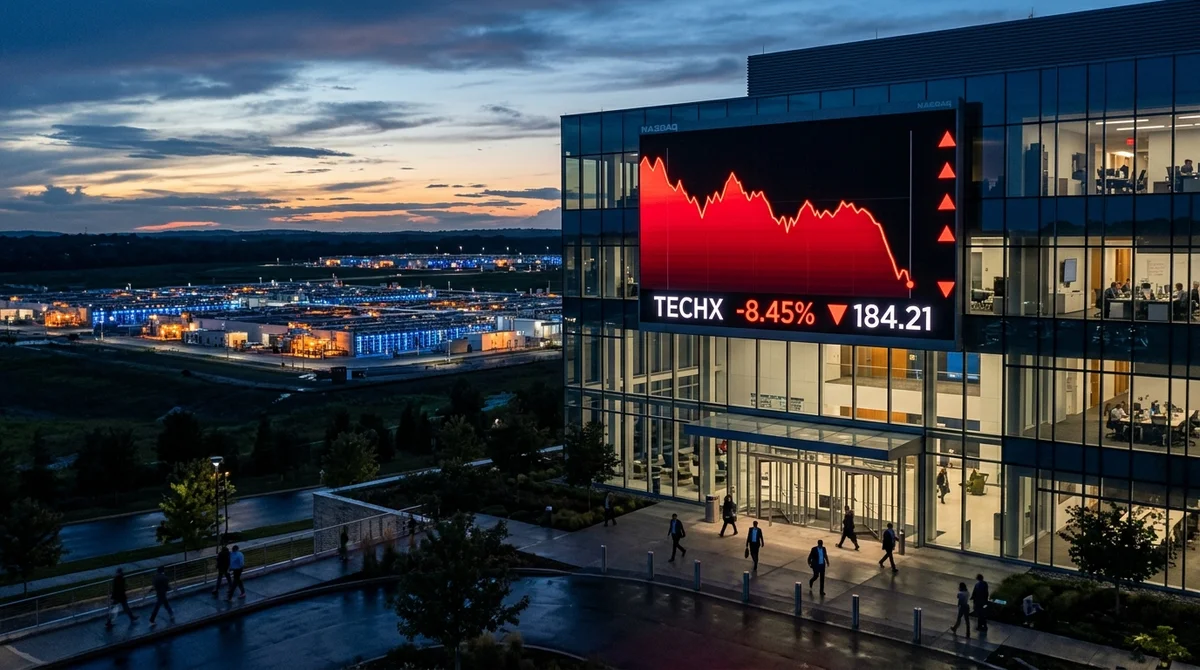
Meta raised its capital expenditure forecast for 2026 and immediately received a harsh market reaction. Despite strong quarterly earnings, investors once again latched onto the main question: will the company's massive artificial intelligence bet pay off?
Why stocks fell
The main trigger is the new capital expenditure range: $125–145 billion instead of January's $115–135 billion. For a company of Meta's scale, this still looks like another sharp step up, and it's exactly that which overshadowed the rest of the earnings report. Following extended trading, Meta shares fell more than 6%.
Formally, management explained the forecast revision by rising component prices, especially memory, and additional data center expenses needed for computing power not only in 2026, but also in subsequent years. The problem for the market is not that Meta is making weak earnings—in fact everything is going well there. The problem is that the company is entering deeper into a spending cycle where promises about future returns exceed proven monetization so far.
Additional skepticism is added by profit structure: diluted earnings per share were $10.44, but within the quarter there was a tax benefit of $8.03 billion. Without it, EPS would have been lower, so investors read the report more cautiously than the headline suggests.
What the quarter showed
Operationally, Meta had a strong quarter. Revenue grew 33% year-over-year to $56.31 billion, operating profit rose to $22.87 billion, and margin remained at 41%. The advertising engine continues to drive the business: the number of ad impressions grew 19%, average price per ad grew 12%.
Meta's family of apps was used on average by 3.56 billion people daily, and the company separately noted that the slight quarterly audience decline was related to internet disruptions in Iran and WhatsApp restrictions in Russia.
- Revenue in the second quarter is expected in the range of $58–61 billion
- Capital expenditures in the first quarter already totaled $19.84 billion
- Free cash flow reached $12.39 billion
- Cash and liquid securities on the balance sheet — $81.18 billion
In other words, the core business is not broken and even looks very sustainable. Moreover, Meta did not raise its overall spending forecast for 2026: it remained in the range of $162–169 billion, and the company continues to expect to finish the year with operating profit higher than in 2025.
But the market found this insufficient: now it wants to see not just advertising growth, but a direct link between AI infrastructure and future cash flows.
Where billions are going
According to management, the investment increase is needed not only because of scarce memory and more expensive components. Meta continues to build computing power for its own models and AI-based products. Mark Zuckerberg stated that the company has already released the first model from Meta Superintelligence Labs, and within its infrastructure is deploying over 1 gigawatt of its own custom silicon created with Broadcom, plus significant volumes of AMD chips and new Nvidia systems. In parallel, Meta is signing multi-year cloud contracts to get needed capacity faster.
"All signals we see within ourselves and in the industry give us
confidence in these investments."
Meta's logic is understandable: the company claims that new models already improve recommendations, engagement, and ad value, and should eventually transform into personal and business agents. But in that same communication, management essentially acknowledges it's still far from leadership.
In a separate call with analysts, CFO Susan Li said the new model release helped Meta "be in the group of leaders," but the bulk of the journey still lies ahead—from multimodality to tool use and orchestration of multiple agents. This is the reason for the nervousness: spending is already historic, but overall leadership is not yet guaranteed.
What this means
The market gave Meta a clear signal: strong advertising and strong revenue are no longer enough if the AI budget is growing faster than confidence in returns. For the entire big tech race, this is an important marker—investors are willing to tolerate massive AI investments, but now demand stronger proof that they're turning not just into new models, but into profit.
- Oct 29, 2026Liquid AI releases LFM3: six multimodal 2B models with a 256K context window
- Oct 28, 2026Wired Tested 6 AI Agents in a Day: Dots Leads, Gemini Spark Fails at Lunch
- Oct 28, 2026Liquid AI releases LFM2.5-24B-A2B: an agent model with 2B active parameters
- Oct 28, 2026Meta releases Muse Spark Open: 816B parameters and the lead among US open-weight models
Key Questions Answered
Why stocks fell?
The main trigger is the new capital expenditure range: $125–145 billion instead of January's $115–135 billion. For a company of Meta's scale, this still looks like another sharp step up, and it's exactly that which overshadowed the rest of the earnings report. Following extended trading, Meta shares fell more than 6%. Formally, management explained the forecast revision by rising component prices, especially memory, and additional data center expenses needed for computing power not only in 2026, but also in subsequent years. The problem for the market is not that Meta is ma
What the quarter showed?
Operationally, Meta had a strong quarter. Revenue grew 33% year-over-year to $56.31 billion, operating profit rose to $22.87 billion, and margin remained at 41%. The advertising engine continues to drive the business: the number of ad impressions grew 19%, average price per ad grew 12%. Meta's family of apps was used on average by 3.56 billion people daily, and the company separately noted that the slight quarterly audience decline was related to internet disruptions in Iran and WhatsApp restrictions in Russia. Revenue in the second quarter is expected in the range of $58–6
Where billions are going?
According to management, the investment increase is needed not only because of scarce memory and more expensive components. Meta continues to build computing power for its own models and AI-based products. Mark Zuckerberg stated that the company has already released the first model from Meta Superintelligence Labs, and within its infrastructure is deploying over 1 gigawatt of its own custom silicon created with Broadcom, plus significant volumes of AMD chips and new Nvidia systems. In parallel, Meta is signing multi-year cloud contracts to get needed capacity faster. "All s
Ship AI Faster with Founders, Engineers & Weekly Architecture Reviews
Inside Vibe Club (hamidun.com/club) — weekly live masterminds with Zhemal Khamidun, Tech Radar, full LMS access, and 370+ production Claude Code skills.
The AI world, distilled — once a week
Seven stories that actually mattered, hand-picked. No noise, no reposts, no press releases.
Done! Check your inbox for a confirmation.