OpenAI Shuts Down Sora Over Resource Shortages, Derailing Major Disney Deal
OpenAI has wound down support for Sora, and the reason is mundane: the service was too expensive to run and consumed scarce computing capacity. According to the WSJ, video generation could cost around $1 million a day, and the planned paid access through ChatGPT never materialized. A major deal with Disney involving licensed characters also fell through at the same time.
AI-processed from 3DNews AI; edited by Hamidun News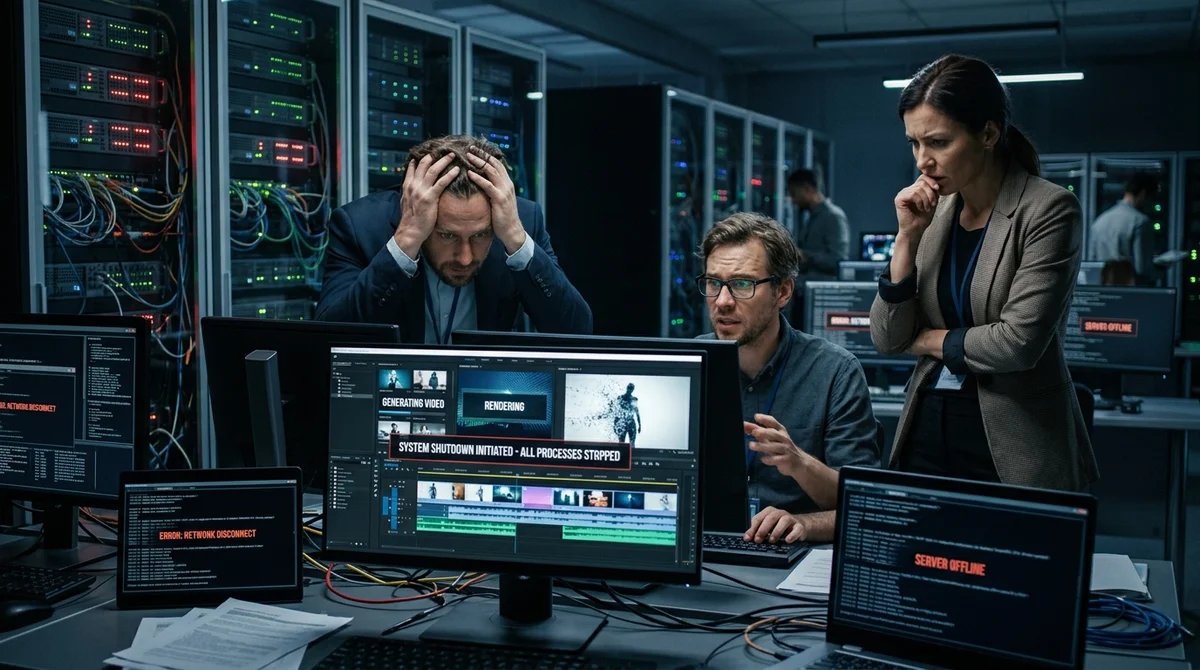
OpenAI has wound down support for its Sora video generator, and the main reason is now clear: not a change of strategy, but a shortage of money and computing capacity. According to The Wall Street Journal, the project proved too expensive to run and began to get in the way of other efforts inside the company.
Why Sora was shut down
Sora's core problem was not the quality of the technology or weak audience interest. According to WSJ sources, OpenAI simply ran into a shortage of resources. Video generation requires far more computation than text models or even image work, which makes it more expensive to run every day. That became especially painful for the company at a moment when the same accelerators and server capacity were needed for other products that leadership considered more important.
Inside OpenAI, Sora developed for a long time as a relatively independent unit and received a noticeable share of the infrastructure. But as competition for compute grew, the spending became harder to justify. The company had already capped the length of clips a single user could generate at ten seconds, precisely so the system would not buckle under load. OpenAI was unable to quickly turn the service into a sustainable source of revenue, so the balance between cost and benefit began to break down.
Cost and load
According to sources, running Sora could cost OpenAI roughly $1 million a day. At launch the service quickly gained about 1 million users, but the audience later shrank to roughly 500,000. Even at that scale, each user kept consuming expensive compute that other teams also needed.
OpenAI has an internal monitoring system that shows what its accelerators are being used for, and it helped make clear just how costly Sora had become.
- Estimated daily cost: about $1 million
- Peak audience: roughly 1 million users
- Later the base shrank to roughly 500,000
- Earlier clip length limit: up to 10 seconds
- The idea of paid access through ChatGPT was ultimately scrapped
Based on the published details, the issue was not only direct costs but also missed opportunities. While Sora occupied a significant part of the infrastructure, other priority projects received fewer resources. For OpenAI this meant a simple choice: keep subsidizing an expensive video generator or move capacity to where the return would be higher. Judging by the company's decision, the second option looked more rational, even at the cost of reputational damage and partner discontent.
The Disney deal collapses
Shutting down Sora hit not only users but also partnerships. According to 3DNews, citing the WSJ, OpenAI had an agreement with Disney worth $1 billion. The media company was expected to invest that sum in OpenAI's equity, and Sora users would gain the right to use licensed characters from Disney franchises when creating clips. Amid the AI video boom, that pairing looked like a clear path to commercialization: well-known IP, mass demand, and a tool that had already gone viral.
But Disney itself learned of the end of Sora support only about an hour before the public did. That kind of notice is hard to call proper preparation of a partner for a major reversal. According to sources, Disney is now already in talks with more than ten alternative AI service providers. Formally, the company thanked OpenAI for the experience of working together, but in practice it means one thing: the studio is quickly looking for a replacement for a platform on which it had recently placed a serious bet.
What this means
Sora's story shows that even a high-profile AI product with millions of users may not survive an internal fight over resources. For the market it is a signal: the era of flashy demos is ending, and the economics of operation are moving to the foreground. If a service does not pay for its expensive compute and gets in the way of the core lines of business, it can be shut down even with a recognizable brand, viral popularity, high-profile partnerships and billion-dollar negotiations on the table.
- Nov 2, 2026Arca gives AI agents finance tasks lasting up to 10 days, but leaves the trades to humans
- Nov 2, 2026Meta's Muse assistant keeps dossiers on loved ones and gets root on Ubuntu by default
- Nov 1, 2026Local models lose to Opus and Codex: 0.21 on a MacBook versus 1.00 for Codex
- Nov 1, 2026Kimi scores 96.2% on a 1C database analytics test and emerges as a fallback if Claude access is blocked
Key Questions Answered
Why Sora was shut down?
Sora's core problem was not the quality of the technology or weak audience interest. According to WSJ sources, OpenAI simply ran into a shortage of resources. Video generation requires far more computation than text models or even image work, which makes it more expensive to run every day. That became especially painful for the company at a moment when the same accelerators and server capacity were needed for other products that leadership considered more important. Inside OpenAI, Sora developed for a long time as a relatively independent unit and received a noticeable shar
What are the key details on Cost and load?
According to sources, running Sora could cost OpenAI roughly $1 million a day. At launch the service quickly gained about 1 million users, but the audience later shrank to roughly 500,000. Even at that scale, each user kept consuming expensive compute that other teams also needed. OpenAI has an internal monitoring system that shows what its accelerators are being used for, and it helped make clear just how costly Sora had become. Estimated daily cost: about $1 million Peak audience: roughly 1 million users Later the base shrank to roughly 500,000 Earlier clip length limit:
What are the key details on The Disney deal collapses?
Shutting down Sora hit not only users but also partnerships. According to 3DNews, citing the WSJ, OpenAI had an agreement with Disney worth $1 billion. The media company was expected to invest that sum in OpenAI's equity, and Sora users would gain the right to use licensed characters from Disney franchises when creating clips. Amid the AI video boom, that pairing looked like a clear path to commercialization: well-known IP, mass demand, and a tool that had already gone viral. But Disney itself learned of the end of Sora support only about an hour before the public did. That
Test Frontier LLMs & Autonomous Agents in One Workspace
Run Claude Opus 5.5, GPT-6, Gemini 3.1, and DeepSeek side-by-side in Nomad AI (nomadnet.ai) — unified model routing, deep research, and multimodal workflows under one subscription.
The AI world, distilled — once a week
Seven stories that actually mattered, hand-picked. No noise, no reposts, no press releases.
Done! Check your inbox for a confirmation.