OpenAI and Sam Altman: how the board crisis became a power struggle
Around OpenAI, the November 2023 crisis resurfaces — when the board attempted to remove Sam Altman, only for him to return four days later, stronger than before. The text explores how questions about the Startup Fund's structure, former board members' claims, internal management conflicts, and a new dispute over a Pentagon defense contract converge in this power struggle.
AI-processed from Habr AI; edited by Hamidun News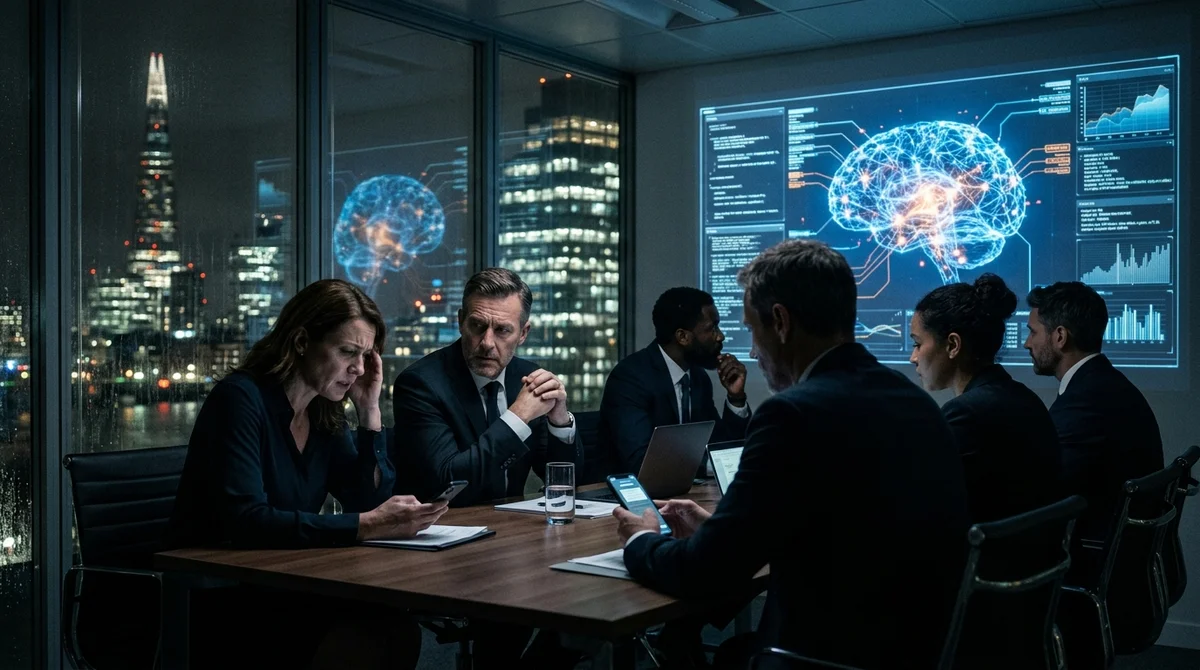
Column about OpenAI's internal crisis combines several episodes at once: Altman's failed firing, questions about his investment connections, and a new dispute over defense contracts. The main thesis is simple: after the November 17, 2023 crisis, OpenAI's head returned not weakened, but practically unreachable.
November Coup
On November 17, 2023, OpenAI's board of directors removed Altman, claiming he was "not consistently frank" in communicating with the board. The phrasing immediately generated the main question: if it was not about a product error or strategy, then what exactly was the trust breach about. Within days, the situation turned into a power struggle: employees demanded the CEO be returned, Microsoft offered a platform for the team's transition, and influential allies from Silicon Valley launched a campaign for his reinstatement.
"Not consistently frank," — that's how the board explained the firing on November 17, 2023.
By November 21, Altman returned to the company, and the previous board effectively lost control.
The article's author sees in this not just a personnel reversal, but a moment when OpenAI stopped being an organization with functioning internal checks and balances. Even if the board's claims were serious, it had neither the political resources nor a coalition to see the decision through. As a result, the crisis only strengthened the position of the person they tried to remove.
Conflicts and Structure
The second set of claims concerns the overlap of Altman's roles as OpenAI's head, investor, and figure with substantial personal stakes in startups. In 2024, particular attention was drawn to OpenAI Startup Fund: it turned out that the fund, associated with OpenAI, was structured through a separate entity where legal control belonged to Altman. Later, on March 29, 2024, the structure was changed, and formal control shifted to Ian Hathaway, but the history itself did not resolve the question about the boundaries of the company's leader's influence.
- former board member Helen Toner said the board didn't know in advance about ChatGPT's launch and learned about it only after release;
- Altman's separate investments in hundreds of companies intensified concerns about conflicts of interest;
- critics linked to this his influence on which startups get access to OpenAI's ecosystem;
- the subsequent restructuring of the fund showed the issue was far from cosmetic.
To this was added accounts of how former board members coordinated actions through disappearing messages and tried not to leave a digital trail. It sounds almost like a corporate thriller, but what matters to the author is different: if people at the board level were afraid of open conversation with their own CEO, then the management structure at OpenAI was already deeply broken at that point.
Contract and Reaction
A separate trigger for a new wave of criticism was an episode from late February 2026 involving the Pentagon. Anthropic publicly refused to soften restrictions on using its model for mass surveillance of citizens and fully autonomous weapons systems. Almost immediately, OpenAI concluded its own agreement with the military department, claiming that its "red lines" are preserved, although critics saw the same risks in the contract's wording that Anthropic tried to avoid.
Against this backdrop, the dispute around Altman went beyond a corporate conflict and turned into a question of political accountability. Opponents see in his style not the usual toughness of a startup leader, but a model where speed, scale, and influence are placed above transparency. Supporters respond that it is precisely this approach that allowed OpenAI to pull ahead in the market.
But public reaction showed that for part of the audience, success no longer outweighs questions about who sets the rules and where moral limits end.
What This Means
OpenAI's story increasingly looks less like a dispute about one CEO's character and more like a test for the entire AI industry. If a company that sets the market's pace can survive a crisis of trust without losing power at the top, then the main struggle of coming years will be fought not only over models, but over who is actually capable of controlling their creators.
- Oct 28, 2026Keystone removes the model name from code: open-source LLM gateway adds 0.64 ms
- Oct 28, 2026Wired Tested 6 AI Agents in a Day: Dots Leads, Gemini Spark Fails at Lunch
- Oct 28, 2026Anthropic Turns Claude Code Into a Platform: Claude Mods Flip the Agent Harness
- Oct 28, 2026Liquid AI releases LFM2.5-24B-A2B: an agent model with 2B active parameters
Key Questions Answered
What are the key details on November Coup?
On November 17, 2023, OpenAI's board of directors removed Altman, claiming he was "not consistently frank" in communicating with the board. The phrasing immediately generated the main question: if it was not about a product error or strategy, then what exactly was the trust breach about. Within days, the situation turned into a power struggle: employees demanded the CEO be returned, Microsoft offered a platform for the team's transition, and influential allies from Silicon Valley launched a campaign for his reinstatement. "Not consistently frank," — that's how the board exp
What are the key details on Conflicts and Structure?
The second set of claims concerns the overlap of Altman's roles as OpenAI's head, investor, and figure with substantial personal stakes in startups. In 2024, particular attention was drawn to OpenAI Startup Fund: it turned out that the fund, associated with OpenAI, was structured through a separate entity where legal control belonged to Altman. Later, on March 29, 2024, the structure was changed, and formal control shifted to Ian Hathaway, but the history itself did not resolve the question about the boundaries of the company's leader's influence. former board member Helen
What are the key details on Contract and Reaction?
A separate trigger for a new wave of criticism was an episode from late February 2026 involving the Pentagon. Anthropic publicly refused to soften restrictions on using its model for mass surveillance of citizens and fully autonomous weapons systems. Almost immediately, OpenAI concluded its own agreement with the military department, claiming that its "red lines" are preserved, although critics saw the same risks in the contract's wording that Anthropic tried to avoid. Against this backdrop, the dispute around Altman went beyond a corporate conflict and turned into a questi
Ship AI Faster with Founders, Engineers & Weekly Architecture Reviews
Inside Vibe Club (hamidun.com/club) — weekly live masterminds with Zhemal Khamidun, Tech Radar, full LMS access, and 370+ production Claude Code skills.
The AI world, distilled — once a week
Seven stories that actually mattered, hand-picked. No noise, no reposts, no press releases.
Done! Check your inbox for a confirmation.