Why the Pentagon-Anthropic conflict became a warning sign for AI business
The Pentagon-Anthropic conflict is more than a $200 million contract story. It revealed that corporate AI systems depend not just on model quality, but on the rules, restrictions, and policy decisions of their provider. Against this backdrop, OpenAI struck a deal with the military on different terms, and the market saw the key lesson: vendor lock-in quickly becomes an operational risk.
AI-processed from Habr AI; edited by Hamidun News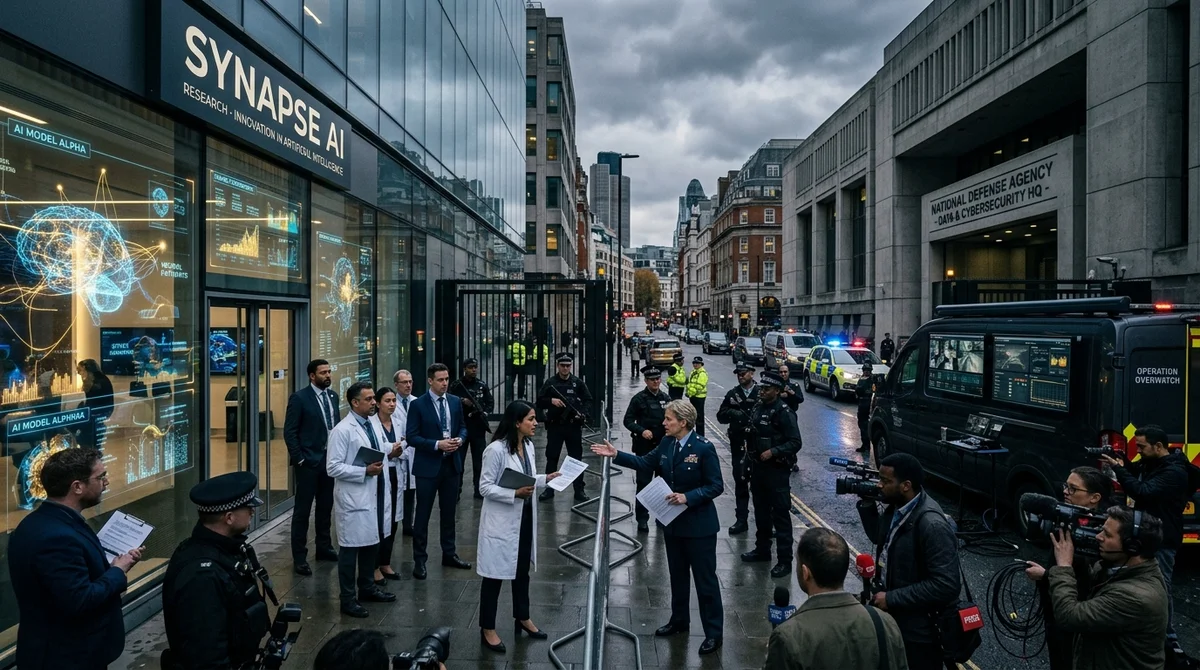
The conflict between the Pentagon and Anthropic looks like a dispute over a $200 million contract, but for business it's a far more practical story. It showed that an AI strategy dependent on a single vendor can suddenly run into other people's political, ethical, and contractual constraints.
What exactly happened
According to American press reports, the US Department of Defense wanted access to Anthropic's models for the widest possible range of "lawful" tasks. Anthropic insisted on red lines: exclusions for mass surveillance and fully autonomous weapons. When the company refused to budge, the dispute quickly escalated beyond ordinary procurement negotiations: there was talk of pressure from above, risk of blacklisting, and the possibility that participation in the government AI ecosystem might depend on willingness to accept someone else's rules.
The situation then became even more telling. Against the backdrop of the conflict, OpenAI struck its own deal with the Pentagon and presented it as compatible with safety principles. For the market, this was an important signal: even if two companies operate in the same industry, they can define acceptable use cases differently.
This means the question is no longer just about model quality, but about who exactly controls the boundaries of its application.
"Your strategy is now hostage to someone else's conflict."
Where the risk lies for business
Many executives still approach LLMs as a cloud service: choose a vendor, agree on price, connect the API, and launch a pilot. But models are not neutral infrastructure. Along with them, a company gets built-in constraints, refusal policies, data storage rules, logging logic, pricing frameworks, and contractual terms that can change without the client's involvement.
In essence, an AI vendor supplies not just computing, but its own governance regime. This is especially dangerous where AI is embedded in actual business processes: support, sales, compliance, internal search, analytics, or agent scenarios. If the vendor changes its security policy, reconsiders allowable use cases, raises prices, or limits model availability, the company loses not just a convenient tool.
It risks breaking a workflow that is already tied to a specific model's behavior and its contractual terms. At this point, legal, product, and infrastructure risks converge into a single problem.
How to reduce dependency
The most vulnerable area is agent systems. For simple tasks like summarization or draft generation, switching models is relatively tolerable. But when an agent calls tools, accesses internal systems, chooses actions, and makes decisions in a chain, dependency sharply increases. In such systems, a specific vendor becomes entrenched through prompts, function calling schemas, orchestration, security rules, and even team expectations about how exactly the model behaves in ambiguous cases.
- Separate business logic from the specific model API
- Keep at least two vendors in production or in reserve
- Build your own layer for evaluation, routing, and observability
- Test critical scenarios for portability between models
- Prepare in advance a switching plan covering data, contracts, and processes
The point is not abstract "model independence," but the ability to adapt quickly without rewriting half the product. Companies need their own layer above the model: quality metrics, tool access rules, logging, risk control, and vendor replacement procedures. Then a dispute between government and an AI vendor remains an external event, and doesn't turn into an internal business failure. It is architecture, not bold statements about AI implementation, that determines resilience in the moment of conflict.
What this means
The Pentagon and Anthropic story shows that choosing an LLM is no longer just a technology purchase, but an architectural and management decision. Companies that build AI systems around their own processes and can swap the engine without stopping operations will win. This readiness will become the new maturity criterion for enterprise AI.
- Oct 28, 2026A 2015 CNN Beat GPT-6 Astra and Claude Fable 5.1 at Skin Cancer Diagnosis
- Oct 28, 2026Keystone removes the model name from code: open-source LLM gateway adds 0.64 ms
- Oct 28, 2026Wired Tested 6 AI Agents in a Day: Dots Leads, Gemini Spark Fails at Lunch
- Oct 28, 2026Anthropic files for IPO: $16.3 billion in revenue in six months, ticker ANT
Key Questions Answered
What exactly happened?
According to American press reports, the US Department of Defense wanted access to Anthropic's models for the widest possible range of "lawful" tasks. Anthropic insisted on red lines: exclusions for mass surveillance and fully autonomous weapons. When the company refused to budge, the dispute quickly escalated beyond ordinary procurement negotiations: there was talk of pressure from above, risk of blacklisting, and the possibility that participation in the government AI ecosystem might depend on willingness to accept someone else's rules. The situation then became even more
Where the risk lies for business?
Many executives still approach LLMs as a cloud service: choose a vendor, agree on price, connect the API, and launch a pilot. But models are not neutral infrastructure. Along with them, a company gets built-in constraints, refusal policies, data storage rules, logging logic, pricing frameworks, and contractual terms that can change without the client's involvement. In essence, an AI vendor supplies not just computing, but its own governance regime. This is especially dangerous where AI is embedded in actual business processes: support, sales, compliance, internal search, an
How to reduce dependency?
The most vulnerable area is agent systems. For simple tasks like summarization or draft generation, switching models is relatively tolerable. But when an agent calls tools, accesses internal systems, chooses actions, and makes decisions in a chain, dependency sharply increases. In such systems, a specific vendor becomes entrenched through prompts, function calling schemas, orchestration, security rules, and even team expectations about how exactly the model behaves in ambiguous cases. Separate business logic from the specific model API Keep at least two vendors in productio
Ship AI Faster with Founders, Engineers & Weekly Architecture Reviews
Inside Vibe Club (hamidun.com/club) — weekly live masterminds with Zhemal Khamidun, Tech Radar, full LMS access, and 370+ production Claude Code skills.
The AI world, distilled — once a week
Seven stories that actually mattered, hand-picked. No noise, no reposts, no press releases.
Done! Check your inbox for a confirmation.