Microsoft leases a 900 MW data center originally prepared for Oracle and OpenAI
Microsoft will get 900 megawatts of capacity in a data center that had been planned for Oracle and OpenAI. Both companies pulled out of the project, and Microsoft quickly took the site for itself. For the market, it is another signal: in the AI race, the winner is not just whoever has the best model, but whoever manages to lock down electricity, land and racks.
AI-processed from Bloomberg Tech; edited by Hamidun News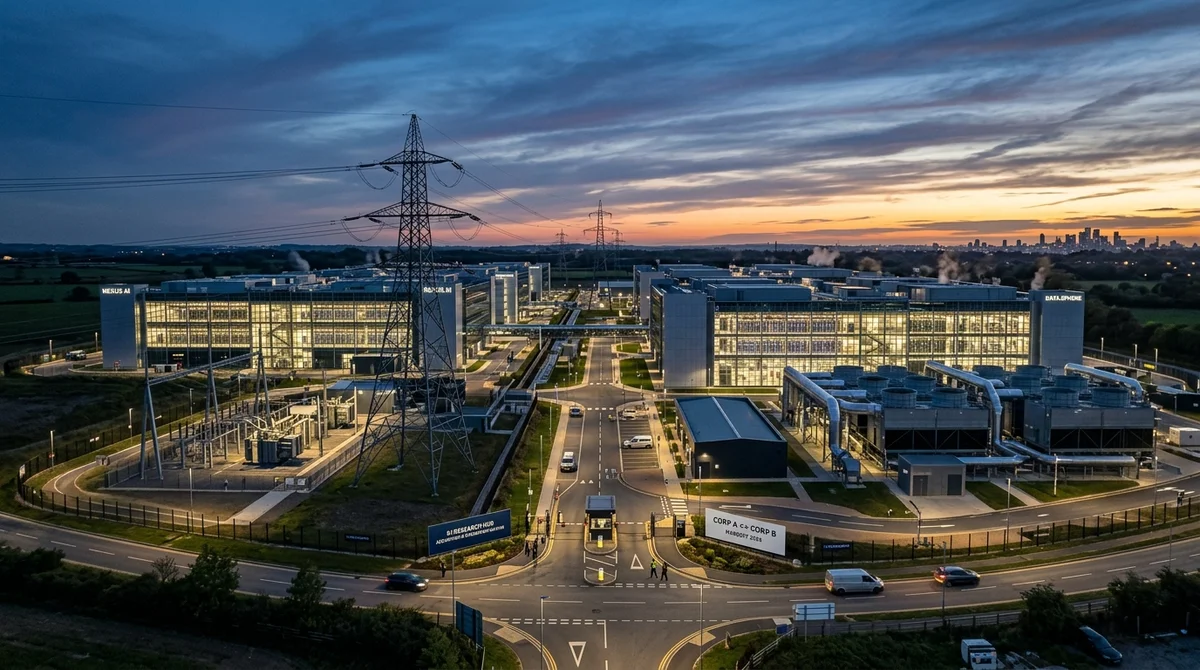
Microsoft will take over a data center project that had been prepared for Oracle and OpenAI. The project offers 900 megawatts of capacity, a rare asset in scale at a time of acute infrastructure shortage for training and running large AI systems.
What happened
Microsoft has leased a data center project that was previously reserved for Oracle and OpenAI. In effect, the company stepped in after the two original participants walked away from it. For the market, this is not just a real estate or server deal: in the era of generative AI, access to power and ready-to-use sites is becoming as strategic a resource as chips and the models themselves.
The key figure in this story is 900 megawatts. That volume shows this is not a targeted expansion but a large bet on future demand. Microsoft is already one of the key players in AI infrastructure, and projects like this help it add computing capacity faster, without the long cycle of building from scratch. If a site is already prepared, the gain is measured in months, and sometimes years.
Why it matters
In the AI infrastructure market, value today is determined not only by GPUs but by the ability to physically house them at the required scale. Even if a company has money and access to accelerators, it still needs electricity, cooling, grid connections and operating permits. So when such a facility passes from one set of tenants to another, it is an important signal of how priorities are being redistributed among the largest tech players.
- 900 MW is a scale designed for very large computing workloads
- A ready project speeds up the launch of new capacity compared with building from scratch
- Microsoft is tightening its grip on scarce infrastructure for its own AI services
- The exit of Oracle and OpenAI shows that even the largest companies are revising their site plans
The very fact that Oracle and OpenAI backed away from the project, and Microsoft quickly took their place, matters in itself. It points to high liquidity for such facilities in an overheated market: if a site is genuinely suited to large AI clusters, it will not sit idle. In this environment, one company's decision to scale back or postpone its plans almost instantly opens a window for another and allows a scarce resource to be reallocated quickly.
The capacity market is shifting
The story of this facility shows what the new competition around AI looks like. Not long ago, the main question was who had the stronger model and better product packaging. Now another layer has emerged on top of that: who can secure real physical resources faster. Without them, it is impossible to train new models, scale inference and serve enterprise demand for AI services reliably.
This is especially sensitive for Microsoft, because the company is both developing cloud infrastructure and supporting a large volume of AI workloads within its own ecosystem. The more services, customers and models depend on a single platform, the costlier any capacity shortage becomes. That makes leasing an already prepared project look like a pragmatic move: rather than waiting for the market to free up, grab a rare asset as soon as the chance appears.
What this means
The fight over AI is increasingly moving beyond models alone and into energy, land and data centers. The Microsoft deal shows that the winners will be those who can not only build AI products but also secure huge computing capacity for them in advance. That turns infrastructure deals into part of product strategy, and the value of pre-booked power and ready sites will keep rising.
- Nov 2, 2026Arca gives AI agents finance tasks lasting up to 10 days, but leaves the trades to humans
- Nov 2, 2026Meta's Muse assistant keeps dossiers on loved ones and gets root on Ubuntu by default
- Nov 1, 2026Local models lose to Opus and Codex: 0.21 on a MacBook versus 1.00 for Codex
- Nov 1, 2026Kimi scores 96.2% on a 1C database analytics test and emerges as a fallback if Claude access is blocked
Key Questions Answered
What happened?
Microsoft has leased a data center project that was previously reserved for Oracle and OpenAI. In effect, the company stepped in after the two original participants walked away from it. For the market, this is not just a real estate or server deal: in the era of generative AI, access to power and ready-to-use sites is becoming as strategic a resource as chips and the models themselves. The key figure in this story is 900 megawatts. That volume shows this is not a targeted expansion but a large bet on future demand. Microsoft is already one of the key players in AI infrastru
Why it matters?
In the AI infrastructure market, value today is determined not only by GPUs but by the ability to physically house them at the required scale. Even if a company has money and access to accelerators, it still needs electricity, cooling, grid connections and operating permits. So when such a facility passes from one set of tenants to another, it is an important signal of how priorities are being redistributed among the largest tech players. 900 MW is a scale designed for very large computing workloads A ready project speeds up the launch of new capacity compared with building
What are the key details on The capacity market is shifting?
The story of this facility shows what the new competition around AI looks like. Not long ago, the main question was who had the stronger model and better product packaging. Now another layer has emerged on top of that: who can secure real physical resources faster. Without them, it is impossible to train new models, scale inference and serve enterprise demand for AI services reliably. This is especially sensitive for Microsoft, because the company is both developing cloud infrastructure and supporting a large volume of AI workloads within its own ecosystem. The more service
Test Frontier LLMs & Autonomous Agents in One Workspace
Run Claude Opus 5.5, GPT-6, Gemini 3.1, and DeepSeek side-by-side in Nomad AI (nomadnet.ai) — unified model routing, deep research, and multimodal workflows under one subscription.
The AI world, distilled — once a week
Seven stories that actually mattered, hand-picked. No noise, no reposts, no press releases.
Done! Check your inbox for a confirmation.