Google adds memory and chat import from ChatGPT and other AI assistants to Gemini
Google has simplified switching to Gemini from ChatGPT and other AI chats. Desktop users can now import conversations and the service's memory of you. The new bot won't have to learn from scratch about your habits, tasks, and communication style at work. Claude introduced a similar feature earlier.
AI-processed from 3DNews AI; edited by Hamidun News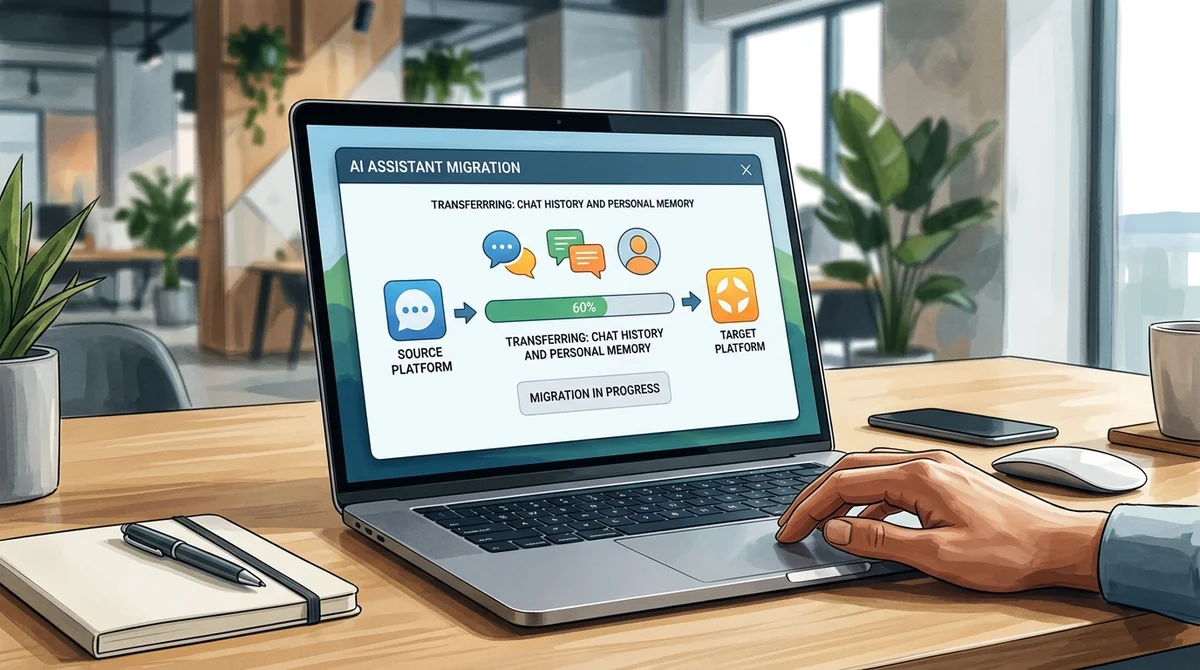
Google has added a feature to Gemini that allows importing chats and memory from other AI services, including ChatGPT and similar platforms. When switching to Google's ecosystem, users can now transfer not just their chat archive, but also the accumulated personal context that previously remained within another bot.
How the Transfer Works
The new feature works on PC and is designed for those who have already settled into another AI service. This is not simply about copying old conversations into an archive, but about transferring context: communication history, saved preferences, and other information that the bot used to provide more accurate responses. For users, this removes one of the most annoying barriers when switching services — the need to re-explain who you are, how you work, and what exactly you need.
In essence, Google is making Gemini more "hospitable" to a competitor's audience. If switching to a new chat bot previously meant starting from scratch, this process is now closer to migration between regular digital services: open a new product, transfer data, and continue working with almost no loss of quality. For people who use AI every day, this is not a cosmetic detail, but a noticeable time and effort savings.
Why Google Is Doing This
The import feature looks like a convenience for users, but simultaneously it's a strong competitive move. Memory in AI chats is gradually becoming one of the main mechanisms for retention: the more a service knows about a person's habits, projects, and communication style, the harder it is for that person to leave. By allowing such context to be transferred to Gemini, Google reduces the cost of switching and directly attacks the main argument for "staying where everything is already set up."
- no need to re-describe your tasks and work context
- easier to maintain communication style and personal preferences
- old conversations remain useful rather than lost during the move
- Gemini starts providing more relevant answers faster
- easier to compare different AI services without being locked into one
For Google, this is also a way to accelerate Gemini's growth without a long period of "warming up" a new user. If a service immediately receives accumulated context, the chances that a person will stay in it longer and return more often increase significantly. In other words, the competition is no longer only about model quality, but also about the convenience of migration between ecosystems, which was previously almost never considered part of product strategy.
The Market Is Changing Rules
It's important that Anthropic Claude had a similar feature earlier. This means we're not talking about an isolated Google feature, but a broader trend: major players are beginning to recognize that user context should be portable. Until recently, memory within AI chats worked more as a hidden lock-in mechanism, through which a service became increasingly useful but simultaneously increasingly irreplaceable. Now this logic is beginning to change at the category level.
If such import tools become standard, competition will shift to a more honest plane. Users will choose not the product from which it's harder to leave, but the one that really performs tasks better, is more conveniently integrated into workflows, and faster adapts to a specific person. For the market, this is a good signal: the value of an AI service will increasingly be built not on locked data, but on the quality of the product itself.
What This Means
Google is taking another step toward Gemini competing not only on technology but also on the convenience of switching. If memory and chat transfer becomes an established norm, the AI assistant market will become more open, and users will have more freedom to change tools without losing accumulated context.
- Oct 28, 2026Keystone removes the model name from code: open-source LLM gateway adds 0.64 ms
- Oct 28, 2026Wired Tested 6 AI Agents in a Day: Dots Leads, Gemini Spark Fails at Lunch
- Oct 28, 2026Anthropic Turns Claude Code Into a Platform: Claude Mods Flip the Agent Harness
- Oct 28, 2026Liquid AI releases LFM2.5-24B-A2B: an agent model with 2B active parameters
Key Questions Answered
How the Transfer Works?
The new feature works on PC and is designed for those who have already settled into another AI service. This is not simply about copying old conversations into an archive, but about transferring context: communication history, saved preferences, and other information that the bot used to provide more accurate responses. For users, this removes one of the most annoying barriers when switching services — the need to re-explain who you are, how you work, and what exactly you need. In essence, Google is making Gemini more "hospitable" to a competitor's audience. If switching to
Why Google Is Doing This?
The import feature looks like a convenience for users, but simultaneously it's a strong competitive move. Memory in AI chats is gradually becoming one of the main mechanisms for retention: the more a service knows about a person's habits, projects, and communication style, the harder it is for that person to leave. By allowing such context to be transferred to Gemini, Google reduces the cost of switching and directly attacks the main argument for "staying where everything is already set up." no need to re-describe your tasks and work context easier to maintain communication
What are the key details on The Market Is Changing Rules?
It's important that Anthropic Claude had a similar feature earlier. This means we're not talking about an isolated Google feature, but a broader trend: major players are beginning to recognize that user context should be portable. Until recently, memory within AI chats worked more as a hidden lock-in mechanism, through which a service became increasingly useful but simultaneously increasingly irreplaceable. Now this logic is beginning to change at the category level. If such import tools become standard, competition will shift to a more honest plane. Users will choose not t
Test Frontier LLMs & Autonomous Agents in One Workspace
Run Claude Opus 5.5, GPT-6, Gemini 3.1, and DeepSeek side-by-side in Nomad AI (nomadnet.ai) — unified model routing, deep research, and multimodal workflows under one subscription.
The AI world, distilled — once a week
Seven stories that actually mattered, hand-picked. No noise, no reposts, no press releases.
Done! Check your inbox for a confirmation.