OpenAI to nearly double its headcount by end of 2026 as Google and Anthropic close in
OpenAI plans to nearly double its headcount by the end of 2026. According to the Financial Times (FT), the move answers mounting competition from Anthropic and Google: the market now turns not only on model quality, but also on launch speed, infrastructure and work with enterprise customers. The scale of the hiring suggests the company is preparing to defend its lead not with words, but with operational pace.
AI-processed from Bloomberg Tech; edited by Hamidun News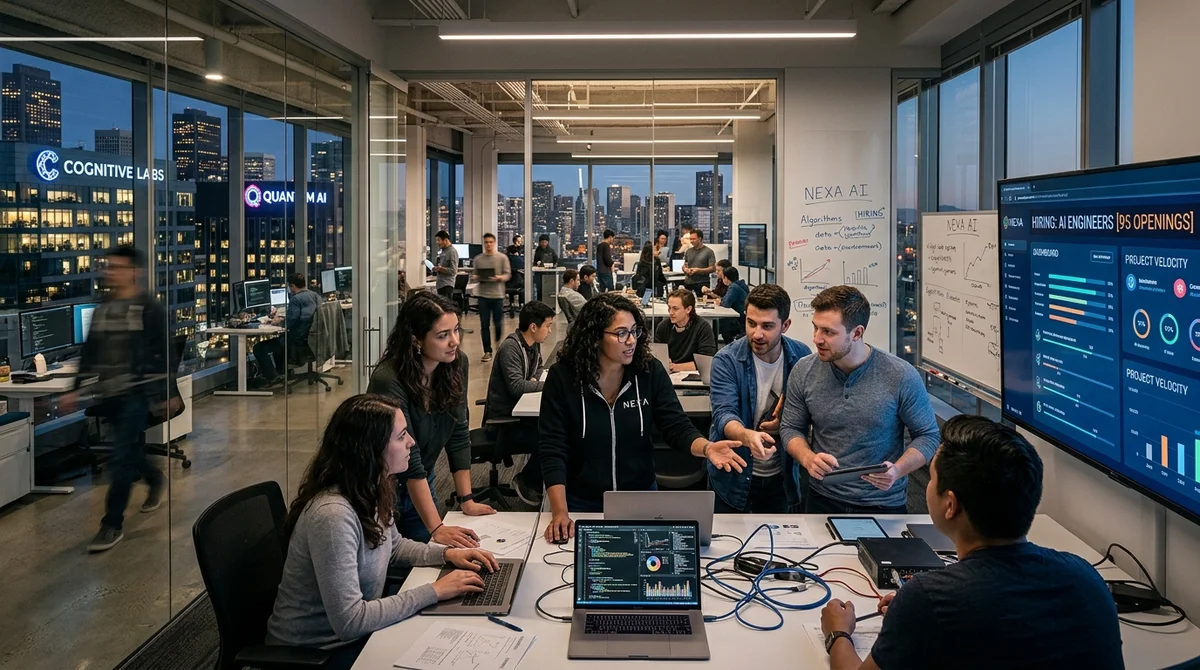
OpenAI plans to nearly double its headcount by the end of 2026. The move looks like a direct response to growing pressure from Anthropic and Google, which are competing ever harder for users, corporate budgets and top engineers.
Why the growth
According to the Financial Times, the company wants to reach the end of 2026 with almost twice as many employees. For the generative AI market, this is an important signal: the contest is no longer only between models, but between organizations that can turn research into product quickly. When a company runs a consumer service, an API platform and enterprise solutions at the same time, it needs not individual stars but large teams that can ship updates without pauses and fix weak spots fast.
Headcount growth on this scale usually means the load is rising in several directions at once. The company needs more people to train and test models, maintain infrastructure, ship new features, negotiate with enterprise clients and handle safety issues. If demand for its products grows faster than the team, the company starts losing not on the quality of its ideas, but on execution speed, quality of support and the number of parallel launches.
Pressure from competitors
The report names two main rivals outright: Anthropic and Google. That is telling. Competition in the AI market is no longer built around a single loud release, but around a long series of improvements: who ships new models faster, who is more reliable in enterprise scenarios, who has better economics and who is easier to trust with critical tasks. In such a market a brand helps, but it no longer decides everything, because customers compare not promises but real stability and development pace.
For OpenAI, this means holding its lead on several fronts at once, and each of them requires not one strong team but a whole system of engineers, researchers, product managers, sales and operations. By that logic, nearly doubling hiring looks less like a safety margin and more like an attempt to clear obvious bottlenecks before competitors increase the pressure on product, service and corporate contracts.
- speed of shipping new models and features
- product quality for mass-market users
- reliability of the API and infrastructure
- work with enterprise customers
- safety, control and internal processes
The hiring market is a separate factor. Companies at the level of OpenAI, Anthropic and Google compete not only for users but also for researchers, engineers, product managers and sales managers. Nearly doubling headcount is not a cosmetic measure but an attempt to raise the business's throughput in advance, while the market has not yet settled around two or three final winners and while the window for accelerating remains open to the fastest players.
Where the people will go
The report does not disclose the exact hiring plan, and it is important here not to speculate about the company's organizational structure. But the logic of such growth is fairly clear: the new employees are unlikely to be needed only by the research division. If the company intends to scale up sharply, it will almost certainly also strengthen its product teams, infrastructure and commercial side. Otherwise, headcount growth will not turn into growth in revenue, quality and delivery pace.
In practice this means a tighter link between research and feature launches. The market has long been waiting not simply for more powerful models, but for clear products that work reliably, integrate into workflows and have a predictable price. Getting there takes large teams in operations, reliability, support, partnerships and deployment. These are exactly the roles that often become the bottleneck when a research company quickly turns into a full platform player.
Fast hiring carries its own risks. The larger an organization becomes, the harder it is to preserve speed, decision-making culture and clarity of priorities. If people are hired faster than management is restructured, bureaucracy may eat part of the gain. But in the current phase of the market, OpenAI seems to have a different choice: under-hiring means giving competitors time to close the gap not only in models, but also in sales channels, support and service quality.
What this means
The plan to nearly double headcount shows that generative AI is entering a phase of large-scale operational competition. The winner will be not only whoever has the stronger model, but whoever hires faster, scales infrastructure, packages the technology into a product and withstands pressure from customers and competitors. For OpenAI, it is an attempt to defend its lead not with loud announcements, but with the scale of its execution.
- Nov 2, 2026Arca gives AI agents finance tasks lasting up to 10 days, but leaves the trades to humans
- Nov 2, 2026Meta's Muse assistant keeps dossiers on loved ones and gets root on Ubuntu by default
- Nov 1, 2026Local models lose to Opus and Codex: 0.21 on a MacBook versus 1.00 for Codex
- Nov 1, 2026Kimi scores 96.2% on a 1C database analytics test and emerges as a fallback if Claude access is blocked
Key Questions Answered
Why the growth?
According to the Financial Times, the company wants to reach the end of 2026 with almost twice as many employees. For the generative AI market, this is an important signal: the contest is no longer only between models, but between organizations that can turn research into product quickly. When a company runs a consumer service, an API platform and enterprise solutions at the same time, it needs not individual stars but large teams that can ship updates without pauses and fix weak spots fast. Headcount growth on this scale usually means the load is rising in several directio
What are the key details on Pressure from competitors?
The report names two main rivals outright: Anthropic and Google. That is telling. Competition in the AI market is no longer built around a single loud release, but around a long series of improvements: who ships new models faster, who is more reliable in enterprise scenarios, who has better economics and who is easier to trust with critical tasks. In such a market a brand helps, but it no longer decides everything, because customers compare not promises but real stability and development pace. For OpenAI, this means holding its lead on several fronts at once, and each of th
Where the people will go?
The report does not disclose the exact hiring plan, and it is important here not to speculate about the company's organizational structure. But the logic of such growth is fairly clear: the new employees are unlikely to be needed only by the research division. If the company intends to scale up sharply, it will almost certainly also strengthen its product teams, infrastructure and commercial side. Otherwise, headcount growth will not turn into growth in revenue, quality and delivery pace. In practice this means a tighter link between research and feature launches. The marke
Test Frontier LLMs & Autonomous Agents in One Workspace
Run Claude Opus 5.5, GPT-6, Gemini 3.1, and DeepSeek side-by-side in Nomad AI (nomadnet.ai) — unified model routing, deep research, and multimodal workflows under one subscription.
The AI world, distilled — once a week
Seven stories that actually mattered, hand-picked. No noise, no reposts, no press releases.
Done! Check your inbox for a confirmation.