A2A Protocol: How Google Is Standardizing Orchestration for Multi-Agent AI Systems
Multi-agent AI systems usually break down not because the models are "dumb," but because nothing orchestrates them. Agents lose context, spin in endless loops and burn through tokens. Google has proposed A2A, an open agent-to-agent communication protocol backed by Microsoft and IBM. Paired with AGP, it standardizes both communication and the order in which agents execute tasks, from discovery to controlled completion.
AI-processed from Habr AI; edited by Hamidun News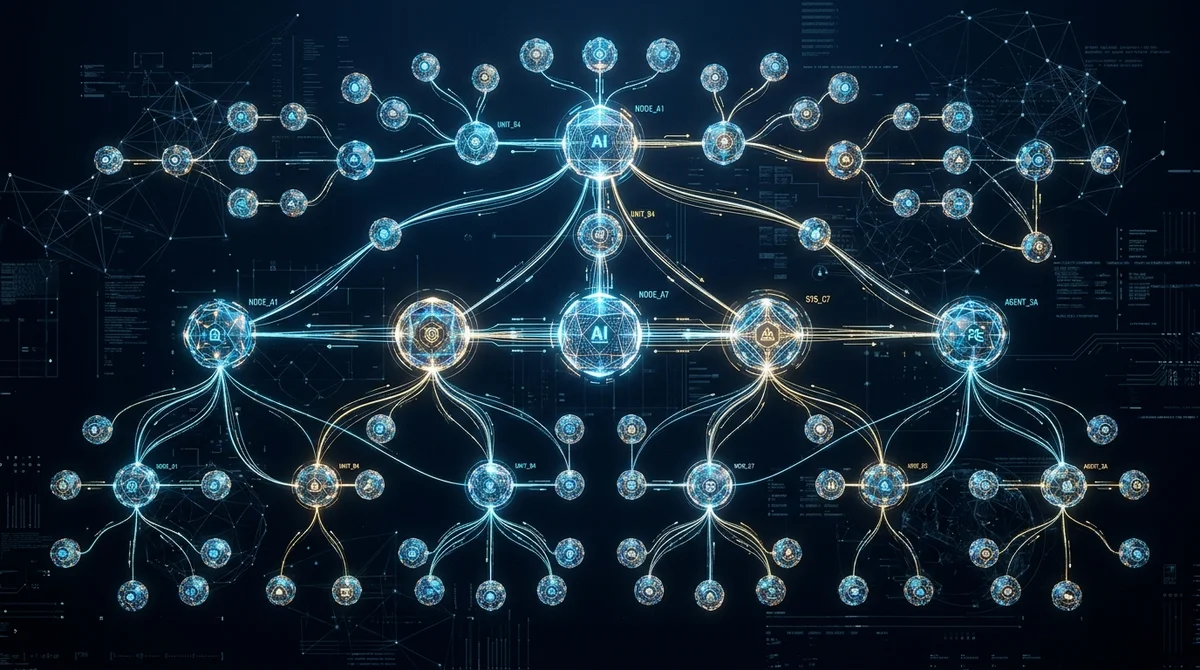
Multi-agent AI systems often break down not because the models are "dumb," but because they lack proper orchestration. Google's A2A protocol and its AGP extension try to fix this at the standard level rather than with workarounds.
Why agents break
Multi-agent systems are tempting: one agent analyzes data, a second writes code, a third checks the results, all in parallel and efficiently. But once there are more than two or three agents, chaos sets in. Developers describe the same failures again and again: agents lose task context when handing work to each other, fall into endless negotiation loops and burn their token budget with nothing to show for it. Meanwhile, the orchestrator does not know which step the system is stuck on or whether it should intervene.
The root of the problem is not LLM quality but missing infrastructure:
- No standard for declaring an agent's capabilities
- No unified format for passing tasks between agents
- No mechanism for signaling execution status
- No protocol for error handling and resuming tasks
Every team solved this in its own way, and spent weeks "gluing" agents together instead of building real logic.
How the A2A protocol works
A2A (Agent-to-Agent) is an open protocol from Google, backed by Microsoft and IBM. It aims to standardize agent interaction at three levels: discovery, communication and state management.
The central concept is the Agent Card. Each agent publishes a card describing its capabilities: which tasks it accepts, in what format, and what it returns. The orchestrator reads these cards and routes tasks without hardcoding. If an agent's competencies change, it updates its card, and the orchestrator picks up the change immediately.
Interaction runs over standard HTTP requests with a JSON body. The protocol supports both synchronous calls and asynchronous event streams, so an agent can report progress in real time instead of only delivering a final answer.
"A2A takes the job of inventing a protocol off developers' plates.
Now they focus on what agents do, not on how they communicate."
AGP: order instead of chaos
A2A handles communication but does not control execution order. AGP (Agent Gateway Protocol) adds exactly that layer of control: who speaks, when and in what sequence.
AGP introduces managed sessions and message queues. This eliminates race conditions, where two agents try to modify the same resource or answer the same request at the same time. With AGP, an agent must explicitly signal that its part is finished before the orchestrator hands the task to the next one.
Together, A2A and AGP cover the full lifecycle of multi-agent interaction: from discovering the right agent to controlled completion with a predictable final state. Chaotic multi-agent systems turn into managed pipelines.
What this means
Google, Microsoft and IBM are already building A2A into their AI platforms, which moves the protocol from "experimental" to an "emerging industry standard." For developers building multi-agent systems today, getting to know A2A is not about being ahead of the curve but about basic architectural hygiene. It is better to lay the right foundation now than to rewrite orchestration after the agents once again "loop and burn the budget."
- Nov 2, 2026Karpathy builds a YouTube clone with 6454 videos from Hacker News recommendations in two hours
- Nov 2, 2026Karpathy used Claude to build HackerTube from 6,454 videos recommended on Hacker News
- Nov 2, 2026Anthropic needs to grow revenue 32% a year to cover $850 billion in contracts
- Nov 2, 2026Bun creator uses Claude Code to port 750K lines from Zig to Rust in 11 days
Key Questions Answered
Why agents break?
Multi-agent systems are tempting: one agent analyzes data, a second writes code, a third checks the results, all in parallel and efficiently. But once there are more than two or three agents, chaos sets in. Developers describe the same failures again and again: agents lose task context when handing work to each other, fall into endless negotiation loops and burn their token budget with nothing to show for it. Meanwhile, the orchestrator does not know which step the system is stuck on or whether it should intervene. The root of the problem is not LLM quality but missing infr
How the A2A protocol works?
A2A (Agent-to-Agent) is an open protocol from Google, backed by Microsoft and IBM. It aims to standardize agent interaction at three levels: discovery, communication and state management. The central concept is the Agent Card. Each agent publishes a card describing its capabilities: which tasks it accepts, in what format, and what it returns. The orchestrator reads these cards and routes tasks without hardcoding. If an agent's competencies change, it updates its card, and the orchestrator picks up the change immediately. Interaction runs over standard HTTP requests with a J
What are the key details on AGP: order instead of chaos?
A2A handles communication but does not control execution order. AGP (Agent Gateway Protocol) adds exactly that layer of control: who speaks, when and in what sequence. AGP introduces managed sessions and message queues. This eliminates race conditions, where two agents try to modify the same resource or answer the same request at the same time. With AGP, an agent must explicitly signal that its part is finished before the orchestrator hands the task to the next one. Together, A2A and AGP cover the full lifecycle of multi-agent interaction: from discovering the right agent t
Test Frontier LLMs & Autonomous Agents in One Workspace
Run Claude Opus 5.5, GPT-6, Gemini 3.1, and DeepSeek side-by-side in Nomad AI (nomadnet.ai) — unified model routing, deep research, and multimodal workflows under one subscription.
The AI world, distilled — once a week
Seven stories that actually mattered, hand-picked. No noise, no reposts, no press releases.
Done! Check your inbox for a confirmation.