DoorDash invested in Also as Rivian spin-off topped $1 billion valuation
Also, a Rivian spin-off in the small EV segment, raised $200 million in Series C and reached a valuation of over $1 billion. DoorDash not only invested in the round alongside Greenoaks and Prysm, but also signed a multi-year agreement to launch autonomous delivery. DoorDash co-founder Stanley Tang will join Also's board as an observer.
AI-processed from TNW; edited by Hamidun News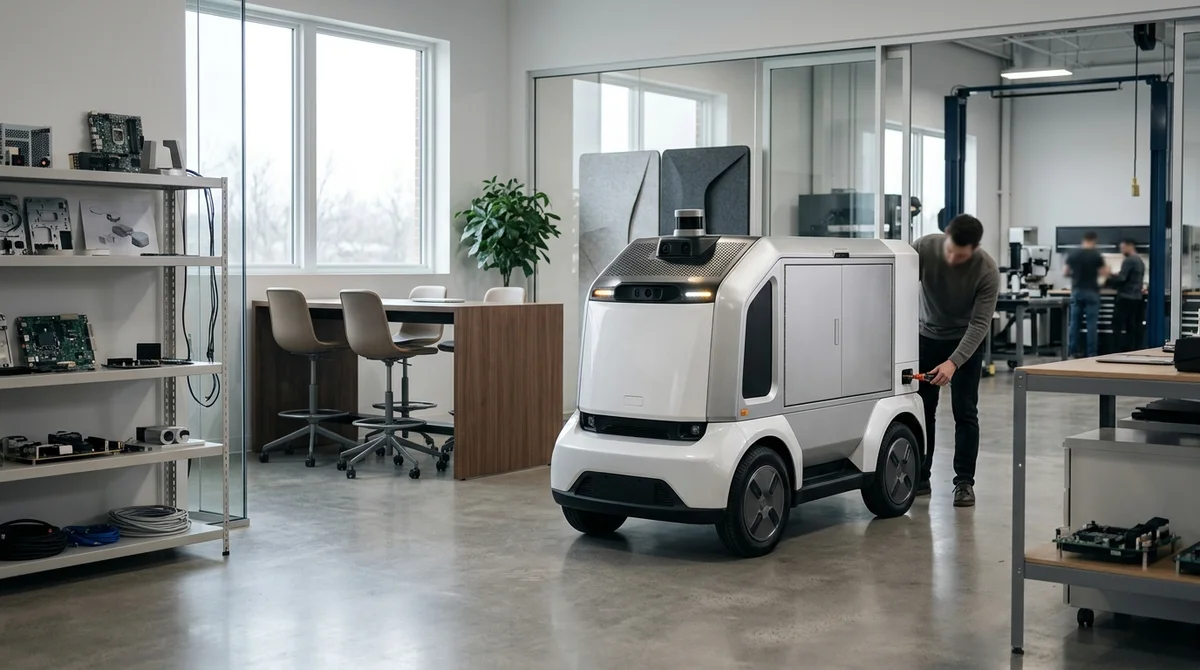
Also, Rivian's spinoff in the small electric vehicle segment, raised $200 million in Series C funding and signed a multi-year agreement with DoorDash. The deal values the company above $1 billion and immediately provides it with a major commercial partner for autonomous delivery.
How the deal works
Greenoaks led the round, joined by Prysm Capital, while DoorDash acted not just as a financial investor but as a strategic partner. In parallel, the companies signed a multi-year commercial agreement: they plan to jointly develop and accelerate the market launch of autonomous delivery based on specially designed small EVs. Also's total raised funding now amounts to $305 million. DoorDash co-founder and DoorDash Labs head Stanley Tang will join Also as an observer on its board of directors, while Rivian will retain a significant minority stake in the business.
"Small autonomous EVs are optimal for zones at the intersection of roads, bike lanes, and roadside spaces," said
Also president Chris Yu.
What vehicles Also makes
Also's thesis is fairly straightforward: the last mile in cities is poorly suited for full-size vans and universal autonomous platforms. The company builds vehicles for dense urban environments with narrow streets, curbs, bike lanes, and short routes, where maneuverability, operating costs, and the ability to transport cargo without excess weight are critical. That's why Also builds its own platform and combines hardware, software, batteries, and manufacturing expertise within one company rather than trying to adapt someone else's vehicle for a new task.
- TM-B — flagship e-bike priced at around $3,500 with a modular frame and software-controlled transmission
- TM-Q Commercial — four-wheeled cargo EV with pedal assist, designed for logistics and delivery
- TM-Q Consumer — compact version for families and everyday trips as a car alternative
- Unified platform — common technological base for different form factors, from consumer transport to commercial
Also plans to start shipping its products in the US in 2026, then expand to international markets. Previously, the company had announced a partnership with Amazon for customized cargo quads with pedal assist, but the DoorDash partnership became the first major signal that this platform will be used not only for electric delivery but for autonomous delivery at industrial scale.
Why DoorDash came
For DoorDash, this deal makes sense. The last mile is not an abstract AI problem, but an expensive physical operation where you need to simultaneously reduce costs, maintain speed, and preserve service quality. The company is already developing DoorDash Labs and testing its own autonomous solutions like the Dot robot, which can travel on roads, bike lanes, and sidewalks.
The partnership with Also gives it another approach: instead of adapting a regular vehicle for delivery, build transport purpose-built for dense urban environments. Meanwhile, DoorDash brings Also something most delivery startups lack — a real stream of orders and a clear use case scenario. Over 30% of DoorDash's monthly active users in the US order not just restaurant food but also items from grocery and retail.
This means the platform has strong incentive to cheapen delivery on short routes and test autonomy where volume already exists, not in sterile pilots without real demand.
What this means
Also's story matters not just as another $200 million funding round. The autonomous delivery market is gradually shifting from flashy experiments with large vehicles to narrower, more grounded scenarios: short routes, small EVs, bike lanes, courtyards, and urban neighborhoods. If DoorDash and Also can scale this model to mass operations, this segment could become one of the first truly functioning autonomous vehicle markets, rather than endless technology demonstrations.
- Oct 28, 2026Keystone removes the model name from code: open-source LLM gateway adds 0.64 ms
- Oct 28, 2026Wired Tested 6 AI Agents in a Day: Dots Leads, Gemini Spark Fails at Lunch
- Oct 28, 2026Bayer Launches Multi-Agent Engine on AgentCore: 80% of Questions Handled Without Engineers
- Oct 28, 2026Anthropic files S-1 for IPO at $2 trillion valuation: 85% margin, profitable Q2
Key Questions Answered
How the deal works?
Greenoaks led the round, joined by Prysm Capital, while DoorDash acted not just as a financial investor but as a strategic partner. In parallel, the companies signed a multi-year commercial agreement: they plan to jointly develop and accelerate the market launch of autonomous delivery based on specially designed small EVs. Also's total raised funding now amounts to $305 million. DoorDash co-founder and DoorDash Labs head Stanley Tang will join Also as an observer on its board of directors, while Rivian will retain a significant minority stake in the business. "Small autonom
What vehicles Also makes?
Also's thesis is fairly straightforward: the last mile in cities is poorly suited for full-size vans and universal autonomous platforms. The company builds vehicles for dense urban environments with narrow streets, curbs, bike lanes, and short routes, where maneuverability, operating costs, and the ability to transport cargo without excess weight are critical. That's why Also builds its own platform and combines hardware, software, batteries, and manufacturing expertise within one company rather than trying to adapt someone else's vehicle for a new task. TM-B — flagship e-b
Why DoorDash came?
For DoorDash, this deal makes sense. The last mile is not an abstract AI problem, but an expensive physical operation where you need to simultaneously reduce costs, maintain speed, and preserve service quality. The company is already developing DoorDash Labs and testing its own autonomous solutions like the Dot robot, which can travel on roads, bike lanes, and sidewalks. The partnership with Also gives it another approach: instead of adapting a regular vehicle for delivery, build transport purpose-built for dense urban environments. Meanwhile, DoorDash brings Also something
Delegate Deep Research, Coding & Multi-Step Workflows to Nomad Agent
Deploy autonomous task execution with Nomad Agent (agent.nomadnet.ai) — automated web research, data synthesis, code generation, and MCP tool orchestration.
The AI world, distilled — once a week
Seven stories that actually mattered, hand-picked. No noise, no reposts, no press releases.
Done! Check your inbox for a confirmation.