Vibe coding under the microscope: what static analysis finds in AI projects
The PVS-Studio team has started analyzing vibe-coded projects — the very ones that are supposed to “change the world.” The static analyzer is finding null pointer dereferences, dead code, and logical contradictions. The bugs do not show up in demos, but they break the product in production. The series of reviews will continue: the team wants to understand which defect classes recur systematically.
AI-processed from Habr AI; edited by Hamidun News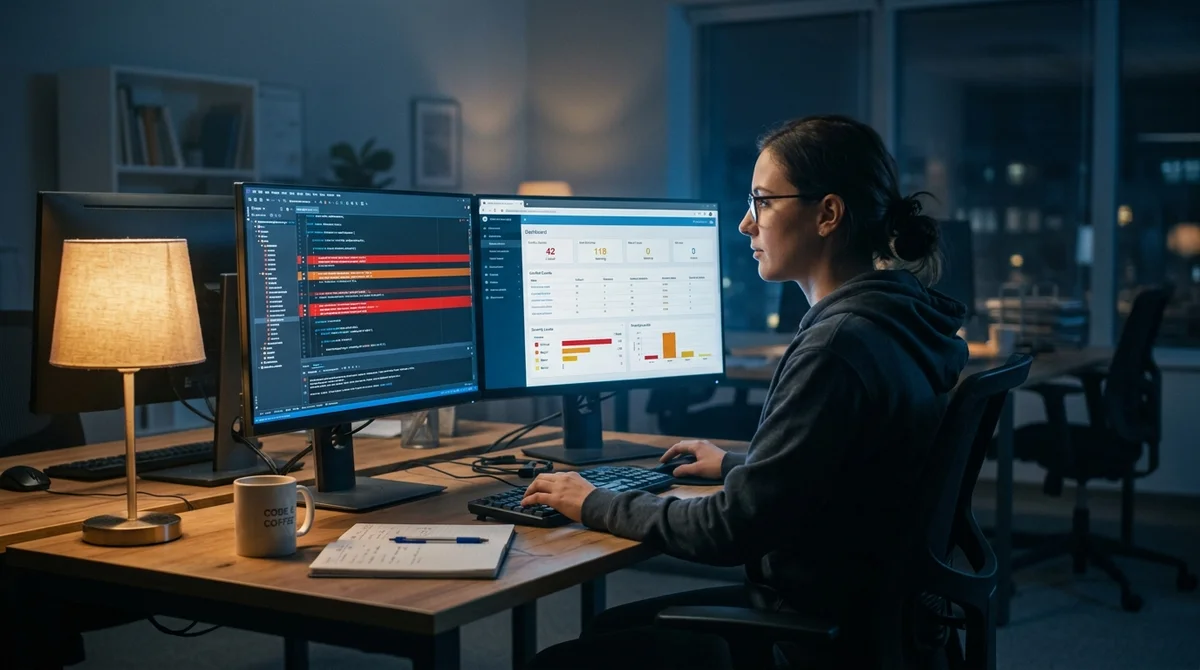
Vibe coding is a trend where developers use AI to generate code without deeply understanding implementation details. The PVS-Studio team began systematically analyzing such projects using static analysis tools — and the first results proved surprisingly interesting.
What is Vibe Code
The term 'vibe coding' was popularized by Andrej Karpathy in early 2025. He described an approach where a developer states an intention, AI writes the code — and the programmer accepts the result without delving into implementation details. The speed of MVP creation with this approach increased dramatically: projects that used to take months now appear in weekends.
It was precisely such 'revolutionary' repositories — with bold claims and rapid MVPs — that caught PVS-Studio's attention. The team began systematically selecting public vibe-coded projects and running them through a static analyzer. The problem is that generation speed and code quality are different things.
AI models are good at reproducing patterns from training data, but don't understand business logic, edge cases, and invariants of a specific project. What works in a demo doesn't necessarily work under load.
What the Analyzer Finds
PVS-Studio is one of the oldest static analysis tools for C, C++, C#, and Java. Typical findings in vibe-coded projects form a predictable pattern:
- Null pointer dereference — code assumes an object always exists without checking edge cases
- Unused variables and dead code — AI generates 'backup' branches of logic that never execute
- Comparing a variable with itself — a classic typo in conditional statements
- Logical contradictions — a condition that either never executes or is always true
- Resource leaks — open file descriptors and network connections without closure
Notably: many of these errors don't manifest on the 'happy path' — which is precisely why vibe-coded projects look functional in demos but break at the first non-standard situation in production.
Why This Is a Systemic Problem
AI assistants are trained on code from GitHub — and GitHub contains a huge amount of code of varying quality. Models reproduce established patterns but lack a mechanism to verify correctness in a specific context: they don't know about business invariants, expected behavior under load, or security requirements.
'Vibe coding is when you completely surrender to AI,' —
Karpathy himself described the approach.
This doesn't mean the method is useless. Vibe coding works great for prototypes, throwaway scripts, and UI templates. But when a 'startup that will change the world' is built on such code, a static analyzer turns from an option into a necessity. An additional risk: a 'viber' developer often doesn't understand the generated code deeply enough to adequately assess the analyzer's findings. The warning exists, but what to do with it is unclear. This creates an illusion of control: run the analysis, get a list, ignore it — and move on.
What This Means
Vibe coding lowered the barrier to entry for development — and that's good. But it didn't automatically raise the bar for code quality. Static analysis remains a filter that separates 'it runs on my laptop' from 'ready for production'. Teams that take their vibe-coded projects seriously should add CI with an analyzer as early as possible — before technical debt becomes the main product.
- Oct 28, 2026AdaPRA lifts Qwen 80B by 24.5 points on data science leaderboards
- Oct 28, 2026Anthropic reveals how it builds Claude with Claude: the brain separate from the hands
- Oct 28, 2026Anthropic Turns Claude Code Into a Platform: Claude Mods Flip the Agent Harness
- Oct 28, 2026Security engineer builds an MCP server in 7 days that spooks an AI agent with vulnerabilities
Key Questions Answered
What is Vibe Code?
The term 'vibe coding' was popularized by Andrej Karpathy in early 2025. He described an approach where a developer states an intention, AI writes the code — and the programmer accepts the result without delving into implementation details. The speed of MVP creation with this approach increased dramatically: projects that used to take months now appear in weekends. It was precisely such 'revolutionary' repositories — with bold claims and rapid MVPs — that caught PVS-Studio's attention. The team began systematically selecting public vibe-coded projects and running them throu
What the Analyzer Finds?
PVS-Studio is one of the oldest static analysis tools for C, C++, C#, and Java. Typical findings in vibe-coded projects form a predictable pattern: Null pointer dereference — code assumes an object always exists without checking edge cases Unused variables and dead code — AI generates 'backup' branches of logic that never execute Comparing a variable with itself — a classic typo in conditional statements Logical contradictions — a condition that either never executes or is always true Resource leaks — open file descriptors and network connections without closure Notably: ma
Why This Is a Systemic Problem?
AI assistants are trained on code from GitHub — and GitHub contains a huge amount of code of varying quality. Models reproduce established patterns but lack a mechanism to verify correctness in a specific context: they don't know about business invariants, expected behavior under load, or security requirements. 'Vibe coding is when you completely surrender to AI,' — Karpathy himself described the approach. This doesn't mean the method is useless. Vibe coding works great for prototypes, throwaway scripts, and UI templates. But when a 'startup that will change the world' is b
Build & Ship Production AI Agents Without Boilerplate Code
Start your free 72-hour trial at Hamidun Academy (academy.hamidun.com) — interactive lessons on Claude Code & Cursor, live Tech Radar, and production agent templates.
The AI world, distilled — once a week
Seven stories that actually mattered, hand-picked. No noise, no reposts, no press releases.
Done! Check your inbox for a confirmation.