Genesis AI unveils GENE-26.5, a model for fully functional robots
Genesis AI, a startup backed by Khosla Ventures, unveiled its first model, GENE-26.5, for advancing robotics. The company raised $105 million to develop foundational AI for autonomous robots. In a public demonstration, it showed robotic arms with highly precise control performing complex manipulation tasks: grasping objects of different shapes, handling various materials, and carrying out industrial operations.
AI-processed from TechCrunch; edited by Hamidun News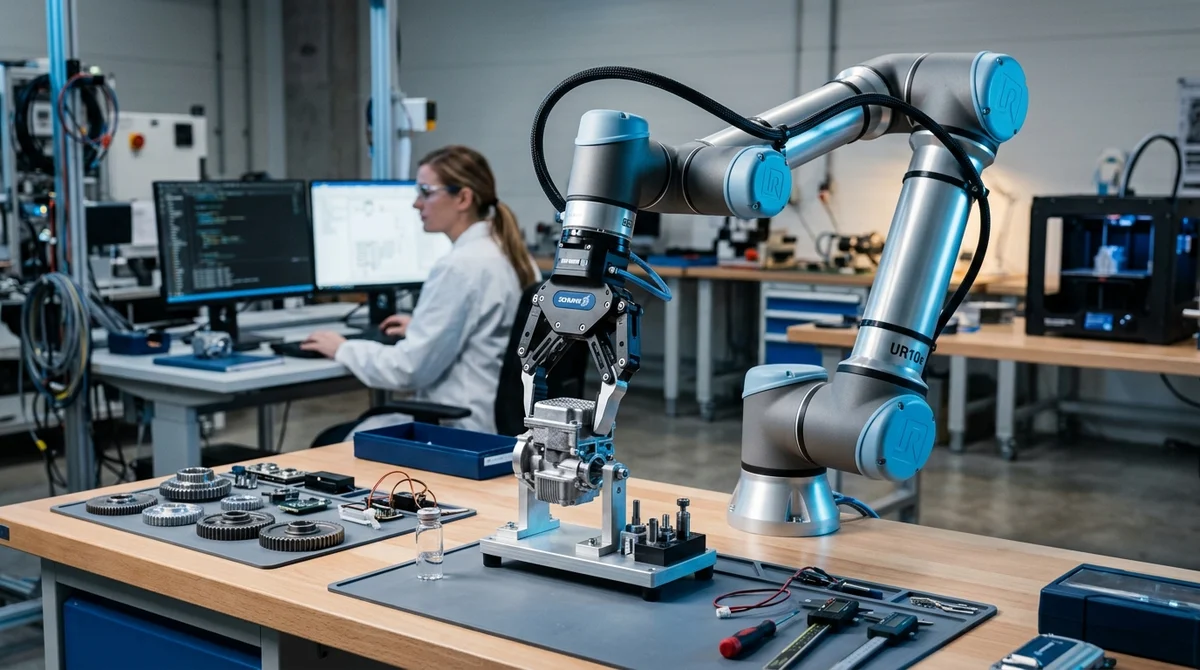
Genesis AI, a startup that received $105 million to develop foundational AI for robotics, unveiled its first model, GENE-26.5. The company not only presented the model as a research paper but also demonstrated working robots with robotic arms performing complex manipulation tasks.
How Genesis AI Came About
The startup received $105 million in funding to create foundational artificial intelligence models specifically for robotics. The idea is straightforward: general models like GPT work great for text, but robots need models trained on perceiving the world in three dimensions, controlling motors, and planning movements. Regular neural networks for text simply don't work for managing a robotic arm or mobile robot.
Investors from Khosla Ventures and other funds believe that a foundational model for robotics can become what GPT became for text and multimodal applications. Instead of developers writing all robot control logic from scratch, they'll be able to use the ready-made GENE model and adapt it for specific tasks. This should significantly reduce development time and robotics implementation costs.
GENE-26.5: The First Model
After years of closed development, Genesis finally showed results. The GENE-26.5 model was trained on a massive dataset of robot movements, grasps, manipulations, and movement trajectories. It can predict and generate how a robot should move to complete a given task, even if that task differs slightly from the training data. This isn't just prediction—it's the generation of actual control commands, the so-called action tokens, which are sent directly to the robot's motors. This approach allows the robot to work almost like a living creature—not following a rigid program, but adapting to the surrounding environment and the type of objects it needs to work with.
Demonstrations and Capabilities
At the public demonstration, the company presented robotic arms performing manipulation tasks with high precision and smoothness:
- Grasping objects of different shapes, sizes, and weights with high precision
- Manipulating fragile objects without damage
- Working with different materials and surface textures
- Performing multi-step production tasks with coordination
- Adapting to new scenarios and task variations without retraining
This is Genesis's first public demonstration, a transition from closed laboratory development to open demonstration of real capabilities. Video materials show smooth and natural hand movements. Even small failures look organic and realistic rather than edited or staged, creating an impression of developer honesty.
Why This Matters
Robotics stands on the brink of a global revolution, yet truly autonomous robots capable of working in unstructured conditions and performing complex physical tasks remain rare outside laboratories. Most industrial robots on assembly lines perform the same task a million times in identical conditions. GENE-26.5 could change this situation, becoming the foundation for more universal and adaptive robots. If the model truly works as well as shown in the demonstration materials, it will accelerate the development of industrial robotics, logistics, warehouse automation, and manufacturing. Companies will be able to deploy robots at their facilities faster without spending years developing custom control logic for each specific robot.
What This Means
Robotics is moving from the phase of experiments and prototypes into the phase of real industrial products. Genesis AI, with serious funding and a working model, is becoming a contender for the role of creator of foundational AI for robots, much like OpenAI created an ecosystem around GPT and changed the trajectory of AI development.
- Oct 28, 2026Keystone removes the model name from code: open-source LLM gateway adds 0.64 ms
- Oct 28, 2026Wired Tested 6 AI Agents in a Day: Dots Leads, Gemini Spark Fails at Lunch
- Oct 28, 2026Anthropic Turns Claude Code Into a Platform: Claude Mods Flip the Agent Harness
- Oct 28, 2026Liquid AI releases LFM2.5-24B-A2B: an agent model with 2B active parameters
Key Questions Answered
How Genesis AI Came About?
The startup received $105 million in funding to create foundational artificial intelligence models specifically for robotics. The idea is straightforward: general models like GPT work great for text, but robots need models trained on perceiving the world in three dimensions, controlling motors, and planning movements. Regular neural networks for text simply don't work for managing a robotic arm or mobile robot. Investors from Khosla Ventures and other funds believe that a foundational model for robotics can become what GPT became for text and multimodal applications. Instea
What are the key details on GENE-26.5: The First Model?
After years of closed development, Genesis finally showed results. The GENE-26.5 model was trained on a massive dataset of robot movements, grasps, manipulations, and movement trajectories. It can predict and generate how a robot should move to complete a given task, even if that task differs slightly from the training data. This isn't just prediction—it's the generation of actual control commands, the so-called action tokens, which are sent directly to the robot's motors. This approach allows the robot to work almost like a living creature—not following a rigid program, bu
What are the key details on Demonstrations and Capabilities?
At the public demonstration, the company presented robotic arms performing manipulation tasks with high precision and smoothness: Grasping objects of different shapes, sizes, and weights with high precision Manipulating fragile objects without damage Working with different materials and surface textures Performing multi-step production tasks with coordination Adapting to new scenarios and task variations without retraining This is Genesis's first public demonstration, a transition from closed laboratory development to open demonstration of real capabilities. Video materials
Build & Ship Production AI Agents Without Boilerplate Code
Start your free 72-hour trial at Hamidun Academy (academy.hamidun.com) — interactive lessons on Claude Code & Cursor, live Tech Radar, and production agent templates.
The AI world, distilled — once a week
Seven stories that actually mattered, hand-picked. No noise, no reposts, no press releases.
Done! Check your inbox for a confirmation.