Stripe's Collison on the e-commerce shake-up: AI agents will shop in place of people
AI agents will soon do the shopping for users. Stripe's John Collison explains why keyword search in e-commerce is yesterday's technology, and how brands will have to adapt to appeal to machines. In his view, the agent will weigh context such as your style, budget and deadline, and will often choose a product with no human involvement at all. Brands will have to describe products for algorithms rather than people, and those who adapt first stand to gain a major advantage.
AI-processed from Bloomberg Tech; edited by Hamidun News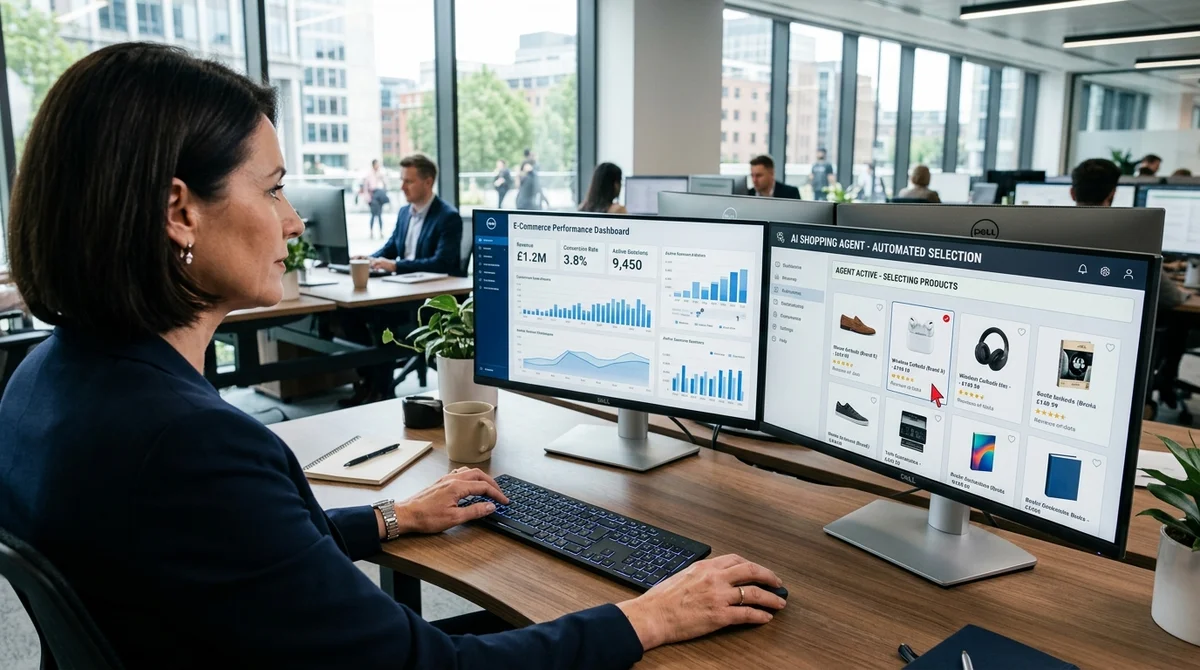
The internet was built for shopping. But where e-commerce once ran on advertising, algorithmic recommendations and SEO, AI agents are now rewriting the rules. Soon machines will shop in place of people, and that will turn online retail into a very different ecosystem. This comes from John Collison, co-founder of the payments platform Stripe, which has watched every transformation of e-commerce from the inside over the past ten years.
Keyword search is yesterday's technology
One of Collison's central ideas sounds radical: keyword search as a way to find a product is a ridiculous mechanism, a relic of the past. When you type "red wool sweater XL" into a search bar, you are doing exactly what you would have done in 2005. AI agents will work in a completely different way. An agent will analyze context: your clothing style, your budget, when you need the item, and for what occasion. On that basis it will pick the best option, often with no human involvement at all.
This already happens on Netflix or Spotify, where the service picks a film or a track without your help. Soon the same logic will take over all of e-commerce.
Brands are preparing to talk to machines
The harshest change: if an agent is your main buyer, you have to persuade it not with attractive packaging or an emotional brand story, but with logic and data. Brands and sellers will have to describe products not for a person but for an algorithm. This resembles SEO, but it is an order of magnitude harder and more critical.
Marketers used to write for a person who wanted a nice picture and a touching story. Now a product has to be described so that a machine understands its characteristics, compares it with alternatives and picks that very product.
"Brands are used to appealing to human taste and emotion.
Now they need to learn to appeal to machines," Collison said in an interview with Bloomberg.
Can a machine copy taste?
The key question: can an AI agent really copy human taste? Collison believes it can, but only if the agent is loaded with the right data about the user's preferences. If you always wear minimalist clothes in muted colors, the agent will learn that and pick products in that style, even when a new release is colorful.
But this raises further questions:
- How will brands compete if the judge is an algorithm?
- What happens to marketing when a machine does the choosing?
- Will brands have a chance to surprise or seduce the buyer?
What this means
This is not just a technological shift but a complete upheaval in online retail. E-commerce will stop being about how to show a product to a person more beautifully and vividly, and will become about how to describe it correctly so that a machine picks it for its owner. Companies that adapt first will gain a huge advantage. Those that wait risk being left on the sidelines of this transformation.
- Nov 2, 2026Karpathy builds a YouTube clone with 6454 videos from Hacker News recommendations in two hours
- Nov 2, 2026Karpathy used Claude to build HackerTube from 6,454 videos recommended on Hacker News
- Nov 2, 2026Arca gives AI agents finance tasks lasting up to 10 days, but leaves the trades to humans
- Nov 2, 2026DeepSeek open-sources Super-agent prototype: p95 task completion time of 15.7 minutes vs. 29.5
Key Questions Answered
Can a machine copy taste?
The key question: can an AI agent really copy human taste? Collison believes it can, but only if the agent is loaded with the right data about the user's preferences. If you always wear minimalist clothes in muted colors, the agent will learn that and pick products in that style, even when a new release is colorful. But this raises further questions: How will brands compete if the judge is an algorithm? What happens to marketing when a machine does the choosing? Will brands have a chance to surprise or seduce the buyer?
What are the key details on Keyword search is yesterday's technology?
One of Collison's central ideas sounds radical: keyword search as a way to find a product is a ridiculous mechanism, a relic of the past. When you type "red wool sweater XL" into a search bar, you are doing exactly what you would have done in 2005. AI agents will work in a completely different way. An agent will analyze context: your clothing style, your budget, when you need the item, and for what occasion. On that basis it will pick the best option, often with no human involvement at all. This already happens on Netflix or Spotify, where the service picks a film or a trac
What are the key details on Brands are preparing to talk to machines?
The harshest change: if an agent is your main buyer, you have to persuade it not with attractive packaging or an emotional brand story, but with logic and data. Brands and sellers will have to describe products not for a person but for an algorithm. This resembles SEO, but it is an order of magnitude harder and more critical. Marketers used to write for a person who wanted a nice picture and a touching story. Now a product has to be described so that a machine understands its characteristics, compares it with alternatives and picks that very product. "Brands are used to app
Test Frontier LLMs & Autonomous Agents in One Workspace
Run Claude Opus 5.5, GPT-6, Gemini 3.1, and DeepSeek side-by-side in Nomad AI (nomadnet.ai) — unified model routing, deep research, and multimodal workflows under one subscription.
The AI world, distilled — once a week
Seven stories that actually mattered, hand-picked. No noise, no reposts, no press releases.
Done! Check your inbox for a confirmation.