MAI developed a robot for automatic defect control in manufacturing
The Moscow Aviation Institute developed a robotic system for automatic quality control in manufacturing. A machine vision system detects defective parts, and a robotic arm automatically removes them directly from the conveyor. The entire process takes place without human involvement. The development is intended for small and medium-sized businesses and stands out for its affordable cost.
AI-processed from CNews AI; edited by Hamidun News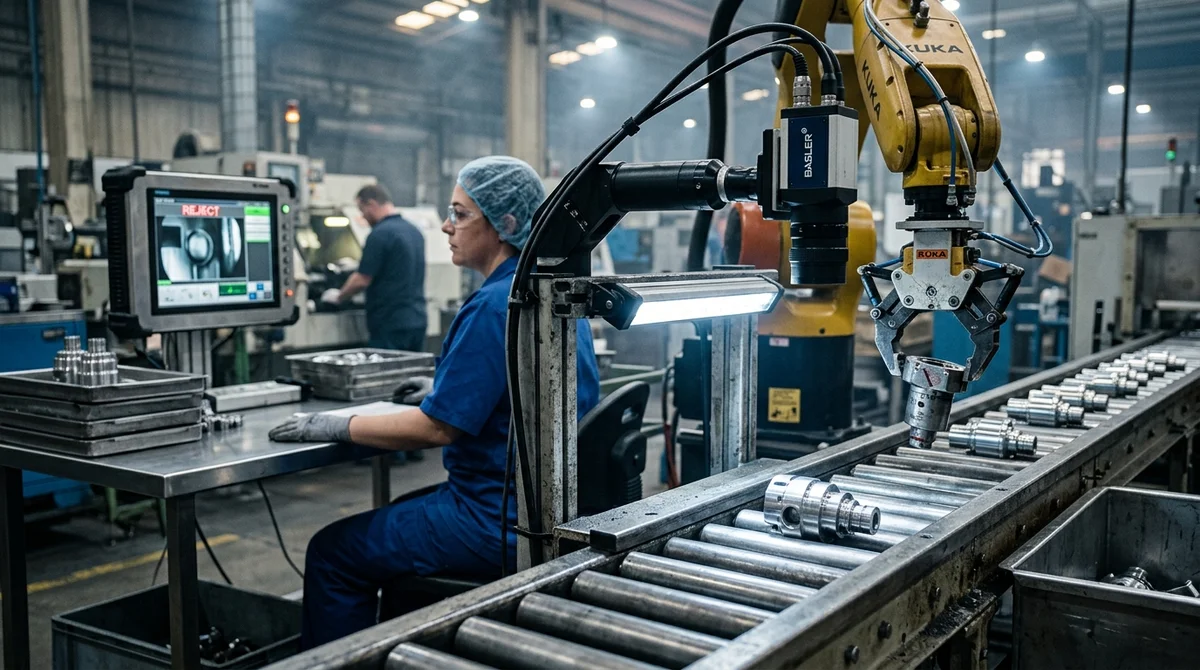
Moscow Aviation Institute created a robotic system that fully automates quality control of parts in manufacturing. The system independently detects defects and removes them from the conveyor without human intervention.
How the system works
The complex consists of two key components. The first is a technical vision system based on computer vision and neural networks, which analyzes parts directly on the conveyor. It scans each element in real time and identifies the presence of defects, including scratches, misalignments, deformations, incorrect dimensions, and other deviations from normal.
The second component is a robot manipulator that receives a signal from the visual system and physically removes the defective part from the production line. The work is fully automated. When the camera detects a defect, the manipulator precisely grips and rejects the part, sending it to a scrap container.
The process is continuous and does not require stopping the conveyor for quality inspection. This significantly speeds up production, eliminates the human factor in quality control, and reduces the likelihood that a defective product will reach the next processing stage or the customer.
Features of the development
The system has a number of advantages for Russian small and medium-sized businesses:
- Fully automated operation without human involvement, works 24/7
- High precision in defect detection — minimal missed defects
- Quick integration with existing conveyor systems
- Affordable cost compared to foreign analogues
- Simple maintenance and quick adaptation to different part types
The system is trainable — it can be trained on parts of any shape and size in a matter of hours. This makes the complex a universal tool for diverse production — from automotive components to electronics and household appliances. The system's power consumption is minimal, which significantly reduces its maintenance costs.
Application in real production
MAI positions the development as a solution for small and medium-sized enterprises that are looking for ways to increase productivity without massive investments. At many Russian factories, quality control is still performed manually, which reduces processing speed and requires significant labor costs. One inspector cannot check all parts at high conveyor speed, which inevitably leads to missing defects. People get tired, get distracted, make mistakes. The robotic system can completely replace this routine work and work without breaks throughout the entire shift without loss of accuracy. This is especially critical for production where even one missed defect can damage a company's reputation.
Accessibility and development
The affordable cost of the solution is a key factor in its implementation at Russian enterprises. Many SMBs cannot afford expensive quality control systems from foreign manufacturers, which cost hundreds of thousands of dollars. MAI's Russian-made solution can close this gap and make automation of quality control accessible to a wider range of domestic enterprises. This could stimulate a wave of automation implementation in manufacturing and create demand for other robotic solutions for small businesses.
What this means
The emergence of an affordable domestic automatic quality control system signals the development of the Russian robotics sector. This could be a turning point for small and medium-sized production that is ready to invest in automation but cannot afford imported solutions. If the development proves its effectiveness in real production environments, it could become a prototype for an entire line of domestic robots for quality control, maintenance, and logistics.
Key Questions Answered
How the system works?
The complex consists of two key components. The first is a technical vision system based on computer vision and neural networks, which analyzes parts directly on the conveyor. It scans each element in real time and identifies the presence of defects, including scratches, misalignments, deformations, incorrect dimensions, and other deviations from normal. The second component is a robot manipulator that receives a signal from the visual system and physically removes the defective part from the production line. The work is fully automated. When the camera detects a defect, th
What are the key details on Features of the development?
The system has a number of advantages for Russian small and medium-sized businesses: Fully automated operation without human involvement, works 24/7 High precision in defect detection — minimal missed defects Quick integration with existing conveyor systems Affordable cost compared to foreign analogues Simple maintenance and quick adaptation to different part types The system is trainable — it can be trained on parts of any shape and size in a matter of hours. This makes the complex a universal tool for diverse production — from automotive components to electronics and hous
What are the key details on Application in real production?
MAI positions the development as a solution for small and medium-sized enterprises that are looking for ways to increase productivity without massive investments. At many Russian factories, quality control is still performed manually, which reduces processing speed and requires significant labor costs. One inspector cannot check all parts at high conveyor speed, which inevitably leads to missing defects. People get tired, get distracted, make mistakes. The robotic system can completely replace this routine work and work without breaks throughout the entire shift without los
Build & Ship Production AI Agents Without Boilerplate Code
Start your free 72-hour trial at Hamidun Academy (academy.hamidun.com) — interactive lessons on Claude Code & Cursor, live Tech Radar, and production agent templates.
The AI world, distilled — once a week
Seven stories that actually mattered, hand-picked. No noise, no reposts, no press releases.
Done! Check your inbox for a confirmation.