Apple delays Vision Pro 2 to 2028: betting on glasses and AI devices
Apple has delayed the Vision Pro successor to 2028 or later. The company has reassigned most of its AR team to developing smart glasses and wearable AI devices, pointing to a strategic shift. The current Vision Pro generation costs $3499 but remains a niche product.
AI-processed from 3DNews AI; edited by Hamidun News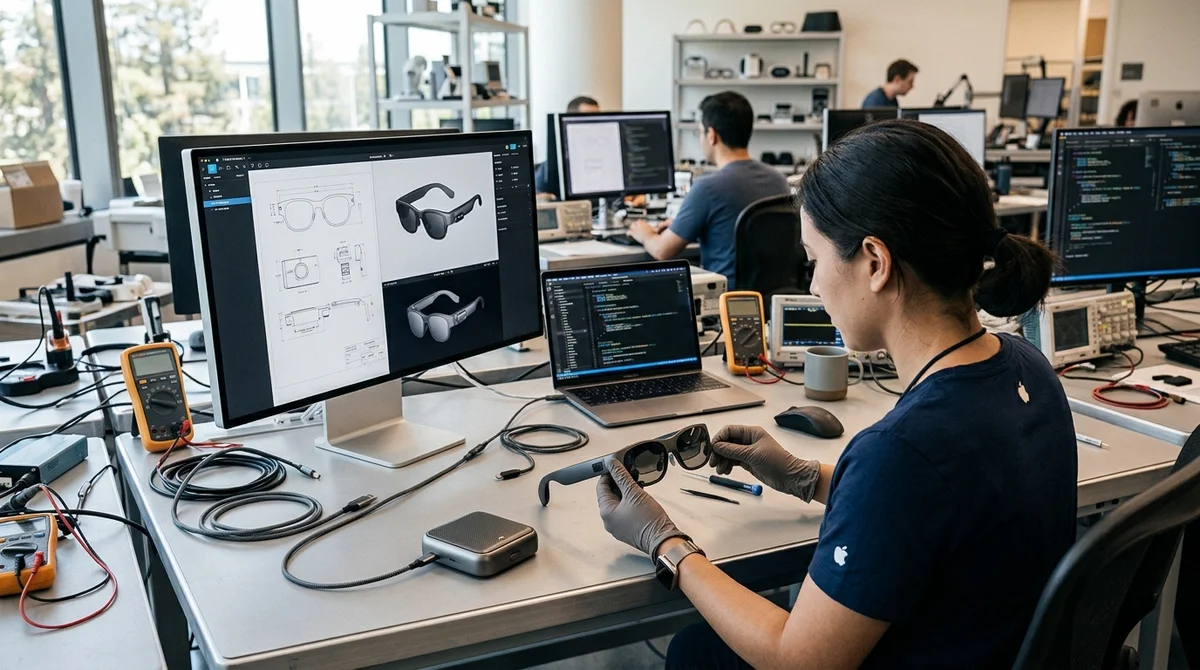
Apple has delayed the launch of the next generation Vision Pro by at least two years — the successor will not appear before 2028. At the same time, the company is fundamentally changing its strategy: it is moving most of its AR team to develop smart glasses and compact wearable AI devices. This will reorient Apple's entire vector in the wearable gadgets space.
Why Vision Pro Failed
Vision Pro costs $3499 — the price of a premium smartphone for a device that people wear for a few hours a week. In its first year, the headset never became a mass-market product, despite Apple's marketing. Demand proved significantly more modest than the company expected. Apple faced a harsh reality: the market for expensive mixed reality headsets simply had not matured.
The company, accustomed to abandoning failed projects, decided not to pursue expensive enhancements. Instead, the company is reassessing its entire approach. Shifting the company's best engineers from the AR department is not just a personnel shuffle. It is a strategic decision: to invest resources in form factors that can realistically become mass-market products.
New Bet: Glasses and AI Assistants
Apple is focusing on two directions that are potentially more promising:
- Smart AR glasses — lightweight glasses with an information layer, not a headset, but actual glasses to wear throughout the day
- Wearable AI devices — compact bracelets or chips for voice interaction and a personal assistant
- Ecosystem integration — glasses and AI devices as extensions of iPhone, Apple Watch, and Mac
- Affordable pricing — target range $500–$1500, not $3500
This strategy is more grounded, but also more practical: people need information throughout the day, not immersion in virtual reality for several hours.
A Signal of Reassessment
Apple has not officially confirmed information about the team reallocation, but such reorientations are a telling signal. History shows that the company knows how to wind down failed projects: iPod gave way to iPhone, iPhone still dominates, Apple Watch found its niche. Vision Pro was an expensive experimental project from which the company is drawing lessons. For the entire industry, it means: don't get stuck in the trap of expensive devices if the market is asking for something simpler.
What This Means
Apple admits it rushed into Vision Pro. The next wave will be practical, affordable AR glasses and AI assistants. This will reorient the entire wearable gadgets industry: from a race for impressive expensive headsets to searching for meaning in cheap, useful everyday devices.
- Oct 28, 2026Liquid AI releases LFM2.5-24B-A2B: an agent model with 2B active parameters
- Oct 28, 2026PyTorch 2.15 speeds up MoE models on Mac by 5–6.5x and adds FP8
- Oct 26, 2026SpaceXAI Bundles Grok, Cursor and X Into a Single Subscription From $8 a Month
- Oct 26, 2026Apple to unveil HomeView smart hub on Tuesday, Gurman reports
Key Questions Answered
Why Vision Pro Failed?
Vision Pro costs $3499 — the price of a premium smartphone for a device that people wear for a few hours a week. In its first year, the headset never became a mass-market product, despite Apple's marketing. Demand proved significantly more modest than the company expected. Apple faced a harsh reality: the market for expensive mixed reality headsets simply had not matured. The company, accustomed to abandoning failed projects, decided not to pursue expensive enhancements. Instead, the company is reassessing its entire approach. Shifting the company's best engineers from the
What are the key details on New Bet: Glasses and AI Assistants?
Apple is focusing on two directions that are potentially more promising: Smart AR glasses — lightweight glasses with an information layer, not a headset, but actual glasses to wear throughout the day Wearable AI devices — compact bracelets or chips for voice interaction and a personal assistant Ecosystem integration — glasses and AI devices as extensions of iPhone, Apple Watch, and Mac Affordable pricing — target range $500–$1500, not $3500 This strategy is more grounded, but also more practical: people need information throughout the day, not immersion in virtual reality f
What are the key details on A Signal of Reassessment?
Apple has not officially confirmed information about the team reallocation, but such reorientations are a telling signal. History shows that the company knows how to wind down failed projects: iPod gave way to iPhone, iPhone still dominates, Apple Watch found its niche. Vision Pro was an expensive experimental project from which the company is drawing lessons. For the entire industry, it means: don't get stuck in the trap of expensive devices if the market is asking for something simpler.
Build & Ship Production AI Agents Without Boilerplate Code
Start your free 72-hour trial at Hamidun Academy (academy.hamidun.com) — interactive lessons on Claude Code & Cursor, live Tech Radar, and production agent templates.
The AI world, distilled — once a week
Seven stories that actually mattered, hand-picked. No noise, no reposts, no press releases.
Done! Check your inbox for a confirmation.