Cerebras completes the largest tech IPO in five years, valued at $95 billion
Cerebras completed its IPO at a $95 billion valuation, raising $5.55 billion. It is the largest U.S. tech IPO in five years — the biggest since Snowflake in 2020. Shares rose 68% on the first day of trading. The company specializes in wafer-scale chips for AI tasks.
AI-processed from TNW; edited by Hamidun News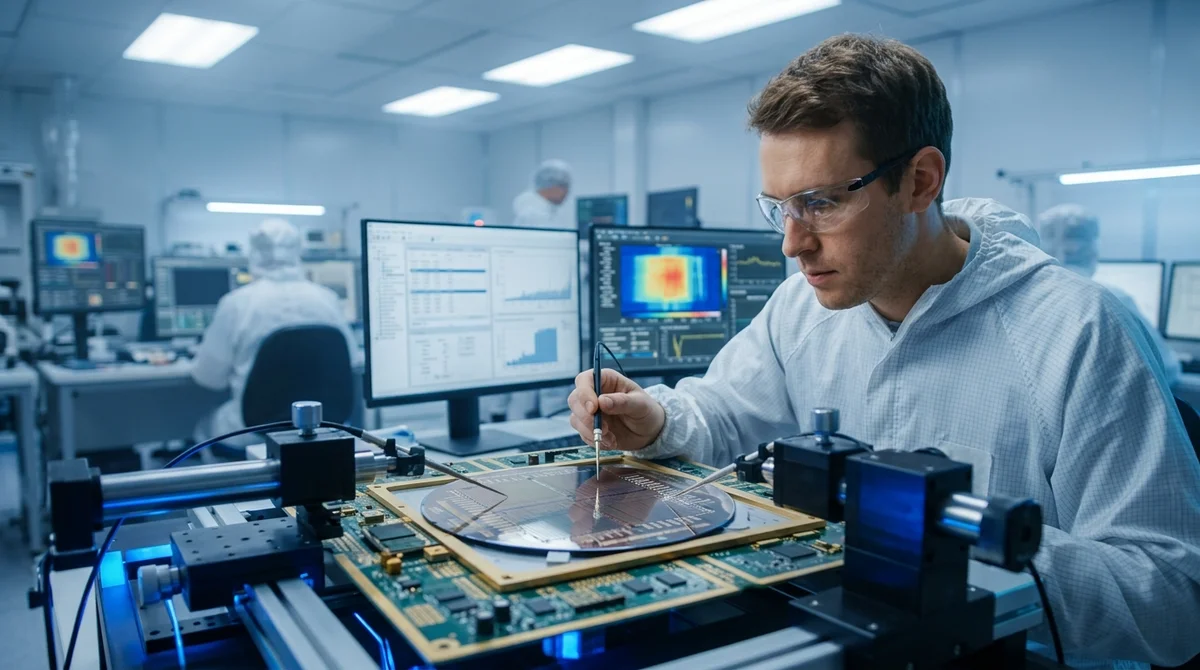
Cerebras Systems went public on Nasdaq, becoming the most successful technology company on the stock market in the last five years. The stock rose 68% on the first day of trading — investors clearly were waiting for this IPO, and the company met expectations.
Impressive Numbers
Cerebras closed its first day of trading at $311.07 per share against the starting price of $185, which gave a 68% increase. Thus, Cerebras' market capitalization reached about $95 billion. The placement itself raised $5.55 billion — this is unprecedented for tech companies and shows enormous investor interest in the microelectronics sector. For context: this is the largest American tech IPO since Snowflake's debut in 2020, when the cloud company raised $3.8 billion. Cerebras exceeded this result by more than 45%. The last time something similar was seen was almost five years ago.
CEO Andrew Feldman personally rang the bell at the opening of trading — a symbolic gesture for a company that has long been on the path to this moment and has proven the viability of its technology.
Wafer-scale Architecture: A Revolution in Microelectronics
Cerebras Systems develops and manufactures specialized chips for processing large language models and other AI tasks. Wafer-scale architecture is a revolutionary approach to chip design, distinguished from traditional solutions used by current GPU manufacturers like Nvidia and AMD.
Advantages of Cerebras technology:
- A chip the size of an entire silicon wafer, not a separate processor or GPU
- 40% more computing cores than competitors for comparable silicon area
- Minimal latency between components thanks to wafer-level integration
- Ideal for training and inference of large AI models that require billions of operations per second
- Attracts the attention of giants like Meta, Google, Microsoft and other cloud providers
Demand for such chips is growing exponentially. Every serious tech company is now building its own data centers to work with AI, and they critically need hardware that works more efficiently than regular GPUs and CPUs. Cerebras positions itself as a key partner in this revolution.
Race for AI Infrastructure
Cerebras' success on the stock market opens the way for other AI companies. Analysts and investors are already discussing potential IPOs of SpaceX, OpenAI and Anthropic in the coming years. This is not just speculation — the investment community is clearly ready to pay enormous sums for companies working at the forefront of AI and microelectronics. The only question is which company will be next and whether its shares will also rise 68% on the first day of trading.
What This Means
Cerebras has shown that in the era of large language models, demand for specialized chips is not just high — it is extraordinary. Every month new AI models are released, each requires more computing resources, and regular processors are no longer efficient enough. For startups and companies working in AI infrastructure, this is a signal: if you have created something that is truly needed for the AI ecosystem, investors may be ready to value you in tens, or even hundreds of billions.
- Oct 28, 2026Keystone removes the model name from code: open-source LLM gateway adds 0.64 ms
- Oct 28, 2026Wired Tested 6 AI Agents in a Day: Dots Leads, Gemini Spark Fails at Lunch
- Oct 28, 2026Anthropic Turns Claude Code Into a Platform: Claude Mods Flip the Agent Harness
- Oct 28, 2026Liquid AI releases LFM2.5-24B-A2B: an agent model with 2B active parameters
Key Questions Answered
What are the key details on Impressive Numbers?
Cerebras closed its first day of trading at $311.07 per share against the starting price of $185, which gave a 68% increase. Thus, Cerebras' market capitalization reached about $95 billion. The placement itself raised $5.55 billion — this is unprecedented for tech companies and shows enormous investor interest in the microelectronics sector. For context: this is the largest American tech IPO since Snowflake's debut in 2020, when the cloud company raised $3.8 billion. Cerebras exceeded this result by more than 45%. The last time something similar was seen was almost five yea
What are the key details on Wafer-scale Architecture: A Revolution in Microelectronics?
Cerebras Systems develops and manufactures specialized chips for processing large language models and other AI tasks. Wafer-scale architecture is a revolutionary approach to chip design, distinguished from traditional solutions used by current GPU manufacturers like Nvidia and AMD. Advantages of Cerebras technology: A chip the size of an entire silicon wafer, not a separate processor or GPU 40% more computing cores than competitors for comparable silicon area Minimal latency between components thanks to wafer-level integration Ideal for training and inference of large AI mo
What are the key details on Race for AI Infrastructure?
Cerebras' success on the stock market opens the way for other AI companies. Analysts and investors are already discussing potential IPOs of SpaceX, OpenAI and Anthropic in the coming years. This is not just speculation — the investment community is clearly ready to pay enormous sums for companies working at the forefront of AI and microelectronics. The only question is which company will be next and whether its shares will also rise 68% on the first day of trading.
Test Frontier LLMs & Autonomous Agents in One Workspace
Run Claude Opus 5.5, GPT-6, Gemini 3.1, and DeepSeek side-by-side in Nomad AI (nomadnet.ai) — unified model routing, deep research, and multimodal workflows under one subscription.
The AI world, distilled — once a week
Seven stories that actually mattered, hand-picked. No noise, no reposts, no press releases.
Done! Check your inbox for a confirmation.