Students booed Eric Schmidt over AI optimism at commencement
At the University of Arizona commencement, students booed Eric Schmidt over his speech about AI. The former Google CEO acknowledged that their fears of job losses were rational, but that did not persuade the students.
AI-processed from The Verge; edited by Hamidun News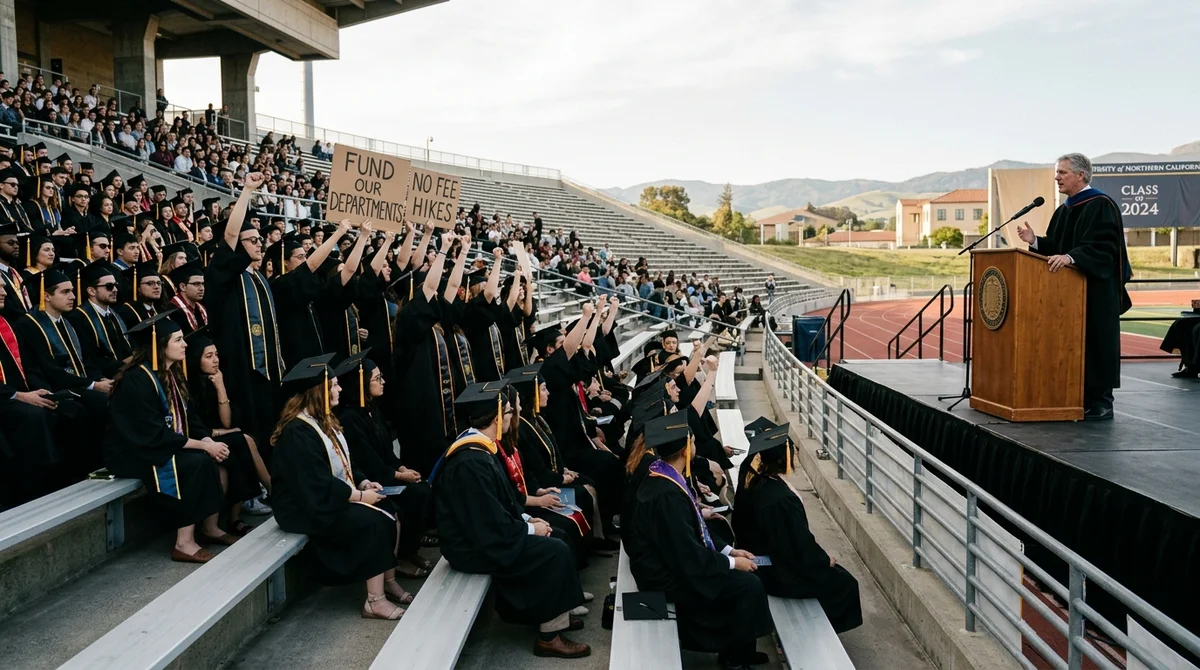
At the University of Arizona graduation ceremony on Friday, an unusual moment occurred: students began to boo former Google CEO Eric Schmidt when his speech turned toward artificial intelligence and its potential.
What Schmidt Said
Schmidt attempted to address youth concerns, acknowledging their validity. According to Business Insider, he recognized that graduates' fears are well-founded: concerns that machines will take away jobs, the climate is breaking down, the political system is fracturing, and they are inheriting ruin that they did not create themselves. Moreover, he agreed that these concerns are generally "rational."
One might think that such acknowledgment of reality and the seriousness of the problem should have resonated with the audience and created a foundation for positive dialogue. But the opposite happened. Instead of approval, cries of disagreement and dissatisfaction were heard. Students were clearly not inspired by the optimistic message about AI at a moment when they are preparing to enter the job market under conditions of deep uncertainty.
Youth Generation in Anxiety
Schmidt's booing at graduation is not simply a failed public speech. It is an indicator of real and deep sentiment among youth about AI:
- Sharp fear of unemployment due to automation
- Skepticism toward optimistic promises about technological progress
- Distrust of Silicon Valley leaders and their vision of the future
- A sense of injustice: they are asked to wait, but no one offers guarantees
- A belief that the older generation underestimates their concerns
For graduates, AI is not an abstract or exciting technology. It is a very concrete threat to their first career steps. While investors see enormous growth potential in AI, young people see competition with machines in the job market, one in which they are barely beginning to orient themselves.
Recognition vs Conviction
The paradox of Schmidt's speech is that he is right in describing real problems. But his solution—believing that technology itself will fix everything—sounds unconvincing. Young people would like to hear a concrete plan: how they will earn money, what skills to develop, how society will protect those replaced by AI, what social contract awaits them.
What It Means
Booing at graduation is a signal to AI developers and policymakers that what is needed is not only further technological optimism. Real guarantees are required: retraining programs, social protection, and tangible employment opportunities for the younger generation in a world where AI automates more and more jobs.
- Oct 28, 2026A 2015 CNN Beat GPT-6 Astra and Claude Fable 5.1 at Skin Cancer Diagnosis
- Oct 28, 2026Google taught an LLM to “sleep”: SLEEP consolidates knowledge into weights, up to 10 million tokens
- Oct 28, 2026Keystone removes the model name from code: open-source LLM gateway adds 0.64 ms
- Oct 28, 2026Wired Tested 6 AI Agents in a Day: Dots Leads, Gemini Spark Fails at Lunch
Key Questions Answered
What Schmidt Said?
Schmidt attempted to address youth concerns, acknowledging their validity. According to Business Insider, he recognized that graduates' fears are well-founded: concerns that machines will take away jobs, the climate is breaking down, the political system is fracturing, and they are inheriting ruin that they did not create themselves. Moreover, he agreed that these concerns are generally "rational." One might think that such acknowledgment of reality and the seriousness of the problem should have resonated with the audience and created a foundation for positive dialogue. But
What are the key details on Youth Generation in Anxiety?
Schmidt's booing at graduation is not simply a failed public speech. It is an indicator of real and deep sentiment among youth about AI: Sharp fear of unemployment due to automation Skepticism toward optimistic promises about technological progress Distrust of Silicon Valley leaders and their vision of the future A sense of injustice: they are asked to wait, but no one offers guarantees A belief that the older generation underestimates their concerns For graduates, AI is not an abstract or exciting technology. It is a very concrete threat to their first career steps. While
What are the key details on Recognition vs Conviction?
The paradox of Schmidt's speech is that he is right in describing real problems. But his solution—believing that technology itself will fix everything—sounds unconvincing. Young people would like to hear a concrete plan: how they will earn money, what skills to develop, how society will protect those replaced by AI, what social contract awaits them.
Ship AI Faster with Founders, Engineers & Weekly Architecture Reviews
Inside Vibe Club (hamidun.com/club) — weekly live masterminds with Zhemal Khamidun, Tech Radar, full LMS access, and 370+ production Claude Code skills.
The AI world, distilled — once a week
Seven stories that actually mattered, hand-picked. No noise, no reposts, no press releases.
Done! Check your inbox for a confirmation.