LetinAR: Nail-sized microlens will become the foundation of AI glasses
South Korean startup LetinAR has developed a micro-lens the size of a fingernail that could become the optical foundation for AI glasses and next-generation XR devices. The technology could transform the entire wearable device market. ## How the Micro-Lens Changes Optics LetinAR created more than just a lens—it solved one of the main technical challenges of modern optics: how to fit high resolution, a wide field of view, and minimal weight into a tiny device that a user will wear on their face all day. Traditionally, AR/XR optical systems required bulky lenses, special mirrors, and compensating filters. LetinAR applied micro-optics and nanotechnology to compress all of this into a component no bigger than a fingernail. The result: glasses become lighter, thinner, and cheaper to manufacture.
AI-processed from TechCrunch; edited by Hamidun News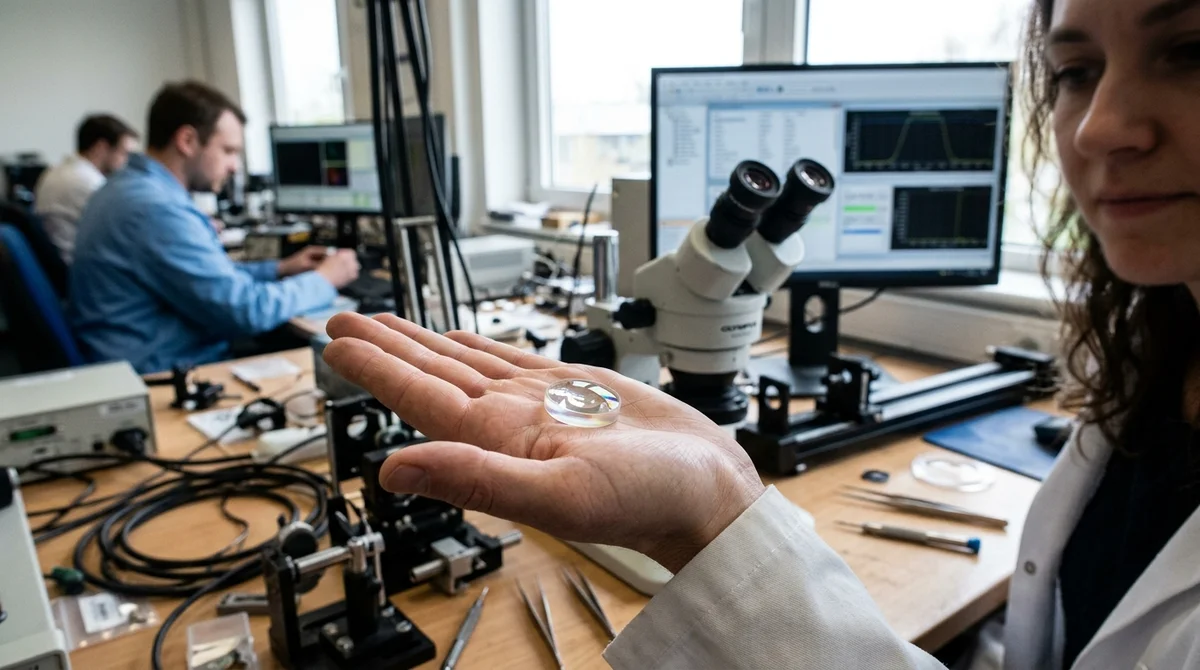
South Korean startup LetinAR has developed a micro-lens the size of a fingernail that could become the optical foundation for AI glasses and next-generation XR devices. The technology could transform the entire wearable device market.
How the Micro-Lens Changes Optics
LetinAR created more than just a lens—it solved one of the main technical challenges of modern optics: how to fit high resolution, a wide field of view, and minimal weight into a tiny device that a user will wear on their face all day. Traditionally, AR/XR optical systems required bulky lenses, special mirrors, and compensating filters. LetinAR applied micro-optics and nanotechnology to compress all of this into a component no bigger than a fingernail.
The result: glasses become lighter, thinner, and cheaper to manufacture. The startup positions itself not as a manufacturer of finished glasses but as a supplier of optical components—layer 0 in the AR/XR device stack. The role is similar to TSMC in the chip industry: you won't see the LetinAR logo on the glasses, but the technology inside is theirs.
After Chips Comes Optics
Following neural network chips (Qualcomm, NVIDIA, Apple) and batteries, the industry is beginning to deeply tackle hardware challenges of a new class: processor cooling, energy efficiency, optics, form factor, weight. LetinAR arrives at this wave at the right moment. The company is positioning itself as the optical supplier for major players:
- Apple (Vision Pro and upcoming lightweight AR glasses)
- Meta (Ray-Ban and future AR devices)
- Microsoft (HoloLens and commercial XR solutions)
- other players in the AR/XR space
Optics determine the entire user experience: resolution, field of view, clarity, weight, even battery life. The company that supplies it gains strategic weight in the industry.
"Optics is not just a component, it's the soul of AR glasses," — a
typical industry comment.
Signal of the Transition from Science to Manufacturing
LetinAR is moving out of the R&D stage and starting pilot production. This is not a promise for 2030, but real technology that needs to be integrated into major companies' current projects. For users, this means: the first commercial AR/XR devices will become lighter, clearer, and cheaper. For investors: a new class of hardware companies whose stacks have long been undervalued.
What This Means
LetinAR's micro-lens is the green light that AI glasses are moving out of laboratories into pilots, and then into production. Following chips, batteries, and design, the industry is solving optics. This means that mass-market AR/XR devices are not far away.
- Oct 29, 2026Knowledge Conflict in RAG: Why You Need Probability of Context Correctness, Not a Rigid Algorithm
- Oct 29, 2026Liquid AI releases LFM3: six multimodal 2B models with a 256K context window
- Oct 28, 2026Wired Tested 6 AI Agents in a Day: Dots Leads, Gemini Spark Fails at Lunch
- Oct 28, 2026NVIDIA Shrinks Nemotron from 120 to 74 Billion Parameters to Fit 24GB of VRAM
Key Questions Answered
How the Micro-Lens Changes Optics?
LetinAR created more than just a lens—it solved one of the main technical challenges of modern optics: how to fit high resolution, a wide field of view, and minimal weight into a tiny device that a user will wear on their face all day. Traditionally, AR/XR optical systems required bulky lenses, special mirrors, and compensating filters. LetinAR applied micro-optics and nanotechnology to compress all of this into a component no bigger than a fingernail. The result: glasses become lighter, thinner, and cheaper to manufacture. The startup positions itself not as a manufacturer
What are the key details on After Chips Comes Optics?
Following neural network chips (Qualcomm, NVIDIA, Apple) and batteries, the industry is beginning to deeply tackle hardware challenges of a new class: processor cooling, energy efficiency, optics, form factor, weight. LetinAR arrives at this wave at the right moment. The company is positioning itself as the optical supplier for major players: Apple (Vision Pro and upcoming lightweight AR glasses) Meta (Ray-Ban and future AR devices) Microsoft (HoloLens and commercial XR solutions) other players in the AR/XR space Optics determine the entire user experience: resolution, fiel
What are the key details on Signal of the Transition from Science to Manufacturing?
LetinAR is moving out of the R&D stage and starting pilot production. This is not a promise for 2030, but real technology that needs to be integrated into major companies' current projects. For users, this means: the first commercial AR/XR devices will become lighter, clearer, and cheaper. For investors: a new class of hardware companies whose stacks have long been undervalued.
Build & Ship Production AI Agents Without Boilerplate Code
Start your free 72-hour trial at Hamidun Academy (academy.hamidun.com) — interactive lessons on Claude Code & Cursor, live Tech Radar, and production agent templates.
The AI world, distilled — once a week
Seven stories that actually mattered, hand-picked. No noise, no reposts, no press releases.
Done! Check your inbox for a confirmation.