Young Asian entrepreneurs profit from hateful AI content on Facebook
An investigation by The Guardian uncovered a global factory of hateful content. Hundreds of Facebook accounts with the British flag and names like Britain Today pass themselves off as organic communities. The people behind them are young entrepreneurs from Sri Lanka and Pakistan who create AI videos claiming that cafes are stopping serving bacon because of Muslims, as well as images of Victorian London captioned "when this was the real England." Alongside nostalgia is outright hatred: memes calling Islam a cancer and posts about a Muslim invasion of the West. The creators make money through Facebook monetization. *Meta is recognized as an extremist organization and banned in Russia.
AI-processed from Guardian; edited by Hamidun News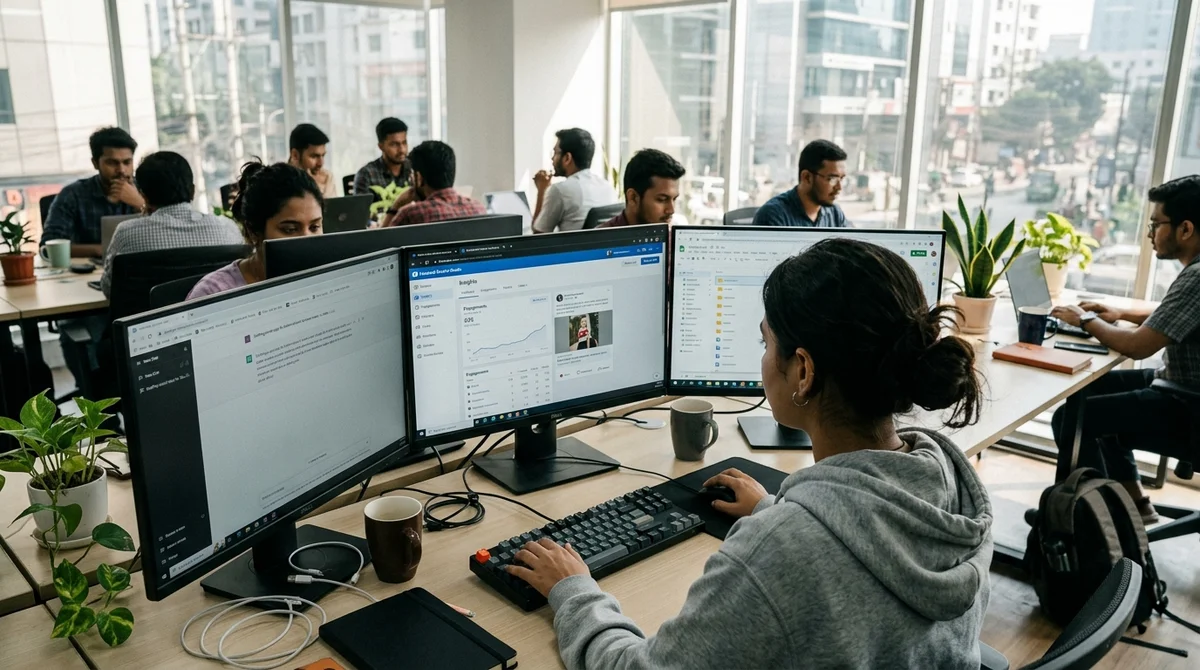
A Guardian journalist investigation has revealed a global scheme for spreading hateful content. Hundreds of Facebook accounts posing as British communities are actually managed by young entrepreneurs from South Asia who use AI to generate toxic content and monetize it. This is not ideological warfare — it's money.
Who's behind the accounts
Facebook accounts like Britain Today, Britannia News, English Voice look like organic communities of concerned Britons. In reality, they are content factories. Behind them are young people from Sri Lanka and Pakistan who neither live in Britain nor care about its politics. Their interest is simple: figure out Facebook monetization and launch a system that makes money. Language, flag, and ideology are just tools.
What content AI generates
Videos that look like statements from real people. A man complains that his café stopped serving bacon to avoid offending Muslims. Pictures of Victorian London with text "when the city was English and beautiful." This nostalgia seems like harmless criticism of change. But alongside it — open hatred. Memes calling Islam cancer. Posts about Muslims praying on the street as an invasion. Spreading the great replacement theory. Together, these posts work like microtoxins: each looks like an opinion, but in the stream they slowly poison.
Money in hatred
On Facebook, views are monetized: the more engagement, the more income. Young people from Asia discovered arbitrage — create hateful content in English (a high-income market) and publish it through a network of fake accounts. One successful account gets 10 million views a month. This is money that gets transferred back to South Asia. With this money you can live, hire operators, expand the factory.
- Creating content through AI (almost no costs)
- Publishing through a network of dummy accounts (looks organic)
- Monetization through Facebook (payments in dollars)
- Withdrawing money to low-cost countries
Why it works
Facebook optimizes for engagement — reaction, not truth. Hatred triggers reaction: people click, comment, share in anger. Algorithms amplify such content, pushing it up the feed. The platform only blocks obvious violations (direct calls for violence). As long as an account looks organic, the content stays.
What it means
Tools (AI for creation, platforms for publishing, payments for monetization) allow anyone to turn emotions into a commodity. Creators don't believe in ideology. But the consequences are real: content stokes phobias, divides societies, poisons discourse. Platforms choose neutrality over responsibility.
*Meta has been recognized as an extremist organization and is banned in Russia.
- Oct 28, 2026Wired Tested 6 AI Agents in a Day: Dots Leads, Gemini Spark Fails at Lunch
- Oct 28, 2026Liquid AI releases LFM2.5-24B-A2B: an agent model with 2B active parameters
- Oct 28, 2026Meta releases Muse Spark Open: 816B parameters and the lead among US open-weight models
- Oct 28, 2026NVIDIA Releases 120B Nemotron 3.5 Super VL and Bolt Models for Local Agents
Key Questions Answered
Who's behind the accounts?
Facebook accounts like Britain Today, Britannia News, English Voice look like organic communities of concerned Britons. In reality, they are content factories. Behind them are young people from Sri Lanka and Pakistan who neither live in Britain nor care about its politics. Their interest is simple: figure out Facebook monetization and launch a system that makes money. Language, flag, and ideology are just tools.
What content AI generates?
Videos that look like statements from real people. A man complains that his café stopped serving bacon to avoid offending Muslims. Pictures of Victorian London with text "when the city was English and beautiful." This nostalgia seems like harmless criticism of change. But alongside it — open hatred. Memes calling Islam cancer. Posts about Muslims praying on the street as an invasion. Spreading the great replacement theory. Together, these posts work like microtoxins: each looks like an opinion, but in the stream they slowly poison.
What are the key details on Money in hatred?
On Facebook, views are monetized: the more engagement, the more income. Young people from Asia discovered arbitrage — create hateful content in English (a high-income market) and publish it through a network of fake accounts. One successful account gets 10 million views a month. This is money that gets transferred back to South Asia. With this money you can live, hire operators, expand the factory. Creating content through AI (almost no costs) Publishing through a network of dummy accounts (looks organic) Monetization through Facebook (payments in dollars) Withdrawing money
Test Frontier LLMs & Autonomous Agents in One Workspace
Run Claude Opus 5.5, GPT-6, Gemini 3.1, and DeepSeek side-by-side in Nomad AI (nomadnet.ai) — unified model routing, deep research, and multimodal workflows under one subscription.
The AI world, distilled — once a week
Seven stories that actually mattered, hand-picked. No noise, no reposts, no press releases.
Done! Check your inbox for a confirmation.