Nyobolt raised $60M and became a unicorn thanks to its batteries for SymBot
Nyobolt raised $60 million in a Series C and reached a $1 billion valuation. The startup developed batteries that charge in minutes and withstand 20,000 cycles. Investor Symbotic is already installing these batteries in SymBot, autonomous robots for warehouse automation.
AI-processed from TNW; edited by Hamidun News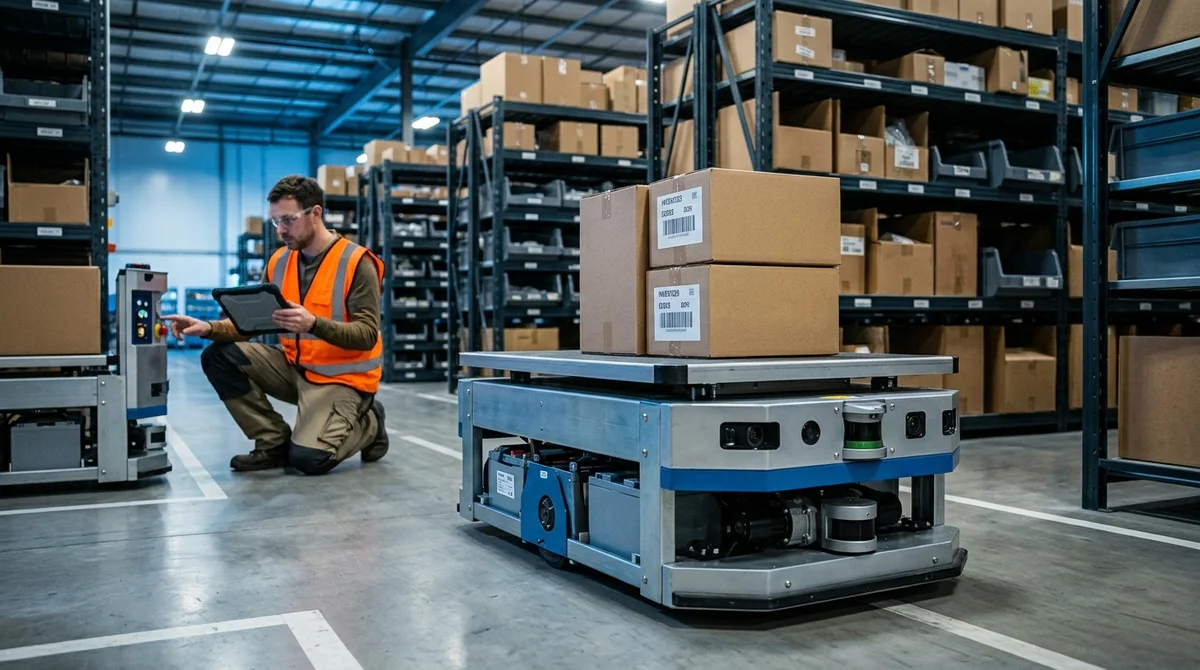
Nyobolt, a British startup from Cambridge, has closed a Series C funding round of $60 million at a company valuation of $1 billion. For the first time, a company achieves unicorn status not through AI software or a platform, but through physical batteries that are already powering real autonomous machines in commercial conditions.
Batteries That Withstand 20,000 Cycles
Nyobolt's main achievement is the development of a battery with extremely fast charging. The company's batteries fully charge in just a few minutes, and in laboratory conditions — even in a few seconds. At the same time, they withstand 20,000 complete charge-discharge cycles without noticeable capacity degradation. For comparison: a standard lithium-ion battery begins to lose capacity after just 1,000–3,000 cycles and requires replacement.
The round leader is Symbotic, a NASDAQ-listed company specializing in AI-driven robotics. This is not just an investor, but already a client and partner: Symbotic installs Nyobolt batteries in its SymBot — autonomous mobile robots for automating warehouses and logistics centers.
Why the Battery Solves the Problem
For an automated warehouse, battery life directly determines the economics. SymBot robots operate around the clock: moving goods between departments, sorting cargo, feeding items onto conveyors. If a robot stops for charging every 4–6 hours, productivity drops by 20–30%, and the automation investment won't pay off in the promised timeframe.
Nyobolt batteries solve this problem directly:
- A robot can work a full shift (12–16 hours) without recharging
- Fast overnight charging fully restores capacity by morning
- Long service life (20,000 cycles = ~5–7 years of intensive use) reduces cost of ownership
- Compact battery size saves weight and space in robot design
- Stable performance throughout its entire lifespan without degradation at the end
How This Changes the Market
Previously, investment in battery technology mainly went to electric vehicles. Tesla, Panasonic, and CATL compete for a share of the EV market, where the money is large but competition is brutal. Nyobolt chose a different path: a narrow market (warehouse robotics), but with higher margins and less competition.
Symbotic chose
Nyobolt not for hype, but because the batteries are already working on real warehouses and proving results through performance metrics.
What This Means
Over the next 3–5 years, batteries will become as much a business factor in robotics as processors were in the 2010s. The company that gives warehouse robots a week of autonomy or a battery that lasts 100,000 cycles will get the market. Symbotic chose Nyobolt because this is not a promise, but a working system. For a startup, this is safer: the client pays not for the future, but for today, for real robots on real warehouse floors.
- Oct 28, 2026AdaPRA lifts Qwen 80B by 24.5 points on data science leaderboards
- Oct 28, 2026AOS-Bench: Agents Separated by 0.6 Points in Isolation Deliver 54% and 68% of the Same Tasks
- Oct 28, 2026CuraLoc finds bugs in repositories with a single plan and uses 90% fewer tokens
- Oct 28, 2026Wired Tested 6 AI Agents in a Day: Dots Leads, Gemini Spark Fails at Lunch
Key Questions Answered
What are the key details on Batteries That Withstand 20,000 Cycles?
Nyobolt's main achievement is the development of a battery with extremely fast charging. The company's batteries fully charge in just a few minutes, and in laboratory conditions — even in a few seconds. At the same time, they withstand 20,000 complete charge-discharge cycles without noticeable capacity degradation. For comparison: a standard lithium-ion battery begins to lose capacity after just 1,000–3,000 cycles and requires replacement. The round leader is Symbotic, a NASDAQ-listed company specializing in AI-driven robotics. This is not just an investor, but already a cl
Why the Battery Solves the Problem?
For an automated warehouse, battery life directly determines the economics. SymBot robots operate around the clock: moving goods between departments, sorting cargo, feeding items onto conveyors. If a robot stops for charging every 4–6 hours, productivity drops by 20–30%, and the automation investment won't pay off in the promised timeframe. Nyobolt batteries solve this problem directly: A robot can work a full shift (12–16 hours) without recharging Fast overnight charging fully restores capacity by morning Long service life (20,000 cycles = ~5–7 years of intensive use) redu
How This Changes the Market?
Previously, investment in battery technology mainly went to electric vehicles. Tesla, Panasonic, and CATL compete for a share of the EV market, where the money is large but competition is brutal. Nyobolt chose a different path: a narrow market (warehouse robotics), but with higher margins and less competition. Symbotic chose Nyobolt not for hype, but because the batteries are already working on real warehouses and proving results through performance metrics.
Build & Ship Production AI Agents Without Boilerplate Code
Start your free 72-hour trial at Hamidun Academy (academy.hamidun.com) — interactive lessons on Claude Code & Cursor, live Tech Radar, and production agent templates.
The AI world, distilled — once a week
Seven stories that actually mattered, hand-picked. No noise, no reposts, no press releases.
Done! Check your inbox for a confirmation.