DeepMind Unveiled Scientific Tools for Gemini: Hypothesis Generation and Experiment Automation
DeepMind unveiled a suite of Gemini-based tools to accelerate scientific research. Three new prototypes include a hypothesis generator through an idea tournament, a system for parallel code testing, and scientific literature structuring. They are being used by BASF and research institutions for rare disease research and climate forecasting.
AI-processed from DeepMind Blog; edited by Hamidun News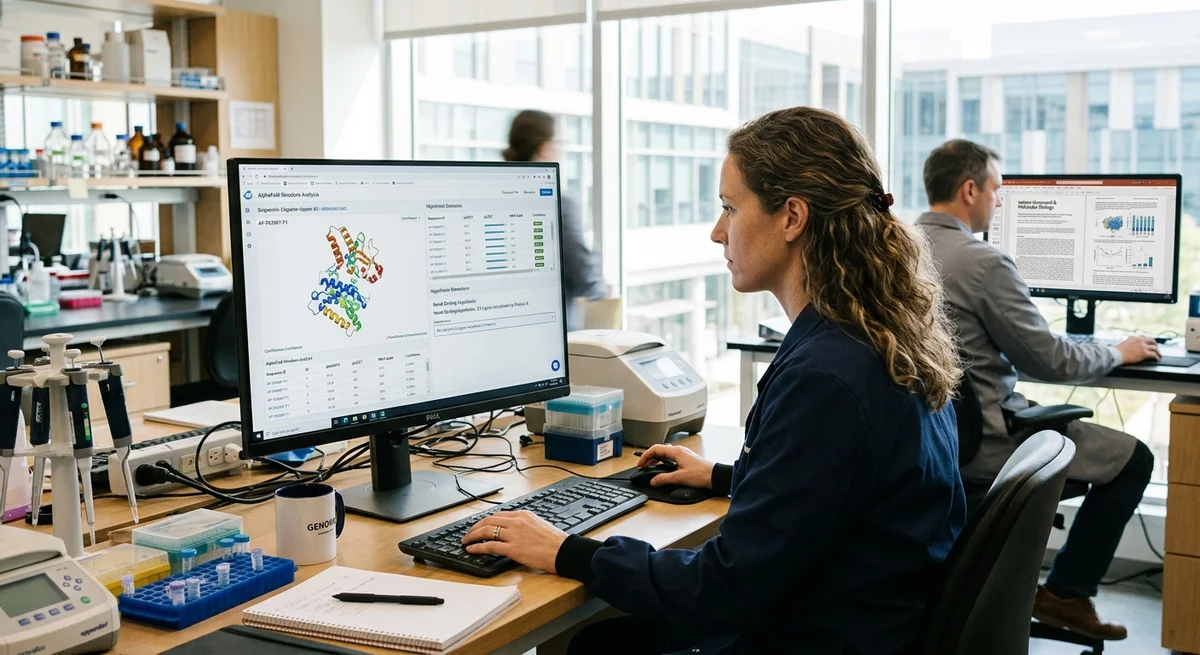
DeepMind unveiled a suite of experimental tools embedded in Gemini to accelerate scientific research. The announcement was made at Google I/O 2026. The three prototypes are designed to scale and improve the precision of experiments in biology, climatology, and other fields.
Three Tools for Science
Hypothesis Generation operates on the principle of an "idea tournament"—analyzing millions of scientific papers and generating competing hypotheses, selecting the most promising ones. The system verifies each conclusion against sources, reducing the risk of errors and ensuring result verifiability. This is particularly useful in fields where the volume of literature grows faster than a person can read.
Computational Discovery is based on the AlphaEvolve and ERA systems—automatically creating and testing thousands of code variants simultaneously. This accelerates complex computational experiments in molecular dynamics, optimization, and machine learning, which typically require hours of manual work. The system finds not only working solutions but also non-obvious optimizations.
Literature Insights integrates NotebookLM to structure scientific literature. The tool transforms stacks of papers into tables, summaries, and visualizations—for quickly identifying patterns and gaps in knowledge.
Where It's Already Being Used
Companies BASF and Klarna use AlphaEvolve to optimize supply chains and machine learning models. Research institutions are applying these tools to investigate rare genetic diseases, antibiotic resistance, and other complex biological questions.
- Rare genetic diseases—analysis of protein properties through AlphaFold
- Climatology—solar energy potential forecasting
- Bioengineering—search for plastic-degrading enzymes for waste utilization
- Epidemiology—disease spread modeling and intervention assessment
Science Skills: A Complete Data Ecosystem
The new Science Skills module integrates over 30 scientific databases: AlphaFold, UniProt, PubChem, and others. Previously, researchers had to manually load data and insert it into context. Now everything is built in—Gemini searches the correct sources and returns verified results. This reduces analysis time from hours to minutes and guarantees citation accuracy.
What This Means
The boundary between information retrieval and interpretation is blurring. Gemini for Science handles data preparation, literature structuring, and hypothesis selection—freeing researchers for the creative aspects. The tools are currently experimental, but within a year or two, these capabilities will become standard in research organizations and corporate labs.
- Oct 28, 2026A 2015 CNN Beat GPT-6 Astra and Claude Fable 5.1 at Skin Cancer Diagnosis
- Oct 28, 2026Google taught an LLM to “sleep”: SLEEP consolidates knowledge into weights, up to 10 million tokens
- Oct 28, 2026Keystone removes the model name from code: open-source LLM gateway adds 0.64 ms
- Oct 28, 2026Wired Tested 6 AI Agents in a Day: Dots Leads, Gemini Spark Fails at Lunch
Key Questions Answered
What are the key details on Three Tools for Science?
Hypothesis Generation operates on the principle of an "idea tournament"—analyzing millions of scientific papers and generating competing hypotheses, selecting the most promising ones. The system verifies each conclusion against sources, reducing the risk of errors and ensuring result verifiability. This is particularly useful in fields where the volume of literature grows faster than a person can read. Computational Discovery is based on the AlphaEvolve and ERA systems—automatically creating and testing thousands of code variants simultaneously. This accelerates complex com
Where It's Already Being Used?
Companies BASF and Klarna use AlphaEvolve to optimize supply chains and machine learning models. Research institutions are applying these tools to investigate rare genetic diseases, antibiotic resistance, and other complex biological questions. Rare genetic diseases—analysis of protein properties through AlphaFold Climatology—solar energy potential forecasting Bioengineering—search for plastic-degrading enzymes for waste utilization Epidemiology—disease spread modeling and intervention assessment
What are the key details on Science Skills: A Complete Data Ecosystem?
The new Science Skills module integrates over 30 scientific databases: AlphaFold, UniProt, PubChem, and others. Previously, researchers had to manually load data and insert it into context. Now everything is built in—Gemini searches the correct sources and returns verified results. This reduces analysis time from hours to minutes and guarantees citation accuracy.
Build & Ship Production AI Agents Without Boilerplate Code
Start your free 72-hour trial at Hamidun Academy (academy.hamidun.com) — interactive lessons on Claude Code & Cursor, live Tech Radar, and production agent templates.
The AI world, distilled — once a week
Seven stories that actually mattered, hand-picked. No noise, no reposts, no press releases.
Done! Check your inbox for a confirmation.