Habr AI
AI news source. Articles are auto-selected and adapted by Hamidun News editors.
Latest publications

Claude Code helped build a graph analysis app in under an hour — developer case study
A developer with low expectations built a working graph analysis app in about an hour, but then spent another three weeks on testing, documentation, and streamlining the process.

IBS explains how neural networks are changing software design and why they won't replace architects
IBS breaks down how large language models and generative tools help design systems, compare trade-offs, and accelerate architect workflows, but don't relieve architects of responsibility.

Playwright and MCP: How an AI Agent Tests UI and Database Without Manual SQL Assertions
A Playwright agent combined with MCP can not only run checkout through the browser but also immediately verify database changes without manual SQL assertions and extra test code.

Why OpenAI, Google, and Anthropic models become more convincing but make mistakes more often
Major AI labs try to fix model errors with additional computations, but the more convincing the answers become, the harder it is to spot deep hallucinations.

Habr AI: Why Language Models Need Guardrails and How to Defend Against Prompt Hacking
Habr AI examines why LLMs now require a separate protective layer: from toxic content and data leaks to prompt injection, jailbreak attacks, and agent control.

Selectel Engineer Showed LLM Agent for Automatic Free Domain Selection
A Selectel engineer built a Python service that asks an LLM to generate domain names and immediately checks them via WHOIS, keeping only available variants.

Anthropic Explained How and When to Properly Start a New Session in Claude Code
Anthropic released the /usage command and explained how to manage sessions in Claude Code so that a million context tokens don't become noise and degrade answer quality.

Niantic Shows How Pokémon Go Turns Player Actions Into AI Datasets
Niantic, Google and other companies increasingly turn ordinary user actions — from games and trips to CAPTCHAs — into data for AI training, navigation and robotics.

Positive Technologies Listed Best Benchmarks for Evaluating LLM in Cybersecurity
Positive Technologies divided cybersecurity benchmarks for LLM into knowledge tests and practical assessments, showing that models already surpass humans in theory but significantly lag in real-world tasks.

AI Deflation in IT: Klarna and IBM Cases Show Why Vacancies Are Up But Salary Growth Is Weak
A new paradox is emerging in software development: engineering vacancies have increased by 11%, yet IT salary growth has slowed to 1.6%, and some senior engineers' incomes have already turned negative.

MTS showed how OpenClaw was connected to a robot and brought an AI agent into the physical world
The MWS team demonstrated that OpenClaw can be connected to a physical robot through a simple software layer and cloud LLM without building a complex VLA system from scratch.

Claude Sonnet Helps C-Suite Build AI Director for Critical Decisions in 8 Hours
At the closed Snow BASE hackathon, a team of CEO, CTO, and CIO assembled CAITO in eight hours — an AI director powered by Claude Sonnet that changes position only when new facts emerge.
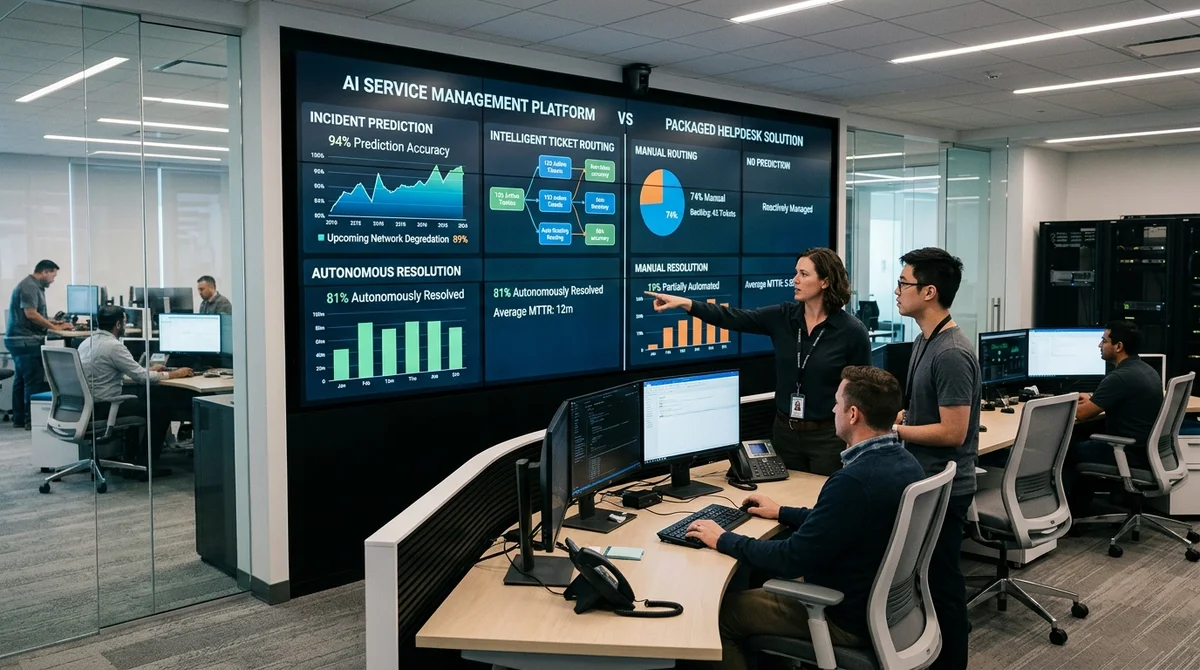
Why ServiceNow, Atlassian and BMC are reshaping the ITSM market and the platform debate in 2026
The ITSM market with AI is shifting from chatbots to managed infrastructure, where security, scalability, and agent control determine the choice between point solution and platform.

ServiceNow and Atlassian Lead ITSM Market Toward AI Platforms Instead of Out-of-the-Box Solutions
AI in ITSM is rapidly shifting from chatbots to managed infrastructure: the market compares platform and out-of-the-box approaches, with audit, security, and flexibility becoming key factors.

Wildberries & Russ described what level of data maturity is needed for accurate AI agents
Wildberries & Russ described a three-level data maturity model where the quality of metadata and semantic layer directly determines the accuracy of LLM, text-to-SQL, and AI agents.

Midjourney in 2026: why strong visual style doesn't make it universal
Analysis of Midjourney shows that in 2026, its main strength is not universality, but recognizable style and deep control that manifests only through deliberate prompt work.

Cursor and Microsoft Research Test Whether AI Agents Need Full Debugger Access
An experiment with Debug2Fix and Cursor Debug Mode shows that breakpoints, step-by-step execution, and expression evaluation can help AI agents fix real bugs significantly more often.

Raft showed how to prioritize AI initiatives and build a realistic roadmap
Raft analyzed how to evaluate the value of AI initiatives, filter out weak ideas through a feasibility matrix, and build a phased transformation roadmap.

Gemma 4 in Codex CLI: local execution works, but still lags behind cloud
Testing local Gemma 4 in Codex CLI showed the model already handles tool calling and passes tests, but remains inferior to cloud GPT-5.4 in quality, stability, and execution time.

Why LLMs Create an Illusion of Creativity and Don't Guarantee Real Novelty of Ideas
LLMs help quickly develop an idea and bring it to final form, but their confident style easily masks secondariness, compilation, and the absence of real novelty.
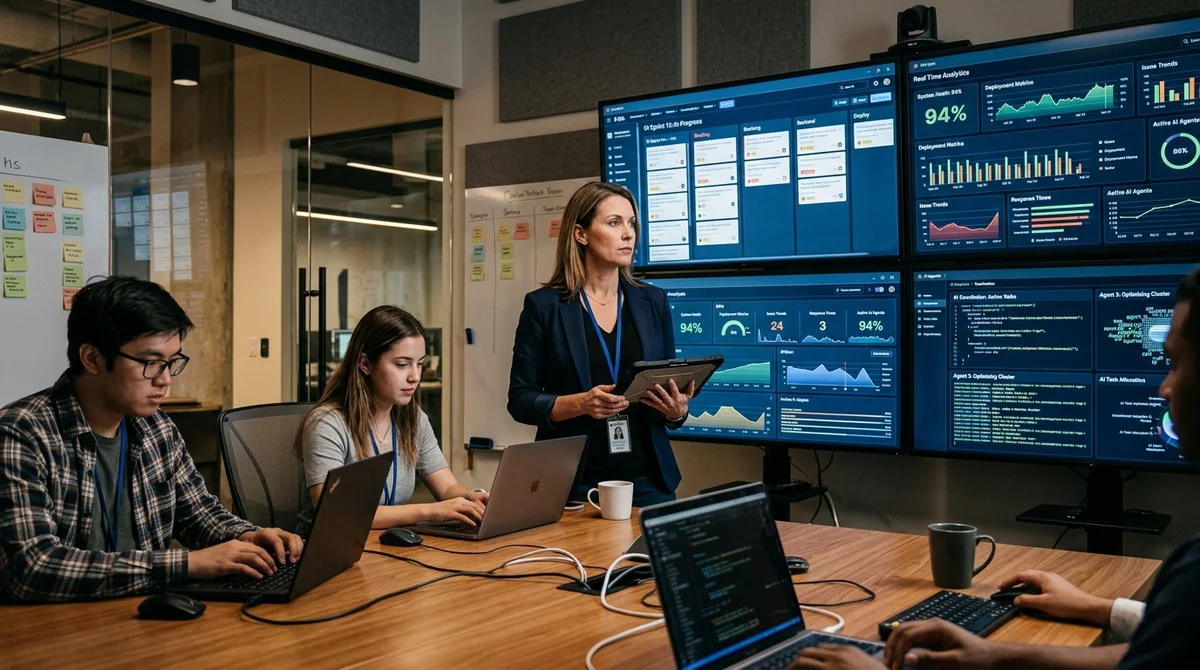
How AI Agents and IBM Are Changing IT Project Management and the Project Manager Role
AI agents are moving beyond chatbots: they already help project managers plan sprints, assess risks, and resolve incidents, and IBM's case shows significant impact.

StudyAI: How Generative AI Undermines Trust in Texts, Voices, and Videos Online
StudyAI examines how generative AI makes deepfakes more convincing, devalues digital evidence, and pushes the internet toward an era of total distrust.
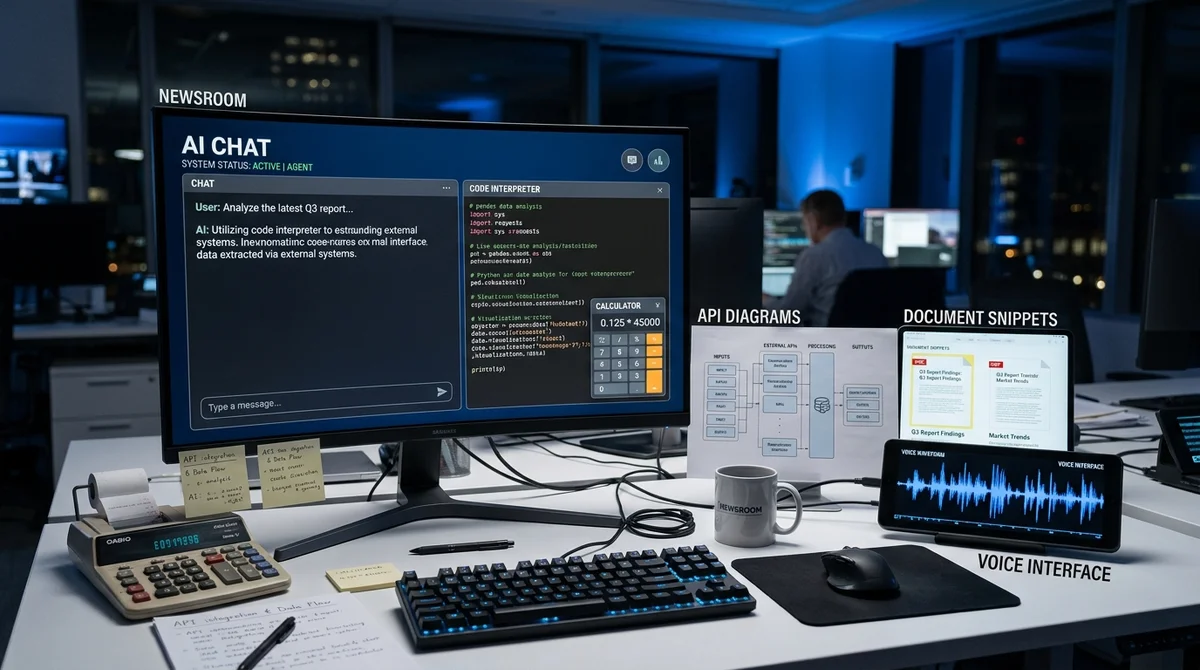
Habr AI Explains Why LLMs Don't Calculate, Don't Learn in Dialogue, and Depend on Tools
Habr AI explains that language models can only work with text on their own, while memory, calculations, search, agents, and 'digital employees' emerge through external tools.

Svoi.ru reduced test preparation by 70% using AI agents
Svoi.ru's team demonstrated how AI agents can automate requirements analysis and test documentation preparation, relieving QA of routine analytics and reducing this phase by 70%.

Kodik explains why public language model benchmarks are misleading
Kodik analyzed weaknesses in popular LLM tests and showed why for its AI code editor, an internal benchmark matters more than impressive percentages in other companies' tables.

How Google DeepMind and Competitors Are Transforming Music: Five AI Services for Track Generation
A collection of five AI services demonstrates how text-to-music generation has stopped being a toy and become a working tool for authors, brands, and independent producers.

WisprFlow, Whisper and GigaAM: who recognizes Russian-English speech better
The author compared five applications and five voice input models for Russian-English code-switching and showed how local open source solutions can already replace WisprFlow.

GPTunneL and the Forbes Trend: Why AI-Superapps Are Becoming the New Growth Driver for the Market
GPTunneL, which has grown to 2 million users, describes how AI-superapps are changing audience behavior, corporate demand, and market economics—from China and the US to Russia.

Habr showed how to train a mini-LLM in C# using ILGPU and integrated AMD graphics
Habr published a breakdown of how to build and train a tiny LLM in C# with ILGPU and OpenCL, export it to GGUF, and run it in LM Studio even on integrated AMD graphics.

Anthropic unveils Claude Mythos Preview via 244-page system card instead of standard release
Anthropic introduced Claude Mythos Preview not as a typical launch, but through a 244-page system card detailing the model's capabilities, risks, and reasons for limited access.