Hugging Face Blog
AI news source. Articles are auto-selected and adapted by Hamidun News editors.
Latest publications

Liquid AI releases LFM2.5-24B-A2B: an agent model with 2B active parameters
Liquid AI has open-sourced the weights of a 24B-parameter MoE model with only 2B active. It runs at 184 tok/s on an M5 Max laptop and at over 21K tok/s on a single B300.

PyTorch 2.15 speeds up MoE models on Mac by 5–6.5x and adds FP8
Hugging Face's PyTorch team rewrote critical MPS ops in Metal: Qwen3.6-35B-A3B on an M3 Ultra jumped from 9.4 to 61.3 tokens/s, and Wan2.2 peak memory fell from 270 to 8 GiB.

NVIDIA Kumo Relational Beats Supervised ML on 41 Tasks Without Any Training
NVIDIA releases Kumo Relational, a pretrained model that predicts churn and demand directly from a relational database in one pass. On SAP SALT it beats AutoGluon by 8% MRR.

Switzerland's Apertus 1.5 Gains Vision, Hearing and a 262K-Token Context Window
Swiss AI has released Apertus 1.5 in 8B and 70B sizes under Apache 2.0: multimodality via tokenizers, a thinking mode, 4x longer context and fully open data.

Microsoft and Hugging Face trained Qwen3.8-27B on database-state rewards: from 38 to 107 tasks
Database end-state checks became the reward for GRPO: in 50 steps, Qwen3.8-27B lifted pass@1 from 51.70% to 60.78% and nearly tripled its count of 20/20 tasks.

Dharma-AI trimmed Qwen3-4B's vocabulary and cut inference cost by 77%
Brazil's Dharma-AI rebuilt the Qwen3-4B tokenizer for a single task. The average response shrank from 350 to 101 tokens, and the benchmark score rose from 0.703 to 0.810.

Reflection Releases Beam: An Open 501B-Parameter MoE Model Under Apache 2.0
New US lab Reflection has open-sourced Beam: 501B parameters, 23B active per token, 1M context and an Apache 2.0 license. The model is built for coding and agents.

Meta open-sources Muse Spark Open: an 816B-parameter MoE with a 1M-token context
Meta has released Muse Spark Open, an open-weight model with 816B parameters, 42B active per token, text, image, audio and video input, and tuning for agentic coding.

GPUs Sit Idle Like Grounded Planes: Hugging Face Explains the Hidden Losses of AI Teams
Hugging Face likens idle GPUs to grounded aircraft and shows how poor GPU management costs AI teams hundreds of thousands of dollars a year.

Nunchaku Lite: 4-bit Image Generation in Diffusers — Up to 50% Less VRAM
Hugging Face has integrated Nunchaku Lite 4-bit inference directly into Diffusers: up to 50% less VRAM and image generation about 30% faster, with a single line of code.

NVIDIA opens Nemotron datasets: 10 trillion tokens for training AI agents
NVIDIA released the Nemotron datasets with 10+ trillion tokens and 2.4 billion synthetic personas to train AI agents on real-world scenarios and tool failures.

Hugging Face: transformers backend in vLLM now runs at native speed
Hugging Face announced performance parity: the `--model-impl transformers` flag delivers native vLLM speed across 450+ architectures without rewriting code.
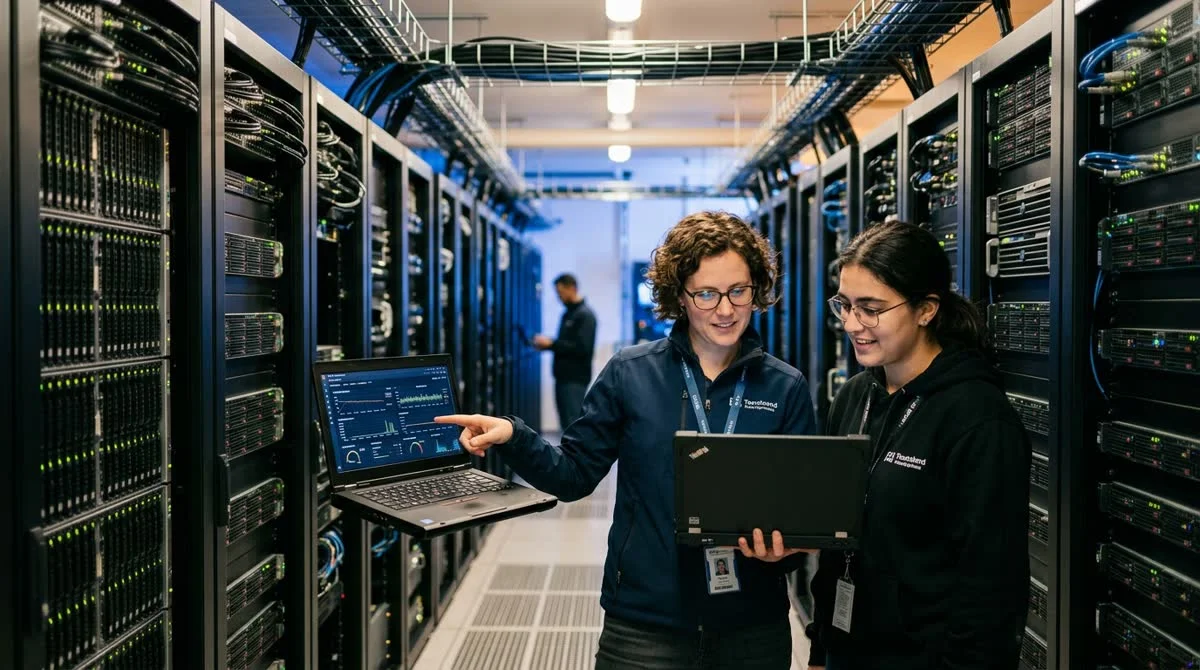
SkyPilot and Hugging Face launched storage with no egress fees
The SkyPilot and Hugging Face Storage integration makes it possible to train models on any cloud while storing weights and datasets at $12-18/TB/month with no egress fees.

Microsoft launched Foundry Managed Compute: thousands of Hugging Face models with one click
Microsoft combined Azure Foundry with the Hugging Face catalog: thousands of open models now deploy in the cloud with one click, with enterprise security and unified billing.
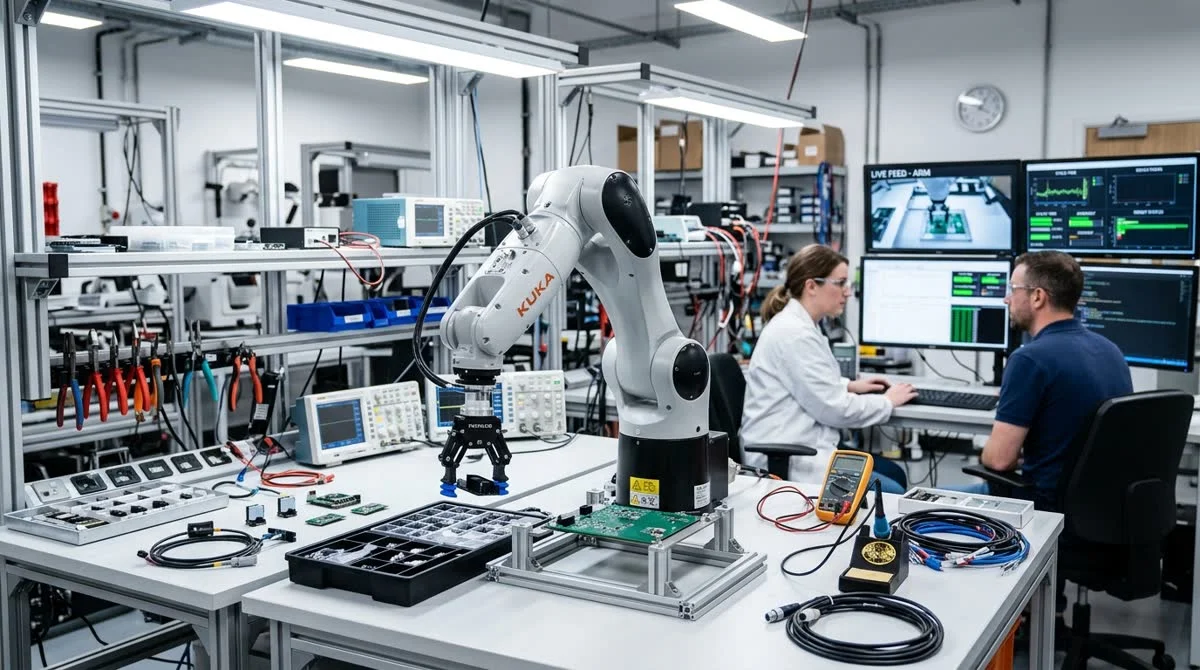
LeRobot v0.6.0 from Hugging Face: robots learn to predict the future and evaluate themselves
Hugging Face released LeRobot v0.6.0 with world-model policies, reward models for task self-assessment, and six new benchmarks — completing the full robot learning cycle.

Hugging Face Updates Kernels: Trusted Publishers, Code Signing, and Agentic Development
On July 6, 2026, Hugging Face released a major Kernels update: kernels became a separate repository type on Hub, trusted publishers and code signing via Sigstore were added.
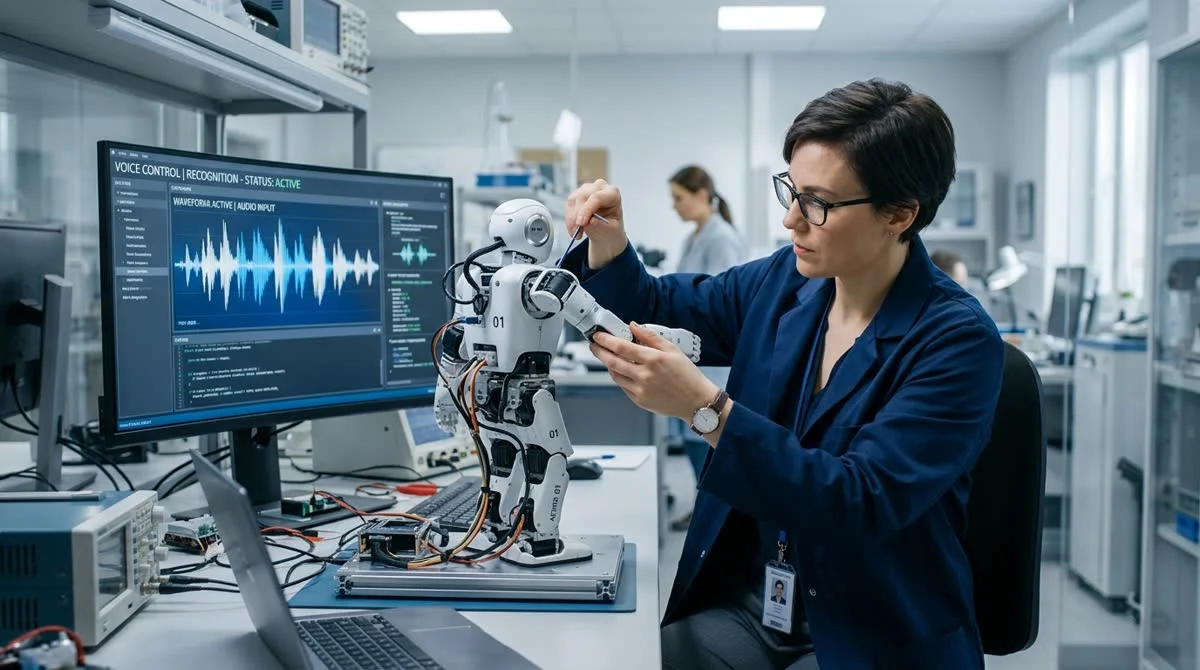
Hugging Face and Cerebras launch Gemma 4 for real-time voice AI
Hugging Face and Cerebras unveiled an open speech-to-speech pipeline on Gemma 4 with predictable latencies — the system is already used in more than 9,000 Reachy Mini robots.

PaddleOCR releases PP-OCRv6: text recognition in 50 languages from 1.5 to 34.5 million parameters
PP-OCRv6 from Baidu PaddlePaddle: a universal OCR system for 50 languages in three configurations ranging from 1.5 to 34.5 million parameters, with an accuracy gain of +4.6-5.1 percentage points over the previous server

ServiceNow: AI agent leaks corporate secrets through a chain of search queries
ServiceNow researchers have shown that a deep-research agent unintentionally exposes corporate secrets — each query is harmless on its own, but the whole chain forms a mosaic.

Hugging Face compares all LoRA alternatives: who wins at fine-tuning LLMs
The Hugging Face team tested five PEFT methods for fine-tuning LLMs — from DoRA to GaLore — and found out when LoRA can be beaten, and exactly what it costs.
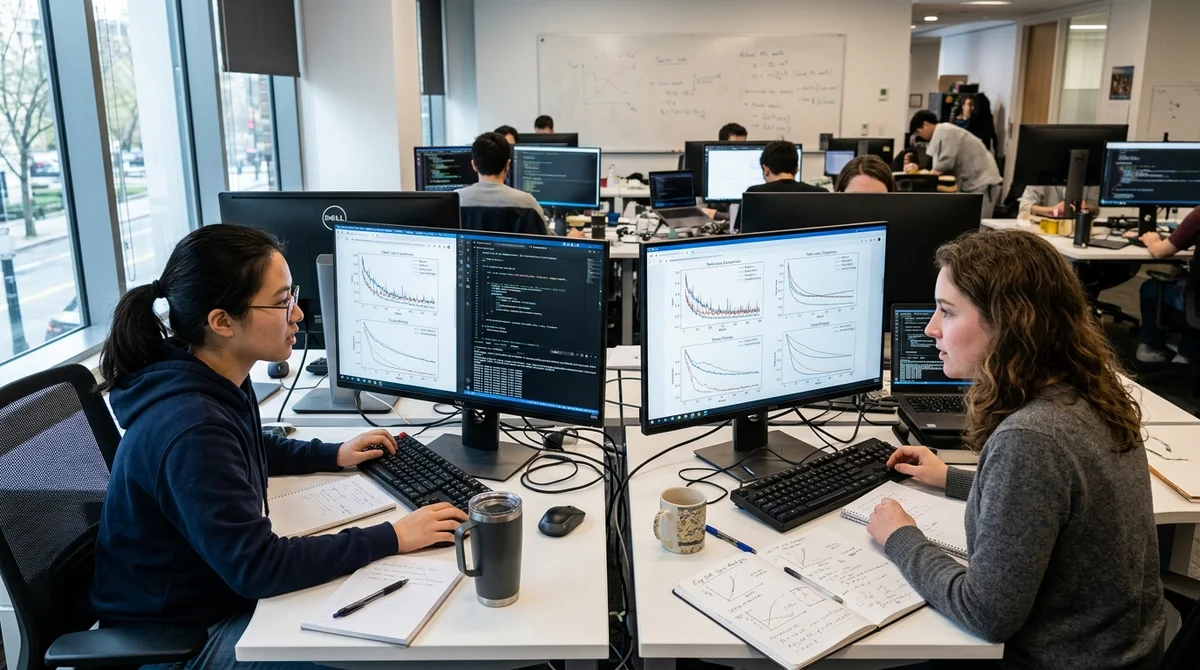
Hybrid models predict content words better than transformers — Allen AI study
Allen AI compared the OLMo 3 and OLMo Hybrid architectures: hybrid models predict nouns, verbs, and adjectives more accurately, but lag behind transformers on repetitive text spans.

Hugging Face: launch a vLLM server on HF Jobs with a single command
Hugging Face has added vLLM support to the HF Jobs platform: a production-ready inference server for any model from the Hub can now be deployed with a single CLI command.
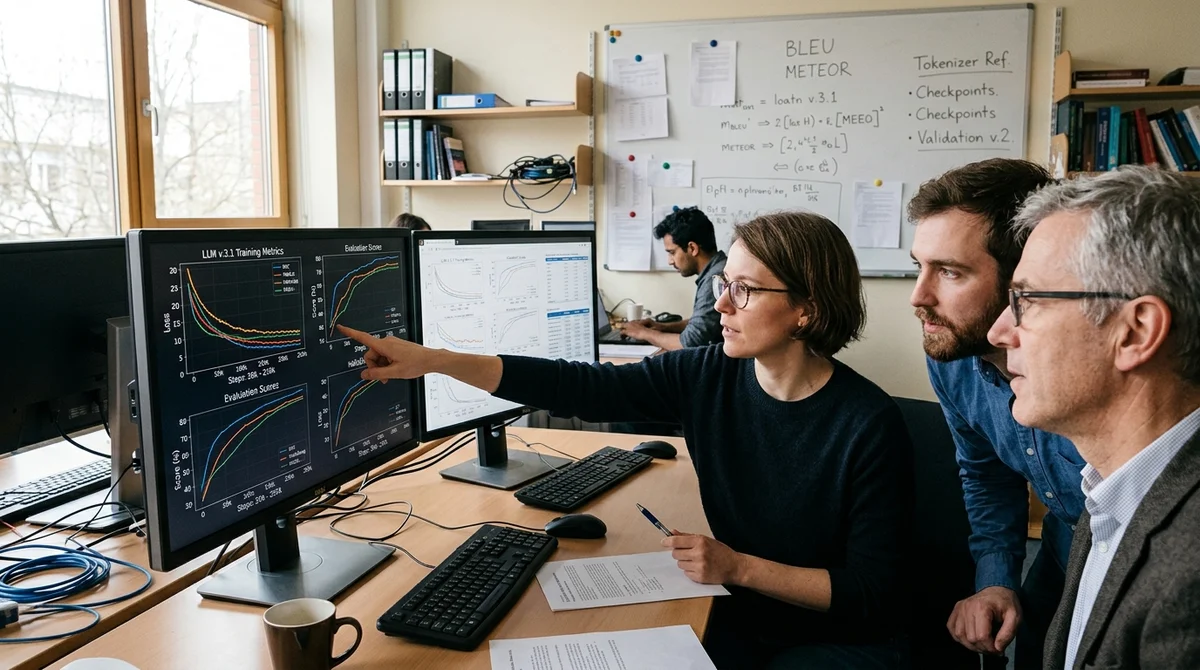
AllenAI Releases olmo-eval — A Platform for Evaluating LLMs During Training
AllenAI released olmo-eval, an open toolkit for continuous evaluation of language models throughout the training cycle — checkpoint by checkpoint.

Cohere Presents North Mini Code — Model for Developers and AI Agents
Cohere released North Mini Code — a 30-billion-parameter model specifically trained on programming and AI agent work. The model is free and available to everyone.

Voice agents not ready for bilingual customers. ServiceNow-AI research
Voice agents perform poorly with bilingual clients. This was shown by research from the ServiceNow-AI team, which tested seven popular speech recognition systems on examples of code-switching — when…

How to Speed Up PyTorch Models: A Practical Guide to torch.profiler
Hugging Face explained torch.profiler, a built-in PyTorch tool for analyzing performance. It helps identify bottlenecks in model training and inference.
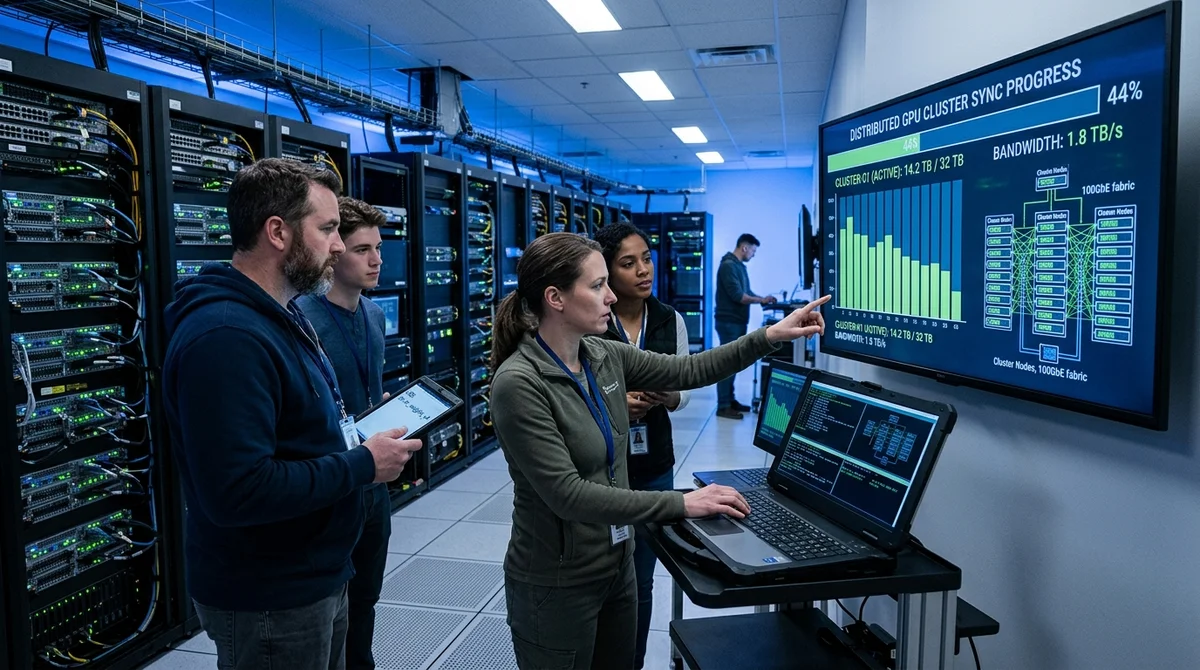
Hugging Face Enables TRL to Deliver Trillion Parameters Through Delta Weights
Hugging Face added Delta Weight Sync to TRL — a technique that sends only weight changes instead of full files, reducing data volume by hundreds of times when training giant models.
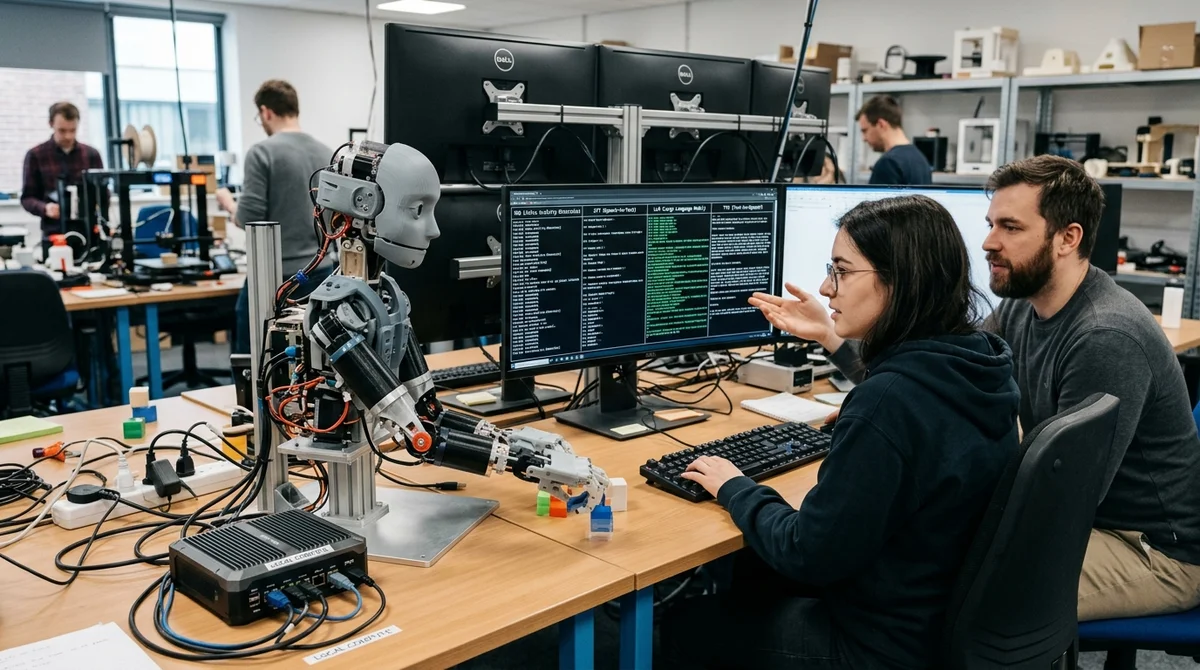
Reachy Mini Learns to Speak Locally Without the Cloud
The Reachy Mini humanoid robot can now run a full speech recognition stack locally without cloud or API, thanks to open models from Hugging Face.

IBM and Artificial Analysis create benchmark: AI agents fail at IT tasks
Large language models scored less than 50% on the new ITBench-AA benchmark for assessing AI agents' ability to solve corporate IT tasks. This shows that full automation of IT work remains a distant future.

NVIDIA Nemotron: Diffusion Models Generate Text 6x Faster
NVIDIA introduced Nemotron-Labs Diffusion — the first language models that generate text in parallel instead of sequentially. In speculative mode, they run 6× faster than conventional models thanks to the diffusion appro