Google I/O 2026: Leaders Discussed Quantum Computing, Robotics, and AI for Creativity
Google I/O 2026 featured an extensive series of Dialogues discussions with leading experts from the global AI industry. They discussed quantum computing breakthroughs, advances in robotics, AI applications in creativity, and the long-term impact of technology. The central message: AI is rapidly transitioning from research laboratories into real-world practice, becoming a tool for solving concrete business challenges and creating new creative forms. The conference highlighted how the industry is moving from experimentation to scaling. Quantum computing paired with AI is opening solutions previously considered incalculable, robotics is finally converging with practical applications across logistics and manufacturing, and generative AI is reshaping creative industries while raising critical questions about copyright and authenticity.
AI-processed from Google AI Blog; edited by Hamidun News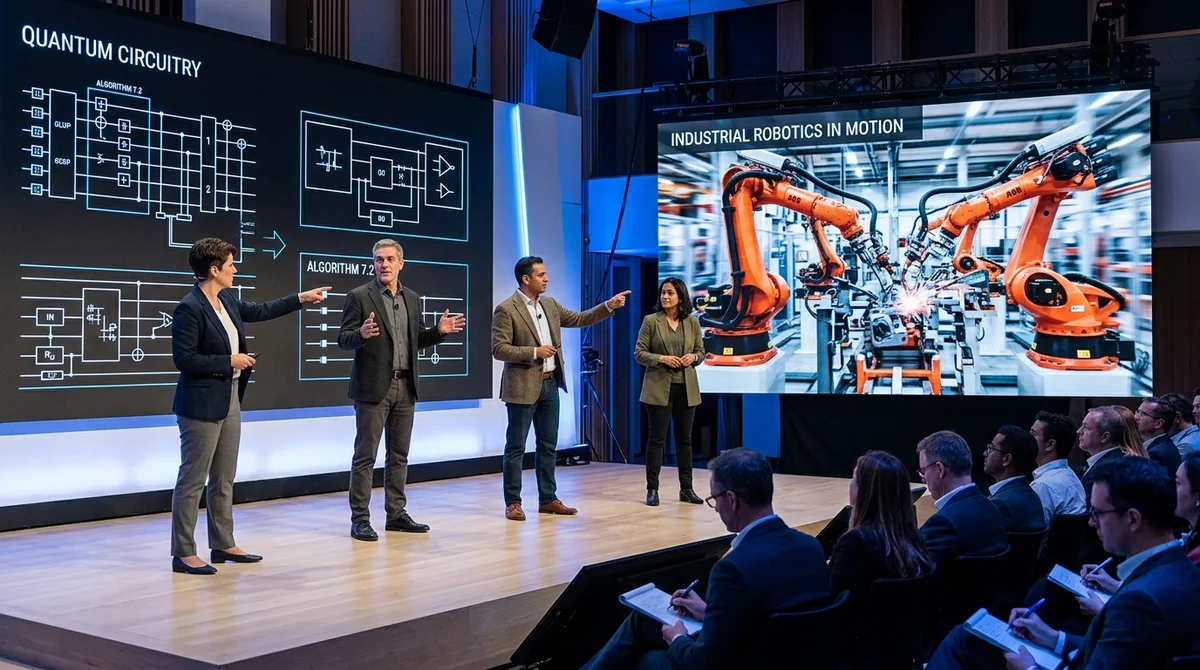
Google I/O 2026 once again brought together leading world experts. On the new Dialogues stage, they discussed not just the latest updates, but truly consequential trends—quantum computing, robotics, AI for creativity, and how technology will reshape the economy and society.
Quantum Computing and AI—The New Frontier
Quantum computers have finally moved beyond the laboratory. On the Dialogues stage, experts discussed how quantum computing paired with AI will create a new class of solutions inaccessible to classical systems. From molecular modeling in drug development to optimizing energy distribution amid climate change, quantum computing opens doors to what was previously simply incalculable.
Google is investing through the Willow project and other initiatives. At the conference, speakers emphasized: hybrid systems, where classical GPUs work in tandem with quantum processors, represent the practical frontier for the next two to three years. Such architecture will enable solving problems that today remain inaccessible even to the most powerful supercomputers.
The main challenge is not the technology itself, but developing algorithms that can use it effectively. Here, AI's role is critical: machine learning will help 'teach' quantum systems and compensate for operational errors.
Robotics in Real Practice
Robotics and AI are finally converging in real-world applications. Dialogues explored how transformers and multimodal models give robots the ability to see and understand the world almost like humans, but at incredible speed. Google and its partners demonstrated projects where robots grasp objects with precision, navigate complex environments, and work in teams with minimal programming. Implementation areas are expanding rapidly:
- Logistics automation and warehouse management
- Assembly and material processing in manufacturing
- Support in surgical procedures
- Infrastructure fault diagnosis
- Exploration of extreme environments: space, ocean, radioactive zones
At the conference, speakers emphasized: robots with AI are not a replacement for humans, but a tool to free people from dangerous and routine work. The result: labor becomes increasingly intellectual and creative.
AI for Creativity—Reshaping the Industry
The most heated discussion centered on generative AI in creativity. Artists, musicians, and filmmakers took the stage, expressing both hopes and concerns. Google clarified: AI is not a replacement for creators, but a tool that eliminates routine work and allows focus on the idea. However, experts agreed: copyright, licensing, and fair compensation for authors are issues that need to be addressed now. Without clear rules, chaos will ensue.
"AI for creativity is a partner that hears and understands the
artist's intention."
They also discussed a critical problem: the safety of generative content. How to prevent deepfakes? How to ensure transparency about AI origins? These questions will become critical as scaling occurs in media and entertainment.
What This Means
Google I/O 2026 demonstrated: the industry is transitioning from experiments to scaling. AI + quantum + robotics + creativity are not separate branches, but a unified ecosystem reshaping production, science, and culture. The next 2-3 years will be decisive: companies that are now building competencies in these areas will gain a sustainable advantage.
- Oct 28, 2026A 2015 CNN Beat GPT-6 Astra and Claude Fable 5.1 at Skin Cancer Diagnosis
- Oct 28, 2026Google taught an LLM to “sleep”: SLEEP consolidates knowledge into weights, up to 10 million tokens
- Oct 28, 2026Keystone removes the model name from code: open-source LLM gateway adds 0.64 ms
- Oct 28, 2026Wired Tested 6 AI Agents in a Day: Dots Leads, Gemini Spark Fails at Lunch
Key Questions Answered
What are the key details on Quantum Computing and AI—The New Frontier?
Quantum computers have finally moved beyond the laboratory. On the Dialogues stage, experts discussed how quantum computing paired with AI will create a new class of solutions inaccessible to classical systems. From molecular modeling in drug development to optimizing energy distribution amid climate change, quantum computing opens doors to what was previously simply incalculable. Google is investing through the Willow project and other initiatives. At the conference, speakers emphasized: hybrid systems, where classical GPUs work in tandem with quantum processors, represent
What are the key details on Robotics in Real Practice?
Robotics and AI are finally converging in real-world applications. Dialogues explored how transformers and multimodal models give robots the ability to see and understand the world almost like humans, but at incredible speed. Google and its partners demonstrated projects where robots grasp objects with precision, navigate complex environments, and work in teams with minimal programming. Implementation areas are expanding rapidly: Logistics automation and warehouse management Assembly and material processing in manufacturing Support in surgical procedures Infrastructure faul
What are the key details on AI for Creativity—Reshaping the Industry?
The most heated discussion centered on generative AI in creativity. Artists, musicians, and filmmakers took the stage, expressing both hopes and concerns. Google clarified: AI is not a replacement for creators, but a tool that eliminates routine work and allows focus on the idea. However, experts agreed: copyright, licensing, and fair compensation for authors are issues that need to be addressed now. Without clear rules, chaos will ensue. "AI for creativity is a partner that hears and understands the artist's intention." They also discussed a critical problem: the safety of
Ship AI Faster with Founders, Engineers & Weekly Architecture Reviews
Inside Vibe Club (hamidun.com/club) — weekly live masterminds with Zhemal Khamidun, Tech Radar, full LMS access, and 370+ production Claude Code skills.
The AI world, distilled — once a week
Seven stories that actually mattered, hand-picked. No noise, no reposts, no press releases.
Done! Check your inbox for a confirmation.