Nvidia and OpenAI: Jensen Huang Clears the Fog Around the $100 Billion
Nvidia CEO Jensen Huang called reports that the company had paused its investment in OpenAI "nonsense." Amid rumors of friction over delays to Blackwell chips and Sam Altman's ambition to build his own hardware, Huang said the partnership remains solid. The stakes are high: OpenAI is Nvidia's largest chip customer, and Nvidia is the main beneficiary of GPT's success. Any hint of conflict hits the market, but for now both sides are holding the status quo. Nvidia cannot afford to lose such a customer, and OpenAI cannot survive without Jensen's compute.
AI-processed from TechCrunch; edited by Hamidun News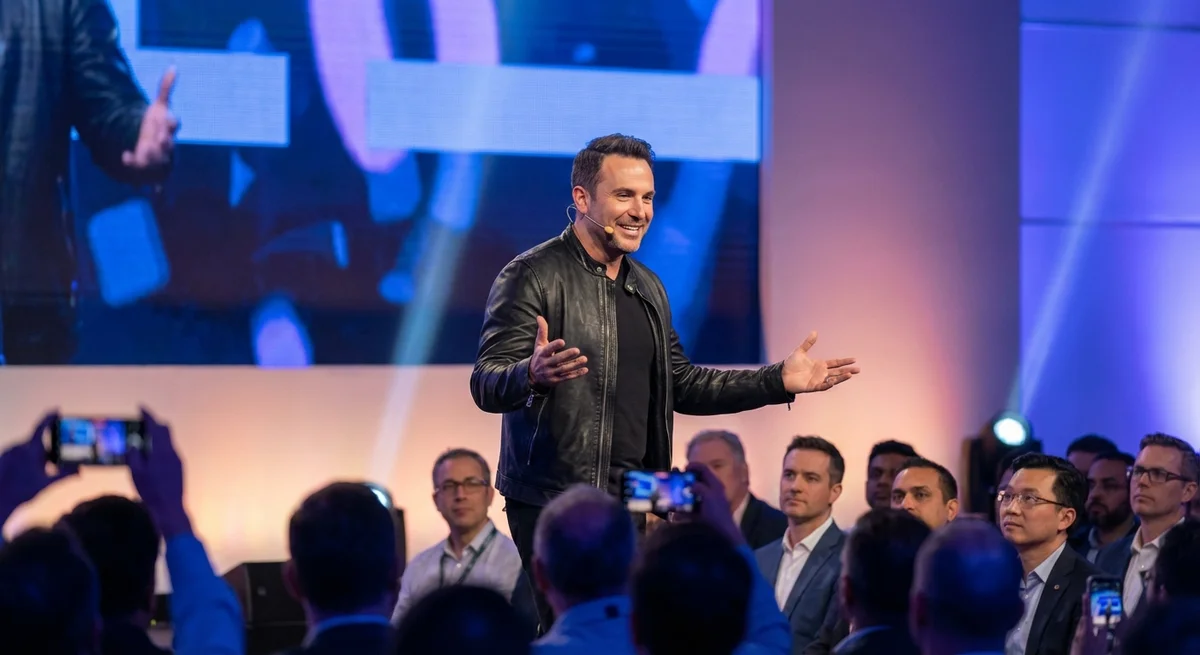
When hundreds of billions of dollars and technological leadership for the next decade are on the line, any spark can start a fire. This week the industry held its breath: rumors spread that Nvidia had supposedly slowed its massive investment in OpenAI. Jensen Huang, the man in the perennial leather jacket and head of the world's most valuable company, chose not to stay silent. His verdict was short and bluntly businesslike: he called the reports complete nonsense.
To see why the statement resonated so much, it helps to recall how the modern AI economy works. Nvidia and OpenAI today are not just a partner and a supplier. They are conjoined twins whose fortunes are inseparable. OpenAI consumes compute at a scale that requires designing dedicated data centers around it, and Nvidia earns the lion's share of its revenue from that demand and, more importantly, confirmation of its status as the gold standard. If a real rift opened in this relationship, investors' faith in the entire AI boom would wobble.
The rumors of friction did not come out of nowhere. Insiders have long whispered that Sam Altman is looking too actively for ways to reduce his dependence on Nvidia. His ambitious plan to build his own network of chip fabs, a project requiring trillions of dollars of investment, clearly does not thrill Huang. On top of that came news of technical difficulties and shipment delays for the new Blackwell architecture, on which OpenAI is making a huge bet for training its next, even more powerful models.
But Jensen Huang understands the rules of the game better than most. Publicly admitting problems would mean an instant drop in the stock price and a lavish gift to competitors AMD and Intel, who are dying to take a bite of this pie. By denying a rift, Huang projects confidence to the market: Nvidia is still fully in control, and OpenAI isn't going anywhere as long as it needs the fastest GPUs in the world. It is a classic show of strength, with hard pragmatism behind the outward calm.
It is interesting to watch how Nvidia's role in this ecosystem is changing. It used to be simply the seller of shovels during a gold rush. Now it is becoming the biggest investor in, and ideologue of, those who use the shovels. An investment of 100 billion dollars is not just a financial transaction; it is the purchase of loyalty. It is a guarantee that OpenAI will use Nvidia software and hardware for many years to come, without looking at alternatives. In a world where software is becoming ever more universal, owning the infrastructure turns into absolute power.
Despite the upbeat statements, some tension between the companies will persist. Altman keeps flying around the world in search of funding for his chip initiatives, while Nvidia engineers are sweating to fix Blackwell's flaws so as not to miss delivery deadlines for key customers. It is a typical marriage of convenience, where the two sides may not particularly like each other, but a divorce would cost both too much. As long as OpenAI remains a showcase for Nvidia's capabilities and Nvidia the only engine for OpenAI's ambitions, they are doomed to cooperate.
Bottom line: Nvidia cannot let OpenAI go to other suppliers, and OpenAI cannot grow without Jensen's compute. Any rumors of conflict will be shut down as hard as possible for as long as this balance of power holds.
- Nov 2, 2026Arca gives AI agents finance tasks lasting up to 10 days, but leaves the trades to humans
- Nov 2, 2026Meta's Muse assistant keeps dossiers on loved ones and gets root on Ubuntu by default
- Nov 1, 2026Local models lose to Opus and Codex: 0.21 on a MacBook versus 1.00 for Codex
- Nov 1, 2026Kimi scores 96.2% on a 1C database analytics test and emerges as a fallback if Claude access is blocked
Test Frontier LLMs & Autonomous Agents in One Workspace
Run Claude Opus 5.5, GPT-6, Gemini 3.1, and DeepSeek side-by-side in Nomad AI (nomadnet.ai) — unified model routing, deep research, and multimodal workflows under one subscription.
The AI world, distilled — once a week
Seven stories that actually mattered, hand-picked. No noise, no reposts, no press releases.
Done! Check your inbox for a confirmation.