Carbon Robotics' Large Plant Model teaches robots to recognize weeds on sight
Carbon Robotics has unveiled the Large Plant Model (LPM), a multimodal system that turns agricultural robots into genuine botany experts. Adapting a robot to a new field or weed species used to take weeks of training and thousands of labeled images. LPM understands plant structure instantly, acting as a "foundation model" for agtech. The company's LaserWeeder machines can now destroy weeds in real time without damaging crops, even when they have never seen a particular weed species before. It's a major step from narrow AI toward general-purpose machines that help farmers cope with labor shortages and cut their reliance on chemicals.
AI-processed from TechCrunch; edited by Hamidun News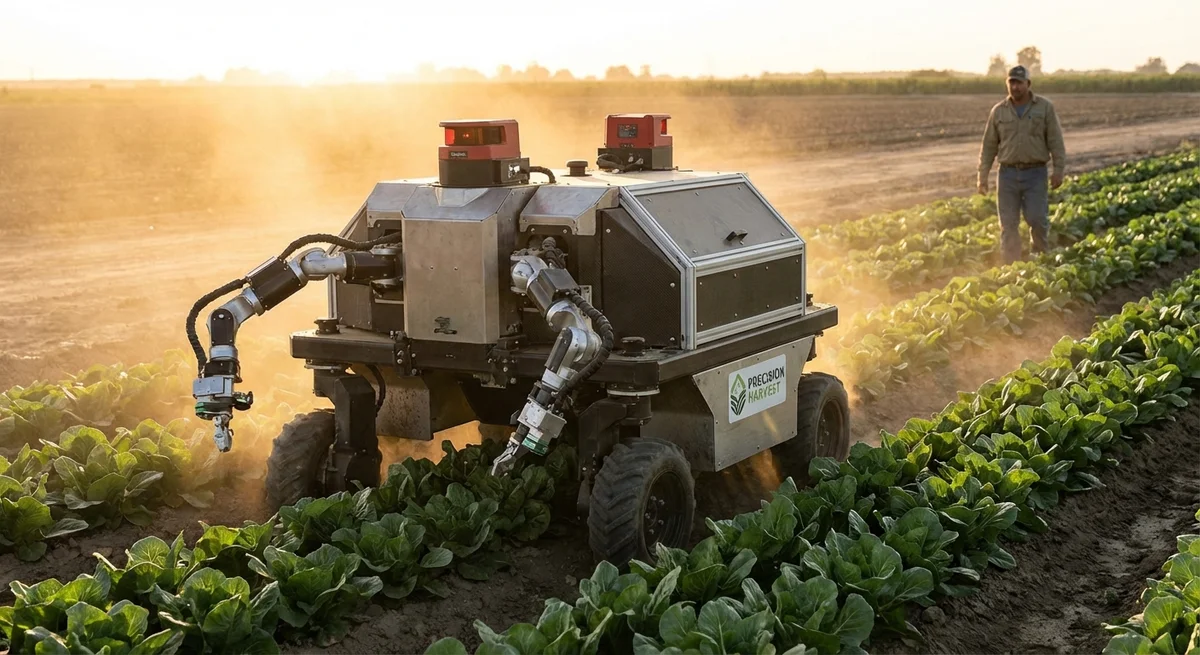
While the rest of the world is busy chatting with neural networks and generating images of questionable quality, a quiet revolution is happening in the fields. Carbon Robotics, a company that has spent several years successfully burning weeds with lasers, has solved agtech's biggest problem: slow training. It has introduced the Large Plant Model (LPM), arguably the most important event in the industry since the invention of the tractor. The robot used to be a diligent but fairly limited tool. Now it has gained something resembling biological vision.
The problem with older systems was their narrow focus. To teach a robot to tell broccoli from pigweed, engineers had to feed the algorithms thousands of photos of a specific field under specific lighting conditions. If a farmer switched crops or moved to another region, the system had to be retrained. That was expensive, slow, and fundamentally unscalable. Carbon Robotics realized it was time to stop teaching robots the specifics and start giving them an understanding of the fundamentals. LPM is a kind of GPT for plants, trained on a massive dataset of 25 million labeled images.
What does this mean in practice? A LaserWeeder can now drive into a field and immediately understand what it's looking at. The model accounts for morphology, growth stage, and even how a plant looks under different lighting or in different weather. That lets it destroy unwanted vegetation with millimeter precision without touching the crops. Adaptation is now many times faster: work that once took months of development now happens instantly. The robot simply sees a weed and decides to eliminate it, without waiting for approval from headquarters.
This matters enormously for agriculture because of two factors: labor shortages and weeds' growing resistance to herbicides. Chemicals no longer work as well as they did thirty years ago, and fewer and fewer people want to spend entire days under a scorching sun. Robots running LPM address both problems. They don't get tired, they don't ask for raises, and, most importantly, they don't drench the soil in toxic chemicals. This is clean energy and clean math at work. Instead of poisoning everything in the hope of killing the weed, the machine burns away the problem with pinpoint accuracy.
The shift to foundation models in robotics is a global trend that we are finally seeing in the real economy. Carbon Robotics has shown that AI can be useful not only in cloud services but also in physical hardware, where the cost of a mistake is a lost harvest. The line between "digital" and "physical" AI is blurring. A robot used to be just a machine running a program; now it is an intelligent agent capable of navigating the chaos of the natural world. And this is only the beginning, since the LPM database will only keep growing.
The bottom line: Carbon Robotics has done for farmers what OpenAI did for copywriters — it has given them a tool that understands context. Will competitors be able to ship something similar quickly, or has the laser weeding market already been captured?
- Nov 2, 2026Meta's Muse assistant keeps dossiers on loved ones and gets root on Ubuntu by default
- Nov 1, 2026Local models lose to Opus and Codex: 0.21 on a MacBook versus 1.00 for Codex
- Nov 1, 2026Kimi scores 96.2% on a 1C database analytics test and emerges as a fallback if Claude access is blocked
- Nov 1, 2026OpenAI Rewrites GPT Behavior Rules: Five Values and a Chain of Command
Test Frontier LLMs & Autonomous Agents in One Workspace
Run Claude Opus 5.5, GPT-6, Gemini 3.1, and DeepSeek side-by-side in Nomad AI (nomadnet.ai) — unified model routing, deep research, and multimodal workflows under one subscription.
The AI world, distilled — once a week
Seven stories that actually mattered, hand-picked. No noise, no reposts, no press releases.
Done! Check your inbox for a confirmation.