Waymo raises $16 billion to make you forget drivers for good
Waymo has officially become an industry heavyweight, valued at $126 billion after a $16 billion round. The investor list reads like a who's who of Silicon Valley and China, from Sequoia to LongYue Capital. While skeptics talk about autonomous driving as a dead end, Alphabet keeps control, and rivals are left wondering where to find that much cash. This is not just an investment. It is a bet that robotaxis are not the future but a business model that already works and is ready to scale across the country.
AI-processed from 36Kr (36氪); edited by Hamidun News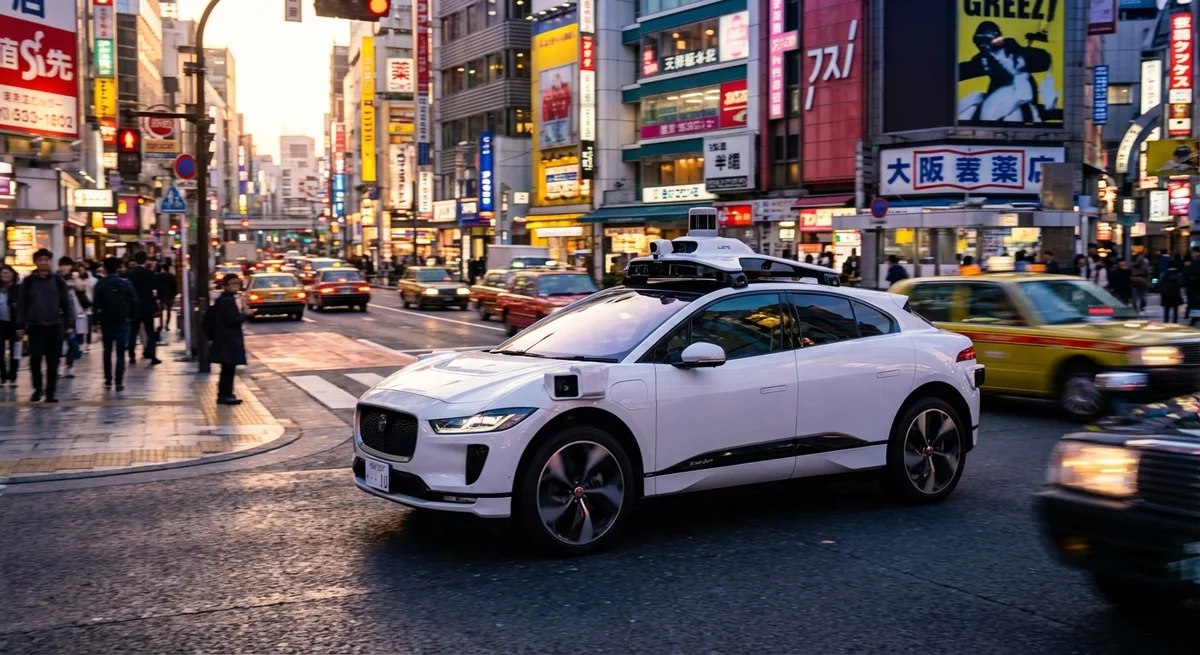
While the industry argues about when neural networks will replace programmers, Waymo has decided to remind everyone who really rules the physical world. A sum of $16 billion sounds like the budget of a small country, but for the autonomous driving market it is the fuel needed for a final push. The company's valuation has soared to $126 billion, a figure that makes even the most successful old-school automakers nervous. This is not just another funding round. It signals that the era of free experimentation is over and the big game has begun.
To grasp the scale of the event, it helps to look back. Waymo began as the secret Google Chauffeur project, back when a car without a steering wheel looked like science fiction. Over the years Alphabet poured tens of billions into the unit, enduring losses and the mockery of skeptics. Today's investor list looks like a Forbes list of the venture capital world: Sequoia Capital, Andreessen Horowitz (a16z), Tiger Global and even China's LongYue Capital. The fact that Alphabet retains a controlling stake says a lot: the parent company is not ready to give up the hen that is about to start laying golden eggs.
Why have investors decided to write such checks right now? The answer is simple: Waymo is the only company whose robotaxis genuinely operate 24/7 in several US metropolitan areas with no driver behind the wheel. While competitors at Tesla feed audiences promises of self-driving cars that will arrive someday, Waymo has already logged millions of miles in San Francisco, Phoenix and Los Angeles. The $16 billion will go not to theoretical lab research but to aggressive fleet expansion and the purchase of new platforms, probably based on Zeekr electric vehicles.
The Waymo Driver technology stack has evolved from bulky rooftop systems to elegant integrated solutions. But the biggest change has happened in the minds of regulators and users. People have stopped filming passing empty cars as a marvel; they now use them as ordinary taxis to get to a bar or to work. This shift in perception is the most expensive part of Waymo's capitalization. Investors are betting the company will become the operating system for moving people and goods, capturing the margin that Uber and drivers used to share.
The participation of Yuri Milner's DST Global and Bessemer Venture Partners is worth noting. These funds are known for their ability to step into projects at the stage when they are ready for global dominance. For Waymo, this means moving to a phase where software and hardware work in perfect symbiosis. The company is no longer just teaching a car to turn left. It is building a highly complex logistics network capable of managing thousands of autonomous units at once without a single failure in its cloud infrastructure. That demands enormous spending on server capacity and real-time data processing.
Competition, meanwhile, is only intensifying. Despite a huge lead, Waymo feels Chinese players such as Baidu's Apollo Go and American startups like Zoox breathing down its neck. Still, a $16 billion financial cushion gives Waymo a right to make mistakes that others do not have. It lets the company not merely survive but dictate the rules of the game, setting standards for safety and interaction with the urban environment. Ultimately, the fight is not over the number of miles but over the trust of passengers and officials.
Bottom line: Waymo has finally turned from a research project into an industrial giant able to absorb billions of dollars to capture the transportation services market. With this valuation and Alphabet's backing, the question of whether robotaxis will ride everywhere is effectively closed. Only one question remains: how fast can Waymo push ordinary taxi drivers out of your city?
- Nov 2, 2026Karpathy builds a YouTube clone with 6454 videos from Hacker News recommendations in two hours
- Nov 2, 2026Karpathy used Claude to build HackerTube from 6,454 videos recommended on Hacker News
- Nov 2, 2026Anthropic needs to grow revenue 32% a year to cover $850 billion in contracts
- Nov 2, 2026Bun creator uses Claude Code to port 750K lines from Zig to Rust in 11 days
Ship AI Faster with Founders, Engineers & Weekly Architecture Reviews
Inside Vibe Club (hamidun.com/club) — weekly live masterminds with Zhemal Khamidun, Tech Radar, full LMS access, and 370+ production Claude Code skills.
The AI world, distilled — once a week
Seven stories that actually mattered, hand-picked. No noise, no reposts, no press releases.
Done! Check your inbox for a confirmation.