SiTime Buys Renesas's Timing Business in a $2.9 Billion Deal for Control of the Clock
SiTime is not thinking small: it is buying the timing division of Japan's Renesas Electronics for a hefty $2.9 billion. The payment is mixed, cash plus shares. Why does it matter? Without quality clock generators and oscillators, modern data centers and 5G towers simply cannot run in sync. SiTime is effectively cementing its position in precision timing, which is critical for the hardware that trains neural networks. The semiconductor market keeps consolidating, and control over the "heartbeat" of electronics is passing into fewer hands.
AI-processed from Bloomberg Tech; edited by Hamidun News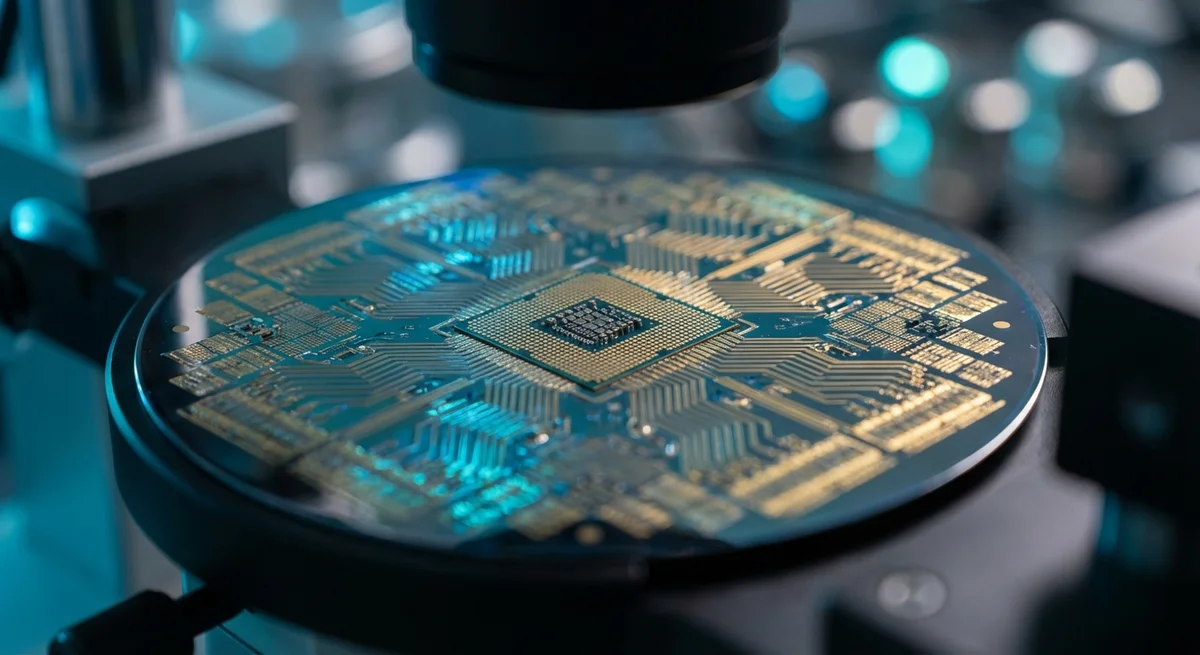
The semiconductor market looks crowded again. SiTime, a well-known maker of analog chips, decided its share of the market was not enough and agreed to buy the timing division of Japanese giant Renesas Electronics. The price tag is $2.9 billion. If three billion dollars for "clocks" sounds excessive, here is why that view is wrong.
Start with the context. In a world where every nanometer counts and data center transfer speeds are measured in terabits, time is literally money. Timing chips (clock generators and oscillators) are the heartbeat of all electronics. Without them, a processor does not know when to execute an instruction, and a network card does not know when to send a data packet. In the AI era, when thousands of GPUs must work as a single organism, synchronization becomes a critical task. Any loss of sync stalls model training and drags down cluster efficiency.
The deal looks strategically calculated. SiTime is paying with a combination of cash and shares, which signals serious intent and confidence in the synergies. By taking the Renesas division, it is not just buying a competitor but also technology and a customer base. Renesas is an industry heavyweight, and its timing work has been used for years in fields ranging from automotive electronics to industrial equipment. SiTime, for its part, is known for its MEMS (microelectromechanical systems) solutions, which replace the good old quartz resonators.
What does this change on the global board? This is classic market consolidation. SiTime is trying to become a "one-stop shop" for anyone who needs precise time in silicon. Now, when makers of AI servers or 5G equipment look for synchronization components, they have fewer and fewer alternatives. SiTime is assembling a full house of technologies: its own innovative MEMS plus Renesas's classic know-how.
For Renesas itself, this is probably a way to shed "excess weight" and focus on its core areas, microcontrollers and power electronics, where competition from Chinese manufacturers and Western giants such as Infineon is only intensifying. The billions it receives will clearly go toward strengthening those positions or paying down debt.
But for those of us watching the AI race, something else matters. This deal is one more signal that hardware is preparing for the next leap in performance. Increasingly complex chip architectures demand ever more refined supporting components. SiTime understands this: whoever controls the clock controls the rhythm of the entire industry.
Bottom line: The market for AI infrastructure components is being monopolized not only at the GPU level (hello, NVIDIA) but also at the level of supporting chips. SiTime is becoming the chief timekeeper of Silicon Valley.
Ship AI Faster with Founders, Engineers & Weekly Architecture Reviews
Inside Vibe Club (hamidun.com/club) — weekly live masterminds with Zhemal Khamidun, Tech Radar, full LMS access, and 370+ production Claude Code skills.
The AI world, distilled — once a week
Seven stories that actually mattered, hand-picked. No noise, no reposts, no press releases.
Done! Check your inbox for a confirmation.