NVIDIA puts gamers on hold: why AI matters more than your graphics card
The AI world has gone wild on scale: Alibaba's Qwen crashed its servers by giving away free tea, and Amazon shocked investors with a plan to spend $200 billion on infrastructure. The main drama is at NVIDIA, which is reportedly ready to sacrifice the gaming GPU market in 2026 and redirect scarce memory to AI chips. Meanwhile, Apple is winding down Mulberry, its ambitious virtual health coach project, and Tencent is joining the race for desktop agents with WorkBuddy. We are watching the moment when hardware finally became more important than software.
AI-processed from 36Kr (36氪); edited by Hamidun News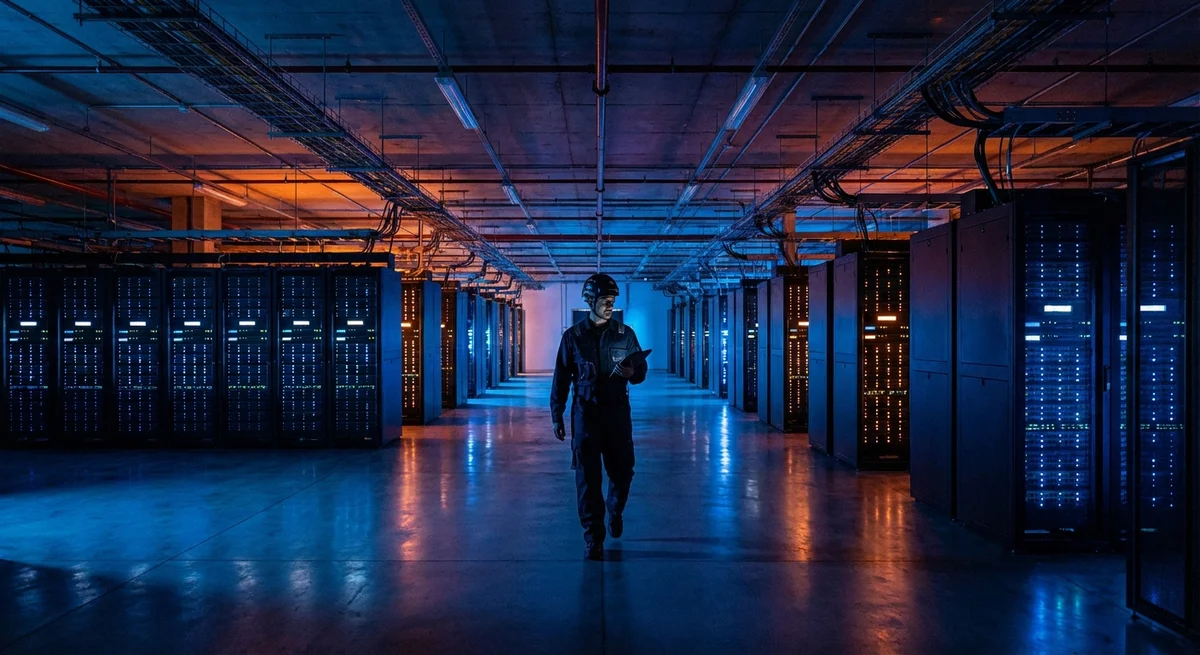
Imagine walking into your favorite coffee shop and finding a line three blocks long, because a neural network promised everyone a free latte. That is essentially what happened to Alibaba and its Qwen model. The "30 billion for free orders" promotion, launched for Chinese New Year, ended with servers buckling under the crush of people who wanted free tea paid for by artificial intelligence. It is a fitting metaphor for the whole industry: demand is so overheated that infrastructure is cracking at the seams, and the giants are ready to burn billions to win user loyalty. But if Alibaba's outage is a temporary problem, the news from NVIDIA raises questions about longer-term changes inside our PCs.
While you were waiting for the RTX 50 Super announcement, Jensen Huang seems to have decided that gamers can wait. Reports suggest NVIDIA may not release any new gaming graphics cards in the coming year. The reason is painfully mundane: a shortage of memory chips. The company faces a choice: sell you a graphics card for a thousand dollars, or ship the same components inside an AI training accelerator for thirty thousand. The answer is obvious. Priorities have shifted so far that even finished designs for new cards are being shelved while cloud giants queue up for compute. The irony is that gamers once helped NVIDIA take off, and now they have become a secondary market.
Amazon confirms the scale of the madness. The company announced plans to invest a staggering $200 billion in building data centers and developing its own chips. Investors are mildly shocked, since such spending will inevitably hit profits in the short term. But the rule in Big Tech now is this: either you build "data factories" today, or your models fall hopelessly behind tomorrow. This is no longer just a contest of algorithms; it is a war of budgets and supply chains. Whoever builds enough servers first will set the rules of the game for the next decade.
Against this backdrop, Apple looks surprisingly cautious. Reports that it is winding down the Mulberry virtual health project suggest that even Cupertino has admitted that building a full AI coach is far harder than simply integrating a chatbot into the iPhone. Instead of a standalone breakthrough service, Apple will most likely spread the work across existing apps. Meanwhile, Tencent is launching WorkBuddy, a desktop AI agent that tries to turn the user's desktop into a full workplace run by a neural network. The battle for our attention is moving from chatbots to operating system interfaces.
Elon Musk is not sitting still either. The plan to merge SpaceX and xAI through a clever two-step procedure is a classic move in his style. SpaceX gets access to the AI startup's brains without legally taking on its debts. Vertical integration in action: from rockets to neural networks, everything runs in a single ecosystem. While some hand out tea, others build an empire where AI controls both cars (recall Xpeng's L4 tests) and spacecraft.
We are entering an era in which AI stops being a "feature" and becomes the foundation for which companies are ready to rework their business models and sacrifice familiar markets.
The bottom line: Are you ready for your next graphics card to cost as much as a used car, because all the chips went to training Claude 4 and GPT-5?
- Nov 2, 2026Karpathy builds a YouTube clone with 6454 videos from Hacker News recommendations in two hours
- Nov 2, 2026Karpathy used Claude to build HackerTube from 6,454 videos recommended on Hacker News
- Nov 2, 2026Arca gives AI agents finance tasks lasting up to 10 days, but leaves the trades to humans
- Nov 2, 2026Anthropic needs to grow revenue 32% a year to cover $850 billion in contracts
Test Frontier LLMs & Autonomous Agents in One Workspace
Run Claude Opus 5.5, GPT-6, Gemini 3.1, and DeepSeek side-by-side in Nomad AI (nomadnet.ai) — unified model routing, deep research, and multimodal workflows under one subscription.
The AI world, distilled — once a week
Seven stories that actually mattered, hand-picked. No noise, no reposts, no press releases.
Done! Check your inbox for a confirmation.