Oura builds its own AI model for women's reproductive health
Oura, the company known for its smart health-tracking rings, has launched a proprietary AI model specializing in women's reproductive health. The model can answer questions across the entire reproductive spectrum, from early menstrual cycles to menopause. It is a serious move in a field where women's health has historically been underfunded and under-researched. Oura is betting on a personalized approach built on the data its ring collects around the clock.
AI-processed from TechCrunch; edited by Hamidun News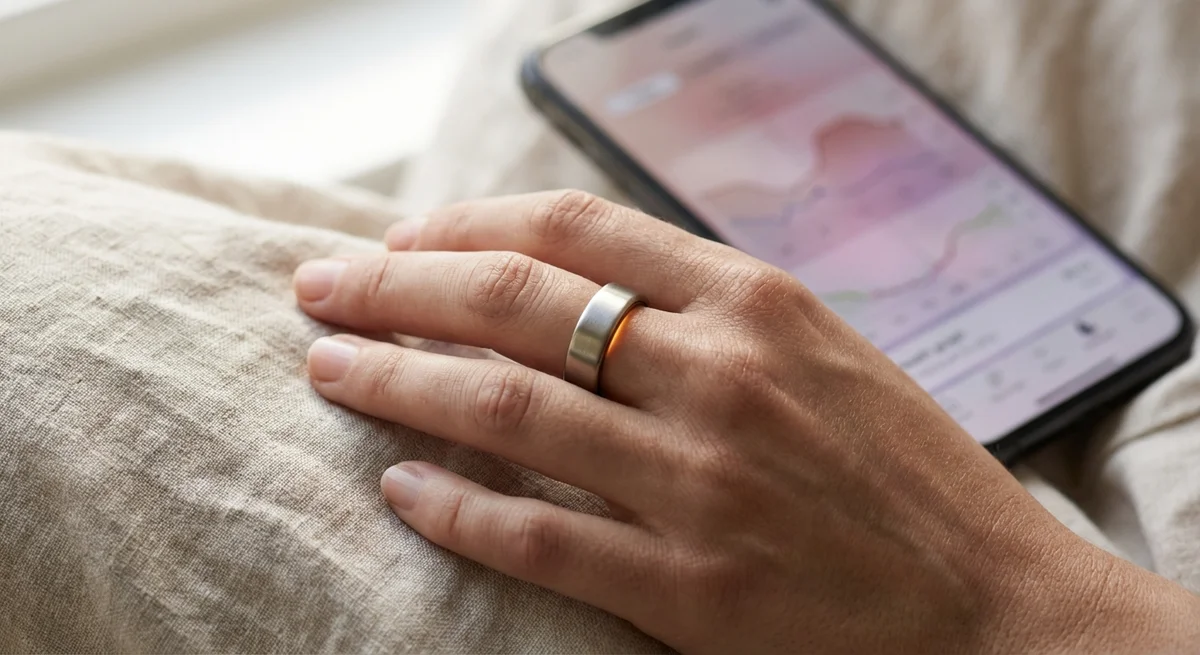
Finland-based Oura, whose smart rings have become some of the most recognizable wearables of recent years, has made an unexpected and ambitious move: it has launched its own AI model, focused entirely on women's reproductive health. The model can handle questions spanning the whole life cycle of the female body, from first periods in adolescence to perimenopause and menopause.
To grasp the scale of the decision, it helps to recall the context. The femtech industry, which covers technology for women's health, spent years on the periphery of big tech's attention. According to McKinsey, women make up half of the world's population, yet research into their health receives disproportionately little funding. Most medical AI models were trained on data in which female physiology was underrepresented. Oura appears to have decided to close that gap with a concrete product rather than abstract promises.
Technically, Oura is in a unique position for a project like this. The company's ring continuously collects data on body temperature, heart rate variability, sleep quality and activity levels. Temperature data is critical for tracking reproductive health: basal body temperature is one of the key markers of ovulation and hormonal change. Unlike apps that ask users to enter how they feel by hand, Oura relies on objective physiological measurements gathered passively. That gives the model a considerably more reliable basis for analysis and recommendations.
Notably, the company chose to build a proprietary model rather than integrate existing LLMs such as GPT or Gemini. That says several things. First, it signals serious intent: building your own model takes substantial investment in data, expertise and infrastructure. Second, it reflects a desire to control answer quality in a sensitive medical area, where hallucinations from general-purpose language models can be not merely inconvenient but potentially dangerous. Third, it speaks to privacy: reproductive data is among the most sensitive categories of personal information, and keeping it inside a company's own ecosystem lowers the risk of leaks through third-party APIs.
The consequences of this launch reach well beyond one company. Oura is effectively setting a new standard for the wearables industry. Until now, AI features in wearables were limited to fairly simple advice: "you slept too little," "your stress level is elevated." A specialized model that can hold a conversation about specific aspects of health is a qualitatively different level. If Oura can prove the clinical value of this approach, competitors such as Apple, Samsung and Google will come under pressure to build similar products.
There is also a broader social context. In a number of countries, including the US, access to reproductive health information is becoming increasingly politicized. A tool that lets women get personalized answers about their own bodies without a doctor's visit and without fear of judgment has a value that is hard to overstate. Of course, AI does not replace a doctor, but it can serve as a first line of support and help women better understand the signals their bodies send.
Questions remain. How accurate is the model? Has it undergone clinical validation? How will Oura handle edge cases, where the AI should recommend seeing a specialist instead of trying to answer on its own? What data was used for training, and how representative is it of women of different ages, ethnic backgrounds and health conditions? The answers will determine whether Oura's product becomes a genuinely useful tool or remains a polished marketing story.
One thing can be said with confidence: the femtech market has just received a powerful signal. Personalized AI for women's health, built on real physiological data, is exactly the kind of product that can change how the industry treats half of its audience. And if Oura delivers on its promises, the ring on your finger may turn out to be a more useful conversation partner than many medical apps on your smartphone.
- Nov 2, 2026Karpathy builds a YouTube clone with 6454 videos from Hacker News recommendations in two hours
- Nov 2, 2026Karpathy used Claude to build HackerTube from 6,454 videos recommended on Hacker News
- Nov 2, 2026Anthropic needs to grow revenue 32% a year to cover $850 billion in contracts
- Nov 2, 2026Bun creator uses Claude Code to port 750K lines from Zig to Rust in 11 days
Test Frontier LLMs & Autonomous Agents in One Workspace
Run Claude Opus 5.5, GPT-6, Gemini 3.1, and DeepSeek side-by-side in Nomad AI (nomadnet.ai) — unified model routing, deep research, and multimodal workflows under one subscription.
The AI world, distilled — once a week
Seven stories that actually mattered, hand-picked. No noise, no reposts, no press releases.
Done! Check your inbox for a confirmation.