Google takes on Nvidia in the AI chip race: the odds and the obstacles
Google is increasingly positioning itself as a serious competitor to Nvidia in AI accelerators. It continues to develop its in-house TPU line, which already runs inside the Google Cloud ecosystem and delivers impressive performance. Analysts acknowledge Google's potential but warn that the road to genuine competition with Nvidia will be hard. The dominance of the CUDA ecosystem, the maturity of Nvidia's software stack and developer loyalty are barriers that good hardware alone cannot overcome.
AI-processed from 3DNews AI; edited by Hamidun News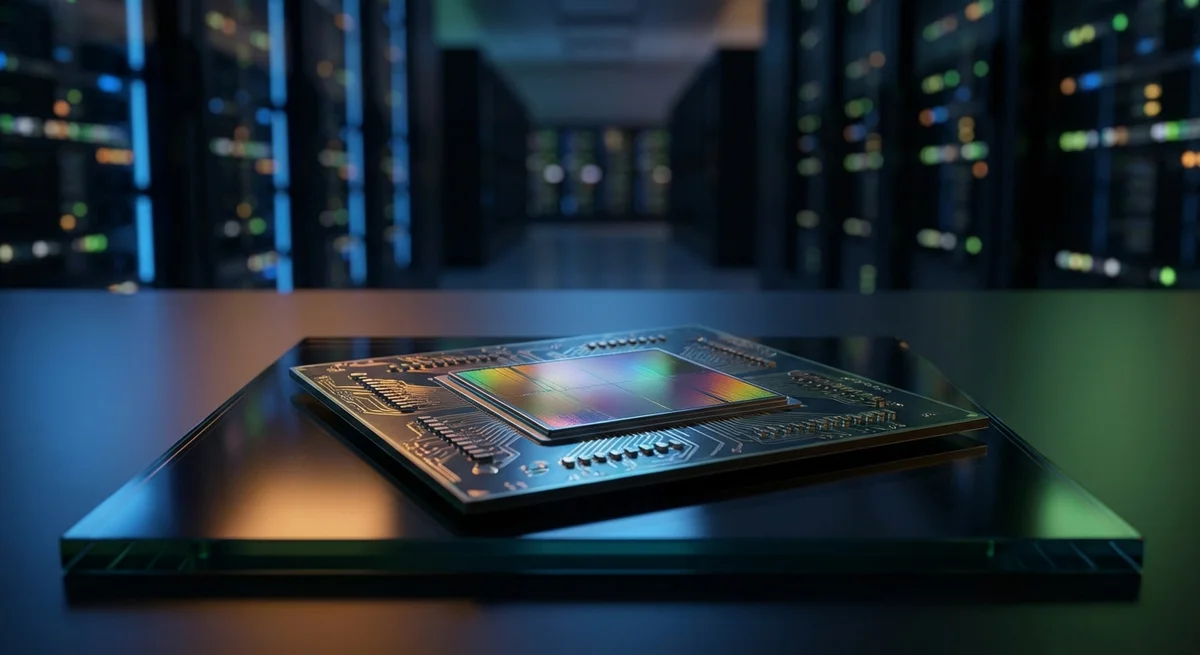
When the conversation turns to AI accelerators, it traditionally comes down to one name: Nvidia. Jensen Huang's company controls the overwhelming share of this segment, and its closest pursuers are usually considered to be AMD and, with major caveats, Intel. But in this settled balance of power, another player is becoming more and more visible, one that was long not seen as a direct competitor in the chip business. Google, which has been developing its own TPU processors for almost ten years, is showing ambitions that are forcing analysts to redraw the competitive map.
The TPU story began in 2016, when Google unveiled the first generation of its tensor processing unit, a specialized chip built exclusively for machine learning. At the time it looked like an internal tool for optimizing the company's own infrastructure: search, recommendation systems, translation. But with each new TPU generation, Google steadily raised performance and widened the range of uses. The sixth-generation chip, Trillium, is already positioned not merely as an internal solution but as a full product for Google Cloud customers, able to compete with Nvidia's top accelerators in training and inference for large language models.
Google's key advantage in this race is vertical integration. The company designs the hardware, develops software frameworks such as JAX and TensorFlow, runs the cloud infrastructure and builds its own Gemini family of models, which are trained on TPUs. It is a closed loop in which every element is optimized for the others. Nvidia, for all its power, has to work in a more fragmented ecosystem, where hardware, software and end applications are built by different companies. Google's vertical integration resembles Apple's approach to its M-series chips, and we have seen how effective that strategy proved in personal computers.
However, a chasm separates potential from real dominance, and analysts never tire of pointing this out. The main barrier is the CUDA ecosystem. Nvidia's software platform, built over more than fifteen years, has become the de facto industry standard. Millions of developers, thousands of libraries and countless optimized pipelines are tied to CUDA so deeply that, for most companies, moving to another platform means an enormous cost in time and resources. Google offers its own tools, but their reach is nowhere near that of Nvidia's ecosystem. Even PyTorch, the most popular framework in the research community, has historically been optimized first and foremost for Nvidia GPUs.
There is another fundamental question: is Google truly ready to open TPUs to the wider market? So far these chips are available exclusively through Google Cloud. You cannot buy a TPU and install it in your own data center, as you can with Nvidia or AMD accelerators. For many large customers, such as banks, telecom companies and government bodies, lock-in to a single cloud provider is unacceptable. Until Google solves this problem, TPUs will remain a powerful but niche product, confined to a single ecosystem.
Still, Alphabet's financial muscle should not be underestimated. The company is investing tens of billions of dollars in AI infrastructure, and a significant part of that money goes into its own chips. With demand for AI accelerators many times higher than supply, and dependence on a single supplier, Nvidia, causing growing concern among big players, alternatives are becoming strategically necessary. Amazon with its Trainium chips, Microsoft with Maia, Meta* with its own designs: all the largest technology corporations are moving in the same direction. But it is Google that has advanced furthest, because it started earlier and already has a mature product spanning several generations.
Competition in the AI chip market is entering a new phase, one fought not only over teraflops and energy efficiency but also over developers' minds, over ecosystems and over customers' strategic independence. Google holds a unique set of trump cards for this fight, but turning potential into market share is a task of a completely different order. Nvidia does not simply sell chips; it sells confidence that everything will work. And until Google can offer a comparable level of trust outside its own cloud, talking about full-fledged competition is premature. Still, the very fact that this conversation has become possible says a lot.
*Meta has been designated an extremist organization and is banned in Russia.
- Nov 2, 2026Bun creator uses Claude Code to port 750K lines from Zig to Rust in 11 days
- Nov 2, 2026The Verge reviewer builds a $50 Meta Muse Charm alternative with Claude Code
- Nov 1, 202616 models tested on 7 search tools: Exa averaged 10.5 out of 14, SearXNG about 3
- Nov 1, 2026Google's StreamVibe video agent beats other models by 10.7% on response timing and quality
Ship AI Faster with Founders, Engineers & Weekly Architecture Reviews
Inside Vibe Club (hamidun.com/club) — weekly live masterminds with Zhemal Khamidun, Tech Radar, full LMS access, and 370+ production Claude Code skills.
The AI world, distilled — once a week
Seven stories that actually mattered, hand-picked. No noise, no reposts, no press releases.
Done! Check your inbox for a confirmation.