Anthropic opposes Illinois AI liability bill that OpenAI backs
Anthropic and OpenAI have publicly disagreed for the first time on a fundamental question: should AI companies be held responsible for the catastrophic consequences of their systems? The trigger is an Illinois bill that would remove labs from legal liability even in cases of mass casualties. OpenAI supports it. Anthropic opposes it.
AI-processed from Wired; edited by Hamidun News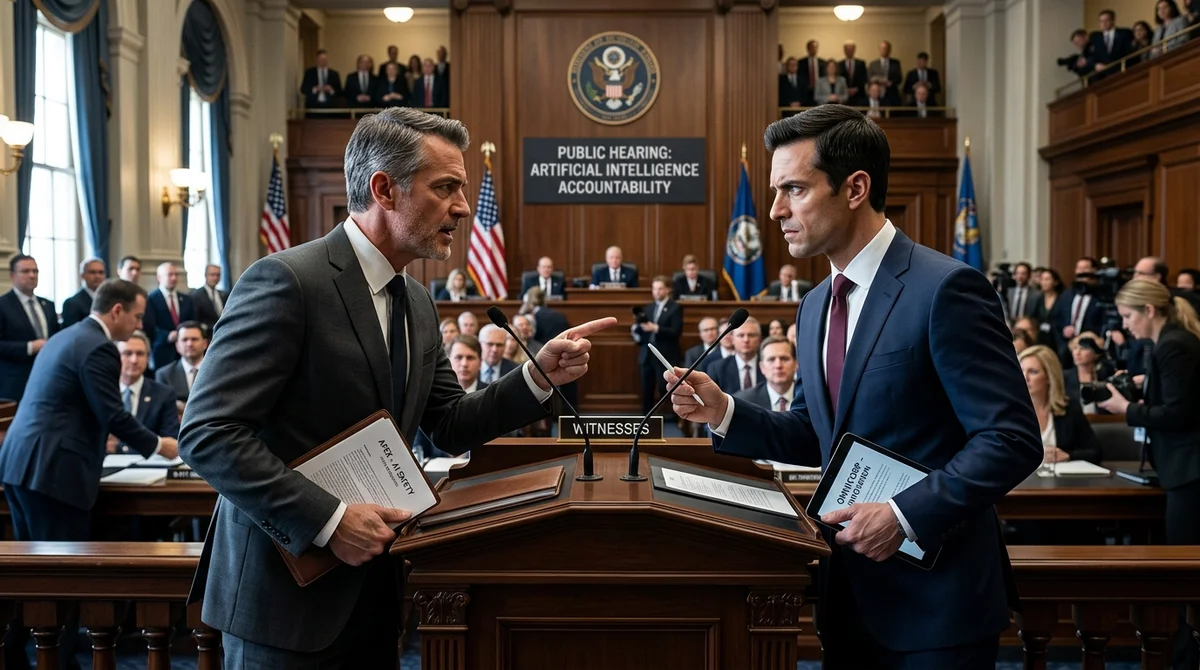
Anthropic and OpenAI, two companies often described as flagships of responsible AI development, have clashed openly on legislation for the first time. The trigger is an Illinois bill that would effectively protect AI labs from liability even when their systems cause mass deaths or financial catastrophes. OpenAI has come out in support of the measure. Anthropic is against it.
The Illinois bill is part of a broader wave of attempts to regulate artificial intelligence at the US state level. The United States still has no federal AI law: Congress has debated various proposals for years, and none has passed. In that vacuum, states have started acting on their own. California tried several times to pass strict regulation, but each time ran into powerful industry lobbying. Now similar debates are heating up in Illinois, and this time the market's biggest players openly disagree.
The bill OpenAI supports boils down to this: AI companies should not bear legal responsibility for the consequences of their systems' operation, even when those consequences are catastrophic. Critics call this immunity from liability and warn that if the law passes, victims would effectively lose any means of legal recourse. Imagine an AI system that wrongly issues medical recommendations, manages financial assets or is embedded in critical infrastructure. If something goes wrong, who is responsible? Without a clear legislative answer, no one.
Anthropic has taken the exact opposite position. The company, founded by former OpenAI employees, has built its public image around safe AI from the start. Its flagship model Claude is developed with an emphasis on constitutional safety, and its leadership regularly calls for stricter industry standards, including in testimony before Congress. Its stance on the Illinois bill looks like a logical continuation of that public line.
OpenAI's position is less obvious. The company also professes a commitment to safe AI development and has created a dedicated safety board. Lately, however, OpenAI has noticeably stepped up its lobbying in Washington and several states, clearly seeking to soften potential regulatory restrictions. Backing the Illinois bill fits that pattern, though it plainly contradicts the company's declared values.
The split between America's two largest AI labs matters beyond the disagreement itself. It exposes a crack within the industry: the consensus on self-regulation that the industry has tried to follow over the past few years is clearly failing. Regulators in other states and at the federal level will closely watch how the Illinois debate ends.
For everyday users of AI systems, the stakes are very real. The question of who is responsible for AI errors is not an abstract legal one. It determines whether you have a right to protection when an AI system has harmed you. And how Illinois law answers it will largely shape the answer in the rest of America.
- Nov 2, 2026Meta's Muse assistant keeps dossiers on loved ones and gets root on Ubuntu by default
- Nov 1, 2026Local models lose to Opus and Codex: 0.21 on a MacBook versus 1.00 for Codex
- Nov 1, 2026Kimi scores 96.2% on a 1C database analytics test and emerges as a fallback if Claude access is blocked
- Nov 1, 2026OpenAI Rewrites GPT Behavior Rules: Five Values and a Chain of Command
Test Frontier LLMs & Autonomous Agents in One Workspace
Run Claude Opus 5.5, GPT-6, Gemini 3.1, and DeepSeek side-by-side in Nomad AI (nomadnet.ai) — unified model routing, deep research, and multimodal workflows under one subscription.
The AI world, distilled — once a week
Seven stories that actually mattered, hand-picked. No noise, no reposts, no press releases.
Done! Check your inbox for a confirmation.