Meta Is Building the Hyperion Data Center: 10 Gas Power Plants for a Single AI Project
Meta has contracted power for its Hyperion data center from 10 new gas-fired power plants, with combined capacity on the scale of an entire state: South Dakota. It is the first time the company has taken direct control of its own generation. Rivals are turning to nuclear: Microsoft is restarting Three Mile Island, and Google is building small reactors. Meta is betting on gas, which is faster to deploy and easier to scale. *Meta has been designated an extremist organization and is banned in Russia.
AI-processed from TechCrunch; edited by Hamidun News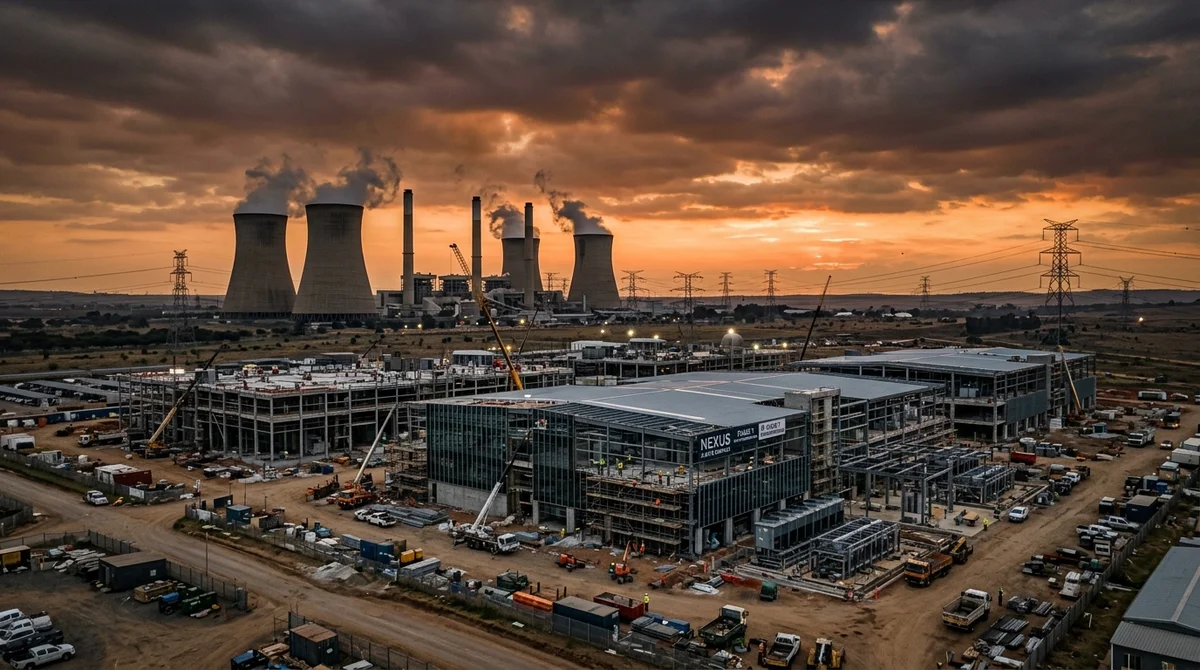
Meta has announced that its new AI supercenter, codenamed Hyperion, will be powered by ten new gas-fired power plants. The scale of energy use is unprecedented for the industry: the combined capacity of these units is comparable to the total electricity consumption of the state of South Dakota, home to about 1.5 million people.
Over the past two years, the world's largest tech companies have run into a shared, fundamental problem: training and inference of large language models demand so much electricity that traditional power supply arrangements can no longer cope. According to the International Energy Agency, by 2026 the combined consumption of US data centers may exceed that of a number of small European countries. GPT-4, Gemini, Llama: behind the interface, each of these products consumes gigawatts of continuous power. Training a single large model uses about as much energy as a average residential neighborhood consumes over many years.
Hyperion is one of Meta's most ambitious answers to this challenge. The company has already announced investments of more than $60 billion in 2025 solely for AI infrastructure. Hyperion will become one of the largest facilities of its kind in the world and the first for which the company directly commissions new generating capacity, rather than simply buying power from utility grids. This is a significant step: Meta is taking control of the entire energy chain and no longer depends on the capacity of regional grids.
The choice of natural gas as the main energy source has drawn criticism from environmental groups and some investors. Just a few years ago, Meta consistently promoted a narrative of shifting to renewables and reported each year that its operations had reached net-zero carbon. Direct contracts to build ten new gas-fired power plants send the market an unambiguous signal: climate pledges are taking a back seat to the demands of deployment speed.
The reasoning is pragmatic and understandable. Wind and solar cannot deliver a stable 24/7 load without large-scale industrial energy storage, a technology that is not yet ready for use at the required scale. AI data centers run under constant, even computational load, unlike, say, office infrastructure with peaks during working hours. They need predictable, continuous, high-capacity power. Natural gas, for all its climate drawbacks, solves that problem here and now.
Competitors are taking similar but distinct paths. Microsoft has signed a deal to restart the Three Mile Island nuclear reactor in Pennsylvania. Google is actively investing in a new generation of small modular nuclear reactors. Amazon is building its own nuclear facilities near existing reactors. Meta is betting on gas, probably because it is faster and simpler in terms of getting capacity into service. A nuclear program takes 10-15 years; gas turbines can be commissioned in 2-3 years.
The Hyperion case exposes a fundamental contradiction in the tech industry in the AI era. Companies publicly proclaim ambitious climate goals, sign green energy agreements and promise carbon neutrality by 2030. But the physics of supercomputers leaves no room to maneuver: the energy is needed here and now, in volumes that existing renewable infrastructure simply cannot keep up with. According to Goldman Sachs analysts, by 2030 electricity demand from data centers will grow fourfold relative to 2023 levels.
In this race, the winner will be whoever can secure a reliable, scalable and affordable energy source. For now, Meta is making the largest and most open solo bet in the game.
*Meta has been designated an extremist organization and is banned in Russia.
- Nov 2, 2026Meta's Muse assistant keeps dossiers on loved ones and gets root on Ubuntu by default
- Nov 2, 2026The Verge reviewer builds a $50 Meta Muse Charm alternative with Claude Code
- Nov 1, 2026MoneyGate safety layer blocked all 42 fraudulent requests to local AI models
- Oct 31, 2026Open-source LLM gateway KTMS 1.0 plugs your own GPUs into the cloud and survives outages
Test Frontier LLMs & Autonomous Agents in One Workspace
Run Claude Opus 5.5, GPT-6, Gemini 3.1, and DeepSeek side-by-side in Nomad AI (nomadnet.ai) — unified model routing, deep research, and multimodal workflows under one subscription.
The AI world, distilled — once a week
Seven stories that actually mattered, hand-picked. No noise, no reposts, no press releases.
Done! Check your inbox for a confirmation.