TikTok's AI ad labeling policy isn't working: Samsung ignores the rules
TikTok requires advertisers to label ads created with AI, but companies are ignoring the requirement. Samsung publishes videos showing signs of generative AI with no labels of any kind. The fine print in the descriptions doesn't settle the question either. The platform has a policy. The mechanism to enforce it does not work.
AI-processed from The Verge; edited by Hamidun News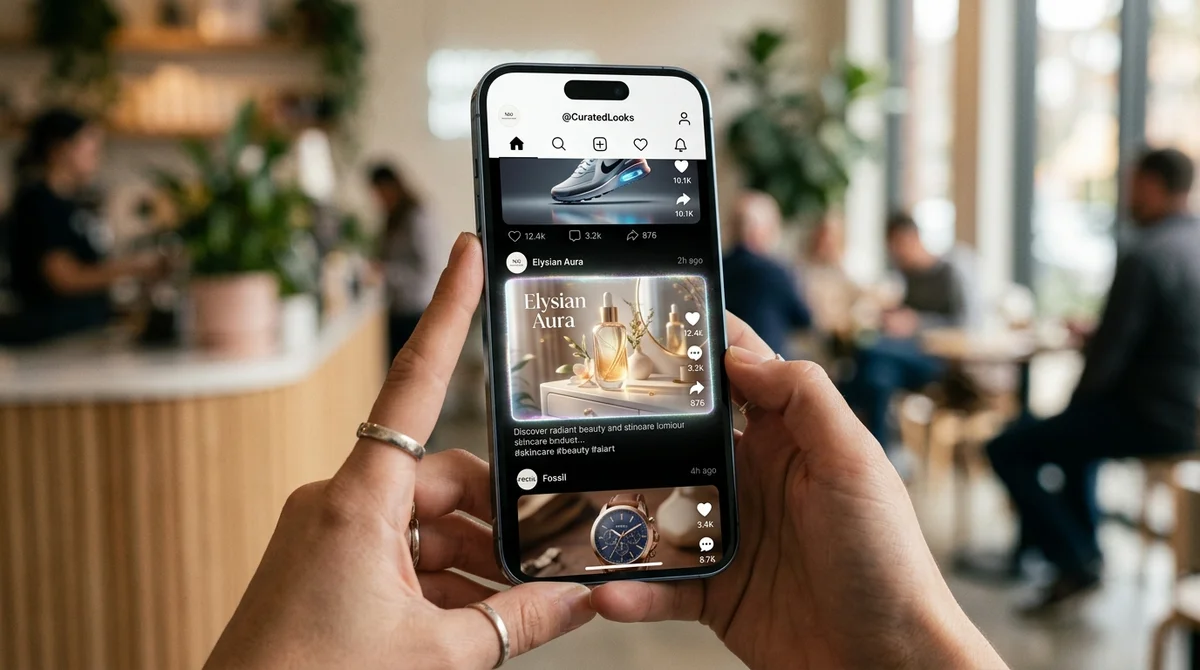
TikTok has required advertisers to label content created with generative AI, but in practice the rule is barely followed. A journalist at The Verge watched the ads in his feed for several weeks and did not see a single one carrying such a label, even though a number of videos looked clearly suspicious as artificial creations.
Among the offenders was Samsung, one of the platform's largest advertisers. The company regularly promotes its AI features for photo and video processing, yet the ads on its TikTok accounts carry no notice that generative tools were used. The fine print in the descriptions does not clarify things either. Notably, Samsung publicly says it supports standards for labeling AI content.
Under TikTok's advertising policy, brands must disclose when they use generative AI to create ad materials. The platform provides tools for applying such labels, but it has no reliable mechanism to check compliance. Responsibility has effectively been shifted onto the advertisers themselves, and they are in no hurry to accept it.
The problem is bigger than one brand. Generative AI is rapidly entering ad production: it makes video cheaper to produce, lets teams quickly adapt content to different audiences and test dozens of creative variants. That is exactly why the temptation not to disclose its use is strong: a label can be read as a signal of a "fake" product.
Meanwhile, research shows that consumers increasingly want to know what exactly they are interacting with. A lack of transparency erodes trust in both the brand and the platform. In a number of jurisdictions, regulators are already considering labeling of AI ads as a mandatory requirement rather than a voluntary initiative.
TikTok's policy exists on paper, but without real enforcement it remains a statement of intent. Until the platform introduces automatic verification or starts penalizing violators, large advertisers have no practical incentive to follow the rules. The Samsung case is not an exception but a symptom of a systemic problem.
- Oct 31, 2026Author puts his script before an AI jury: the verdict cost 850 thousand tokens
- Oct 30, 2026Agent traffic on Zocdoc is up 30x since July, and ChatGPT faces two health lawsuits
- Oct 29, 2026OvisOCR3: an 0.8B-parameter model that reads documents better than specialized systems
- Oct 29, 2026Tencent releases Youtu-Parsing-Omni: one model parses documents, audio and video
Test Frontier LLMs & Autonomous Agents in One Workspace
Run Claude Opus 5.5, GPT-6, Gemini 3.1, and DeepSeek side-by-side in Nomad AI (nomadnet.ai) — unified model routing, deep research, and multimodal workflows under one subscription.
The AI world, distilled — once a week
Seven stories that actually mattered, hand-picked. No noise, no reposts, no press releases.
Done! Check your inbox for a confirmation.