Judge calls Pentagon's attempt to 'undermine' Anthropic a red flag
A district judge has cast doubt on the Pentagon's decision to put Anthropic, the maker of the Claude AI assistant, on a supply chain risk list. At a hearing on Tuesday, the court openly questioned the Defense Department's motives and called the situation alarming. The case could set a precedent for the entire American AI industry.
AI-processed from Wired; edited by Hamidun News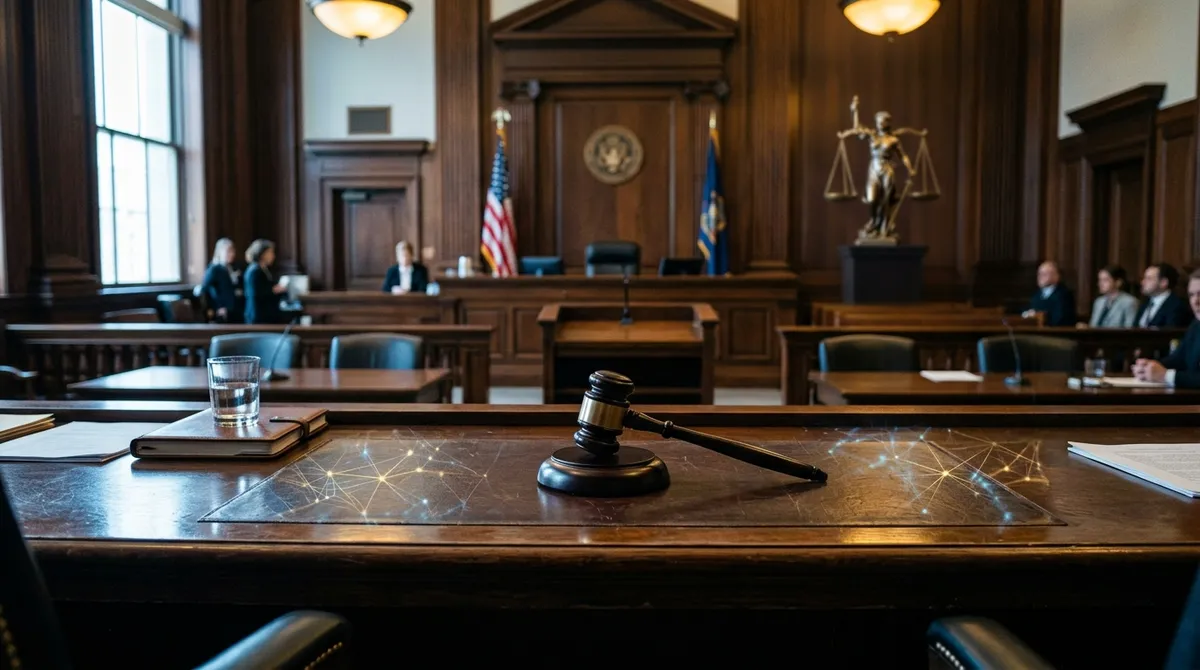
A federal court has questioned a Pentagon decision that could effectively have undermined the business of Anthropic, one of the leading US AI companies and the developer of the Claude language model.
At a hearing on Tuesday, a district judge expressed serious concern about the motives of the Department of Defense, which placed Anthropic on a list of companies posing supply chain risks. According to the judge, the move looks like an "attempt to undermine" the company rather than a considered decision based on concrete national security threats. DoD representatives at the hearing failed to give a coherent explanation of the logic behind their actions.
Being placed on a supply chain risk list is an extremely serious measure for any technology company. It effectively closes the door to government contracts, scares off institutional investors and forces corporate partners to revisit the terms of their cooperation. For Anthropic, which works actively with large American organizations and offers Claude as an enterprise-grade tool, such a classification threatened to be catastrophic.
Anthropic was founded in 2021 by Dario Amodei, Daniela Amodei and other former OpenAI staff. The company presents itself as an advocate of "constitutional AI," an approach in which models are trained to follow explicitly written safety principles. In recent years Anthropic has raised billions of dollars in investment from Amazon and Google, and its market valuation exceeds 60 billion dollars. Claude is used in medicine, law, finance and education around the world.
Most companies that fall under supply chain restrictions have documented ties to the military-industrial complex of China or other states that Washington regards as a strategic threat. Anthropic clearly does not belong to that category: it is an American company with no such ties. This contradiction is, by all appearances, what put the court on alert.
The case is unfolding amid a heated debate over the limits of government regulation of the AI industry. The US wants to keep key technologies from reaching geopolitical adversaries, a goal shared across the political spectrum. Here, however, tools designed to restrict foreign players have ended up aimed at a flagship of the American AI industry. Critics have long warned that broad regulatory powers without clear criteria for their use can be applied arbitrarily.
The outcome will set a precedent for the entire AI industry. If the court sides with Anthropic, it will limit the Pentagon's ability to use supply chain controls against American developers without concrete evidence of violations. If the ruling goes in DoD's favor, it will open the way to systematic pressure on AI companies, with unpredictable consequences for the investment climate and the global competitiveness of American developers.
The hearings are continuing.
- Nov 2, 2026Bun creator uses Claude Code to port 750K lines from Zig to Rust in 11 days
- Nov 2, 2026mcp-linter finds 18 undescribed parameters in Anthropic's filesystem server
- Nov 2, 2026The Verge reviewer builds a $50 Meta Muse Charm alternative with Claude Code
- Nov 2, 20268 Skills for video in Claude Code: from 244 pixel effects to rough-cut editing
Test Frontier LLMs & Autonomous Agents in One Workspace
Run Claude Opus 5.5, GPT-6, Gemini 3.1, and DeepSeek side-by-side in Nomad AI (nomadnet.ai) — unified model routing, deep research, and multimodal workflows under one subscription.
The AI world, distilled — once a week
Seven stories that actually mattered, hand-picked. No noise, no reposts, no press releases.
Done! Check your inbox for a confirmation.