Anthropic wins reprieve: court orders Pentagon to remove the company from its blacklist
Anthropic has won its dispute with the Pentagon: a federal court ruled that placing the company on the list of unreliable suppliers was unlawful. Judge Rita Lin ordered the US Department of Defense to lift the restrictions within seven days, leaving the department time to appeal. The ruling matters beyond Anthropic itself. It shows that AI companies can challenge defense sanctions in court and regain access to major government contracts.
AI-processed from 3DNews AI; edited by Hamidun News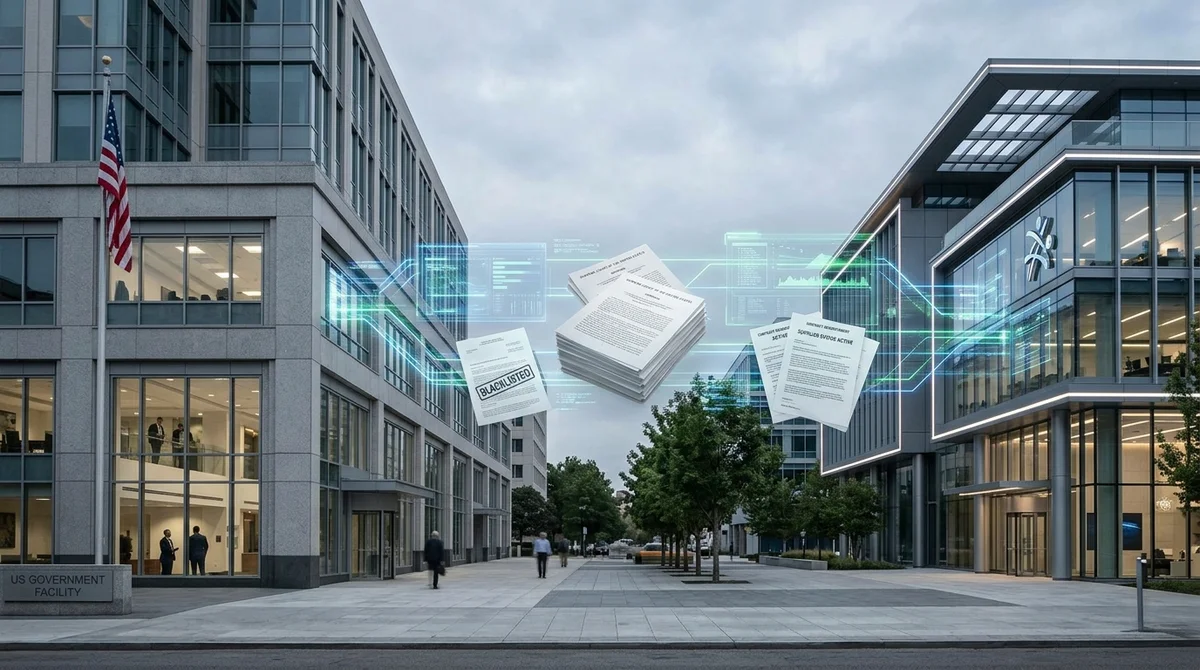
Anthropic has won its case against the Pentagon: a US federal court ruled that putting the company on the list of unreliable suppliers was unlawful. Judge Rita Lin ordered the department to lift the restrictions after seven days, leaving time for a possible appeal.
The federal court's decision
The ruling followed proceedings in which Anthropic argued that its blacklisting was carried out improperly and did not comply with the law. After the hearing, Judge Rita Lin effectively agreed with those arguments. In her order she required the Pentagon to remove the company from the list of unreliable suppliers within a week.
That deadline looks like a technical pause: the department needs it if it decides to challenge the ruling on appeal.
For Anthropic, this is not just a reputational win. Landing on such a list usually means being blocked from part of government procurement and creates a toxic backdrop for any talks with federal agencies. Even if the ban concerns a formal procedure, the status of unreliable supplier itself works as a risk signal to partners, contractors and investors. So the court's decision removes not only a legal restriction but also a significant barrier to the company's future work with the public sector.
What the dispute was about
The conflict was not about Anthropic's technology as such, but about whether the Pentagon's own actions were lawful. The company argued that the department had put it on the sanctions list illegally, and the court found that argument convincing.
In such disputes, what matters is not only the final decision but also the procedure: government bodies must clearly justify why a supplier is deemed unreliable and which rules they apply to do so. If the procedure is violated, even a harsh measure can be overturned in court.
The case is especially telling given how quickly AI companies are entering the circle of government and defense contracts. For them, access to contracts is not only money but also strategic status. Any public claim by the Pentagon immediately affects risk assessments: customers, integrators and corporate partners start to act more cautiously. That is why Anthropic was defending not only its right to take part in procurement but also its standing as a serious player in the applied AI market.
Consequences for the market
The ruling in the Anthropic case may prove more important than the one-week delay before it takes effect. The court showed that even in the sensitive area of defense procurement, a department's actions are not shielded from rigorous judicial review. For the generative AI market, this is a signal: relations with the state are becoming more formalized, and disputes over access to contracts will be settled not only behind closed doors but also through public legal mechanisms.
- For AI companies, it is an example that sanctions status can be challenged and reversed.
- For the Pentagon, it is a reminder that procedural errors in procurement are costly.
- For Anthropic's partners, it means lower regulatory risk and a clearer legal framework.
- For the market as a whole, it is a sign of maturing: generative AI is moving ever deeper into the system of large government orders.
What this means
If there is no appeal, or if an appeal does not change the outcome, Anthropic will quickly regain normal standing in its relations with the Pentagon. More broadly, the story shows that it is no longer enough for an AI business to be technologically strong: it also has to defend its position just as hard in the legal arena. For the market, this is a good signal, because the rules of the game are becoming more transparent even where everything used to be decided inside the agencies.
That is why other suppliers working at the intersection of AI, large contracts and regulatory oversight will study the Anthropic verdict closely.
- Nov 2, 2026Karpathy builds a YouTube clone with 6454 videos from Hacker News recommendations in two hours
- Nov 2, 2026Karpathy used Claude to build HackerTube from 6,454 videos recommended on Hacker News
- Nov 2, 2026Arca gives AI agents finance tasks lasting up to 10 days, but leaves the trades to humans
- Nov 2, 2026Anthropic needs to grow revenue 32% a year to cover $850 billion in contracts
Key Questions Answered
What are the key details on The federal court's decision?
The ruling followed proceedings in which Anthropic argued that its blacklisting was carried out improperly and did not comply with the law. After the hearing, Judge Rita Lin effectively agreed with those arguments. In her order she required the Pentagon to remove the company from the list of unreliable suppliers within a week. That deadline looks like a technical pause: the department needs it if it decides to challenge the ruling on appeal. For Anthropic, this is not just a reputational win. Landing on such a list usually means being blocked from part of government procure
What the dispute was about?
The conflict was not about Anthropic's technology as such, but about whether the Pentagon's own actions were lawful. The company argued that the department had put it on the sanctions list illegally, and the court found that argument convincing. In such disputes, what matters is not only the final decision but also the procedure: government bodies must clearly justify why a supplier is deemed unreliable and which rules they apply to do so. If the procedure is violated, even a harsh measure can be overturned in court. The case is especially telling given how quickly AI compa
What are the key details on Consequences for the market?
The ruling in the Anthropic case may prove more important than the one-week delay before it takes effect. The court showed that even in the sensitive area of defense procurement, a department's actions are not shielded from rigorous judicial review. For the generative AI market, this is a signal: relations with the state are becoming more formalized, and disputes over access to contracts will be settled not only behind closed doors but also through public legal mechanisms. For AI companies, it is an example that sanctions status can be challenged and reversed. For the Penta
Test Frontier LLMs & Autonomous Agents in One Workspace
Run Claude Opus 5.5, GPT-6, Gemini 3.1, and DeepSeek side-by-side in Nomad AI (nomadnet.ai) — unified model routing, deep research, and multimodal workflows under one subscription.
The AI world, distilled — once a week
Seven stories that actually mattered, hand-picked. No noise, no reposts, no press releases.
Done! Check your inbox for a confirmation.