Anthropic wins in court against the Pentagon, but the dispute is not fully settled
Anthropic has won an important but not final victory in its dispute with the Pentagon: a federal court in California ordered the Pentagon to remove the company from its list of untrustworthy suppliers. The catch is that the story isn't over. Experts warn that a higher court must still confirm the company's position, or the restrictions could return. For the market, it is a signal that an AI vendor's legal status already affects access to large government contracts.
AI-processed from 3DNews AI; edited by Hamidun News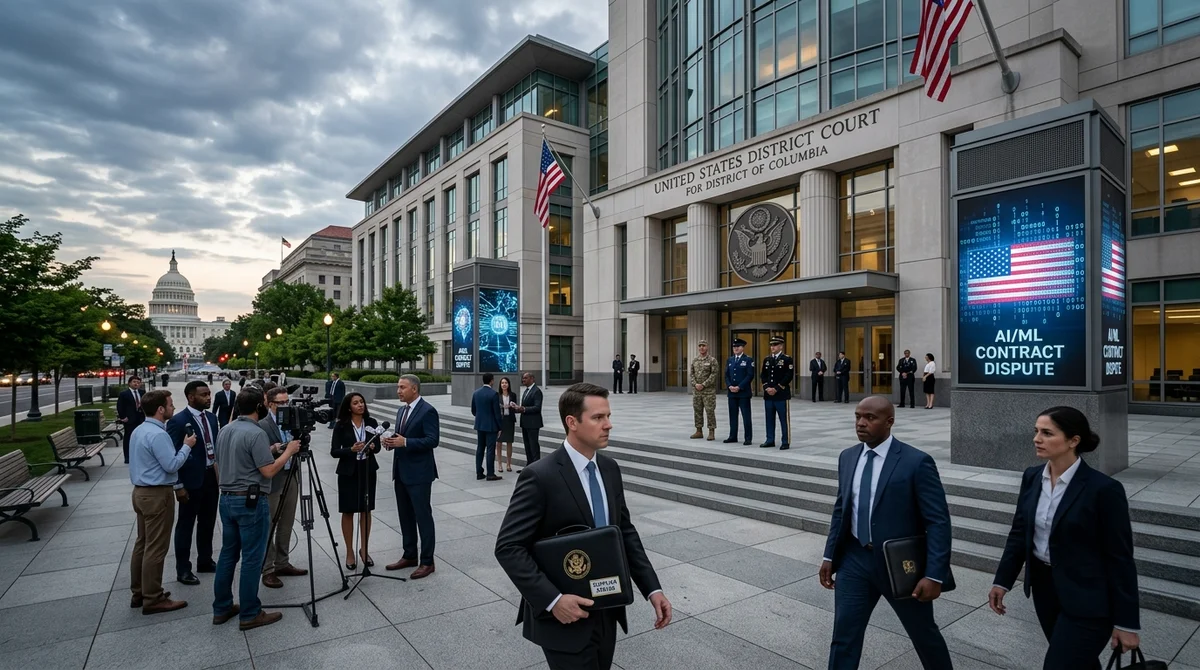
Anthropic has won an important but interim victory in its dispute with the Pentagon: a federal court in California ordered the military department to remove the company from its list of untrustworthy suppliers. The catch is that the ruling doesn't close the matter. Only a higher court can finally put the claims to rest.
What the court decided
A federal court in California sided with Anthropic and demanded that the Pentagon remove the company from its list of suppliers that cannot be trusted. For any technology company, such a status hurts well beyond reputation. It can get in the way of negotiations, slow access to government contracts, and raise awkward questions among partners who do not want to deal with a legally toxic counterparty.
For Anthropic this is especially sensitive, because the AI market increasingly overlaps with the interests of the state, large contractors and organizations that handle sensitive data. Even a provisional lifting of the claims changes the tone of the conversation: the company gains a strong argument that the military department's position, at the very least, did not look flawless in the eyes of the court. But that is not yet the same as full vindication.
Why the dispute is not closed
Experts cited by American political media warn that it is too early to celebrate. Anthropic's current win matters, but a higher court still has to uphold it. Until that happens, the case remains open, and the legal uncertainty has not gone away.
In other words, the company has won a round, but not the whole match. In cases like this, the appeal often determines whether a ruling becomes a reference point for other agencies and suppliers. That is why the story looks less like a final turnaround and more like a temporary shift in the balance of power.
If the higher court agrees with the California court's conclusions, Anthropic will be able to lock in the win and permanently shed this status. If not, the Pentagon will get a chance to reinstate the restrictions, or at least drag the dispute out further. For business, that means months of uncertainty where predictability is usually needed.
What is at stake
This case matters for more than one company. It shows how fragile an AI developer's position can be when it comes to working with the government, and especially with the defense sector. Even if the product is in demand and the technology looks strong, a supplier's formal status can sharply change its growth trajectory and the range of customers available to it.
So a dispute over a single status quickly turns into a question about access to an entire market segment.
- The company's reputation with government clients
- The ability to take part in tenders and negotiations
- Relationships with contractors who care about legal cleanliness
- The speed of winning new contracts in sensitive areas
- A signal to other AI companies working close to the state
For the whole market, it is also a test of how relations will take shape between fast-growing AI companies and the traditional defense bureaucracy. The latter moves slowly and relies on formal procedures, while the generative AI market moves in jolts. Conflicts arise at that junction: one side wants to scale quickly, the other tries to minimize risk and keep control. That is why not only lawyers but also competitors are watching the Anthropic case.
What it means
Anthropic has won a strong court ruling in its favor, but it is too early to speak of the claims being fully lifted. For the market, it is an important signal: in the AI era, the competition is not only over model quality and customers, but also over the right to be considered a reliable partner for the state. Until a higher court confirms the first-instance findings, this victory remains significant but interim.
- Nov 2, 2026Karpathy builds a YouTube clone with 6454 videos from Hacker News recommendations in two hours
- Nov 2, 2026Karpathy used Claude to build HackerTube from 6,454 videos recommended on Hacker News
- Nov 2, 2026Arca gives AI agents finance tasks lasting up to 10 days, but leaves the trades to humans
- Nov 2, 2026Anthropic needs to grow revenue 32% a year to cover $850 billion in contracts
Key Questions Answered
What the court decided?
A federal court in California sided with Anthropic and demanded that the Pentagon remove the company from its list of suppliers that cannot be trusted. For any technology company, such a status hurts well beyond reputation. It can get in the way of negotiations, slow access to government contracts, and raise awkward questions among partners who do not want to deal with a legally toxic counterparty. For Anthropic this is especially sensitive, because the AI market increasingly overlaps with the interests of the state, large contractors and organizations that handle sensitive
Why the dispute is not closed?
Experts cited by American political media warn that it is too early to celebrate. Anthropic's current win matters, but a higher court still has to uphold it. Until that happens, the case remains open, and the legal uncertainty has not gone away. In other words, the company has won a round, but not the whole match. In cases like this, the appeal often determines whether a ruling becomes a reference point for other agencies and suppliers. That is why the story looks less like a final turnaround and more like a temporary shift in the balance of power. If the higher court agree
What is at stake?
This case matters for more than one company. It shows how fragile an AI developer's position can be when it comes to working with the government, and especially with the defense sector. Even if the product is in demand and the technology looks strong, a supplier's formal status can sharply change its growth trajectory and the range of customers available to it. So a dispute over a single status quickly turns into a question about access to an entire market segment. The company's reputation with government clients The ability to take part in tenders and negotiations Relation
Test Frontier LLMs & Autonomous Agents in One Workspace
Run Claude Opus 5.5, GPT-6, Gemini 3.1, and DeepSeek side-by-side in Nomad AI (nomadnet.ai) — unified model routing, deep research, and multimodal workflows under one subscription.
The AI world, distilled — once a week
Seven stories that actually mattered, hand-picked. No noise, no reposts, no press releases.
Done! Check your inbox for a confirmation.