Project Maven: How the Pentagon's Skeptics Became Military AI's Biggest Believers
Project Maven is a Pentagon AI program launched in 2017 to analyze drone video footage. At first, the Department of Defense had plenty of skeptics. Today, almost a decade later, many of them have become convinced supporters of military AI. A new book traces how skepticism gave way to conviction, and why that is changing the rules of military competition.
AI-processed from Wired; edited by Hamidun News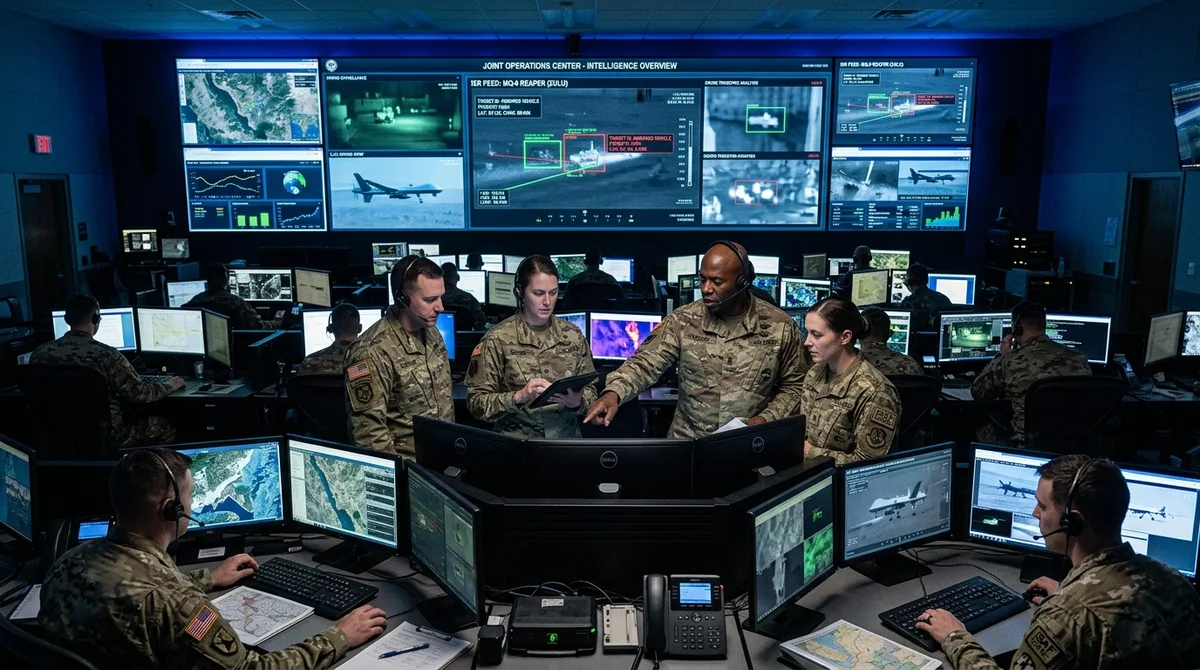
Project Maven, launched in 2017 on the Pentagon's initiative, is now seen as the starting point of the military AI era. When it first appeared, the US Department of Defense had no shortage of people who viewed it with open skepticism. Today, almost a decade later, many of those people have become convinced supporters, or, as investigative journalist Katrina Manson calls them, gods of military AI.
In 2017, Deputy Secretary of Defense Bob Work set the Pentagon an ambitious task: use machine learning algorithms to analyze video streams from drones. The idea was simple: automatically recognize objects, vehicles and people in footage that analysts had previously reviewed by hand for hours. The project was code-named Maven.
At first, many Pentagon officers and civilian officials were wary of the initiative. Skeptics pointed to the traditional risks: algorithmic errors, legal and ethical questions around autonomous weapons systems, and the bureaucratic inertia of the military establishment. When it emerged that the Pentagon had brought in Google as a contractor, a loud scandal erupted inside the company itself: thousands of employees signed a petition demanding that the contract be cancelled. In 2018, Google withdrew from further participation.
But the program did not stop. The Pentagon found other partners: Palantir, Booz Allen Hamilton, Shield AI and dozens of other technology companies. Gradually, Maven grew from an experimental pilot into a full-fledged combat system. Computer vision algorithms trained on millions of frames of reconnaissance video now help operators identify threats faster and make tactical decisions.
Practice became the key argument for the skeptics. Officers who had doubted what AI could do came to see that the system really does cut information processing time and reduces the cognitive load on analysts. Within a few years, Maven helped process hundreds of thousands of hours of video, a volume that traditional methods would have required vastly more human resources to handle.
At the same time, the Pentagon's very understanding of military AI changed. In 2017 it was a single experiment; today AI is built into the Department of Defense's strategy at every level, from logistics and cybersecurity to operational planning and early-warning systems. Project Maven became an organizational precedent for dozens of later initiatives.
Manson's book arrives as the debate over AI in the military takes on a new dimension. Several states, including China, Russia and a number of European countries, are investing actively in combat AI, while the international community is trying to work out norms for regulating autonomous weapons. In that context, the story of Project Maven is not just the chronicle of one program but a mirror for a broader process: how military institutions learn to trust machines in matters of life and death.
The conversion of skeptics into believers is less a story about technology than about institutional psychology. Project Maven showed that the hardest part of military AI is not writing the algorithm, but convincing people used to trusting their own judgment that a machine can be a reliable partner in combat.
- Nov 2, 2026Bun creator uses Claude Code to port 750K lines from Zig to Rust in 11 days
- Nov 2, 2026The Verge reviewer builds a $50 Meta Muse Charm alternative with Claude Code
- Nov 1, 202616 models tested on 7 search tools: Exa averaged 10.5 out of 14, SearXNG about 3
- Nov 1, 2026Google's StreamVibe video agent beats other models by 10.7% on response timing and quality
Test Frontier LLMs & Autonomous Agents in One Workspace
Run Claude Opus 5.5, GPT-6, Gemini 3.1, and DeepSeek side-by-side in Nomad AI (nomadnet.ai) — unified model routing, deep research, and multimodal workflows under one subscription.
The AI world, distilled — once a week
Seven stories that actually mattered, hand-picked. No noise, no reposts, no press releases.
Done! Check your inbox for a confirmation.