Taylor Swift files trademark applications for her voice and likeness over AI risks
Taylor Swift has started locking down legal rights to her own voice and likeness as deepfakes proliferate. On April 24, 2026, the singer's company filed three trademark applications: two cover signature voice phrases, and a third covers her visual likeness. It's another sign that celebrities are moving from complaining about AI clones to formally protecting their brands.
AI-processed from Guardian; edited by Hamidun News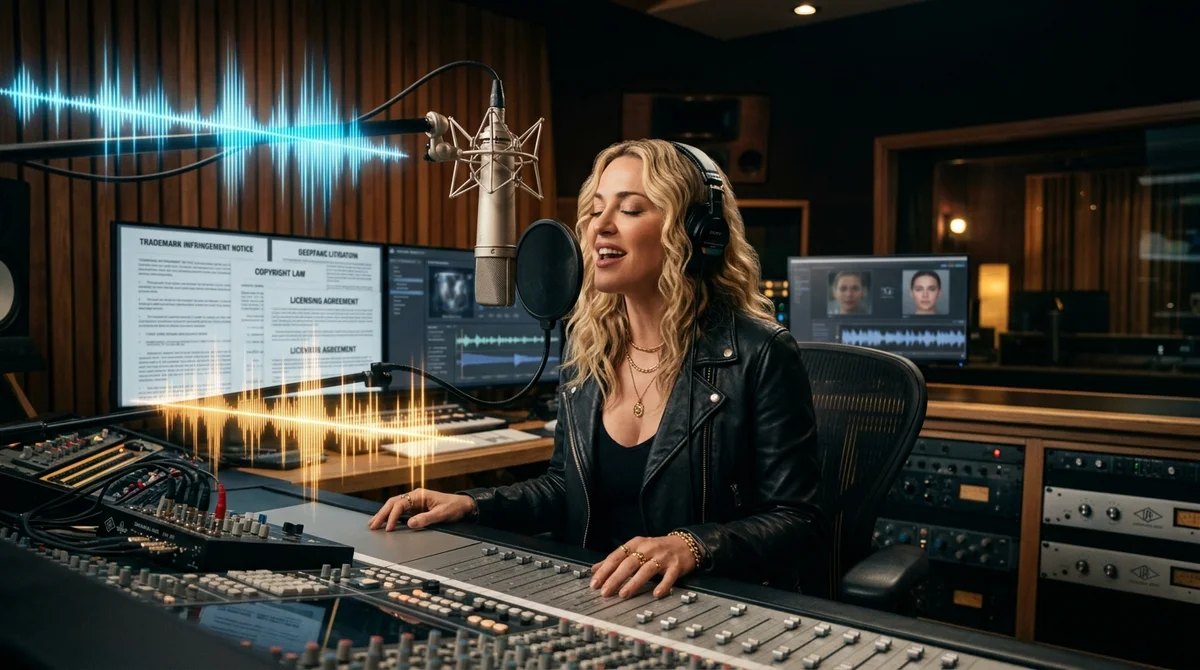
Taylor Swift is moving her fight against AI fakes out of the realm of public complaints and into the legal arena. The singer's company has filed trademark applications tied to her voice and likeness, in what looks like an attempt to get ahead of one of the most vulnerable fronts for celebrities: unauthorized voice clones, deepfakes, and commercial use of a recognizable likeness without the rights holder's consent.
On April 24, 2026, TAS Rights Management filed three applications. Two are for sound trademarks covering the phrases "Hey, it's Taylor Swift" and "Hey, it's Taylor." The third covers her visual likeness. The combination shows this is not a symbolic gesture. It locks down specific elements of her identity that generative models can already copy easily, and that could turn up in ads, fake audio messages, synthetic interviews, and other content that looks convincing to audiences.
The motivation is clear. AI systems have made it dramatically easier to produce material in which a celebrity supposedly says something, endorses a product, releases new music, or takes part in a campaign they have nothing to do with. For an artist at Swift's level, this is not just a reputational risk but a direct business problem. Her voice, delivery, name, and visual recognizability drive revenue across streaming, merch, licensing, touring, and brand partnerships. If all of that can be imitated relatively cheaply, protection has to be preventive rather than reactive. In effect, the goal is to protect not a single track or video, but the artist's entire commercial identity as a brand.
It matters that these are trademarks specifically, not just copyright. Copyright typically protects specific works: a song, a recording, lyrics, a video. But when a dispute centers on a short audio phrase, a signature greeting, or the commercial persona itself, copyright mechanisms alone may not be enough.
A trademark offers a different kind of argument: it helps establish that a particular sound, phrase, or visual identity is associated with a specific rights holder and could mislead audiences if someone else uses it. That's especially useful in the AI era, because fakes often don't directly copy an old recording; they convincingly imitate a recognizable style. For lawyers and platforms, it's a more practical framework when they need to quickly justify a takedown or go after a brand that decided to use a synthetic copy of a famous person.
The context around the filing is telling, too. Shortly before, Matthew McConaughey chose a similar strategy, also moving to formalize rights to his own voice and likeness. The entertainment industry is starting to treat generative AI not as a one-off nuisance but as a long-term legal and commercial risk.
Platforms can remove obvious fakes, but that isn't enough: public figures and their management need tools that work before disputed content gets published, during negotiations with brands, and in court. The more clearly rights to specific elements of identity are defined, the easier it is to demand blocking, compensation, or an end to the use. For the music market, it's also a signal to other artists: they now have to protect not only their song catalogs but their persona itself, as a set of licensable attributes.
The shift is simple: the fight against AI imitations is becoming not just technological but infrastructural. The winners won't be those who complain loudest about deepfakes, but those who register rights to the key elements of their identity in advance and can quickly prove ownership. Taylor Swift's applications aren't just about protecting one singer; they're an early model of how major public figures will build their defenses in an era of mass synthetic content.
- Nov 2, 2026Karpathy builds a YouTube clone with 6454 videos from Hacker News recommendations in two hours
- Nov 2, 2026Karpathy used Claude to build HackerTube from 6,454 videos recommended on Hacker News
- Nov 2, 2026The Verge reviewer builds a $50 Meta Muse Charm alternative with Claude Code
- Nov 2, 20268 Skills for video in Claude Code: from 244 pixel effects to rough-cut editing
Test Frontier LLMs & Autonomous Agents in One Workspace
Run Claude Opus 5.5, GPT-6, Gemini 3.1, and DeepSeek side-by-side in Nomad AI (nomadnet.ai) — unified model routing, deep research, and multimodal workflows under one subscription.
The AI world, distilled — once a week
Seven stories that actually mattered, hand-picked. No noise, no reposts, no press releases.
Done! Check your inbox for a confirmation.