Google DeepMind to open the world's first AI campus in Seoul for engineering and research
Google DeepMind will open the world's first AI campus in Seoul this year. The company signed a memorandum with South Korea's Ministry of Science and ICT and agreed to send at least ten engineers from its US headquarters. President Lee Jae-myung backed the launch. For Korea, it is a chance to strengthen its position in AI; for DeepMind, a way to secure a long-term presence in Asia.
AI-processed from TNW; edited by Hamidun News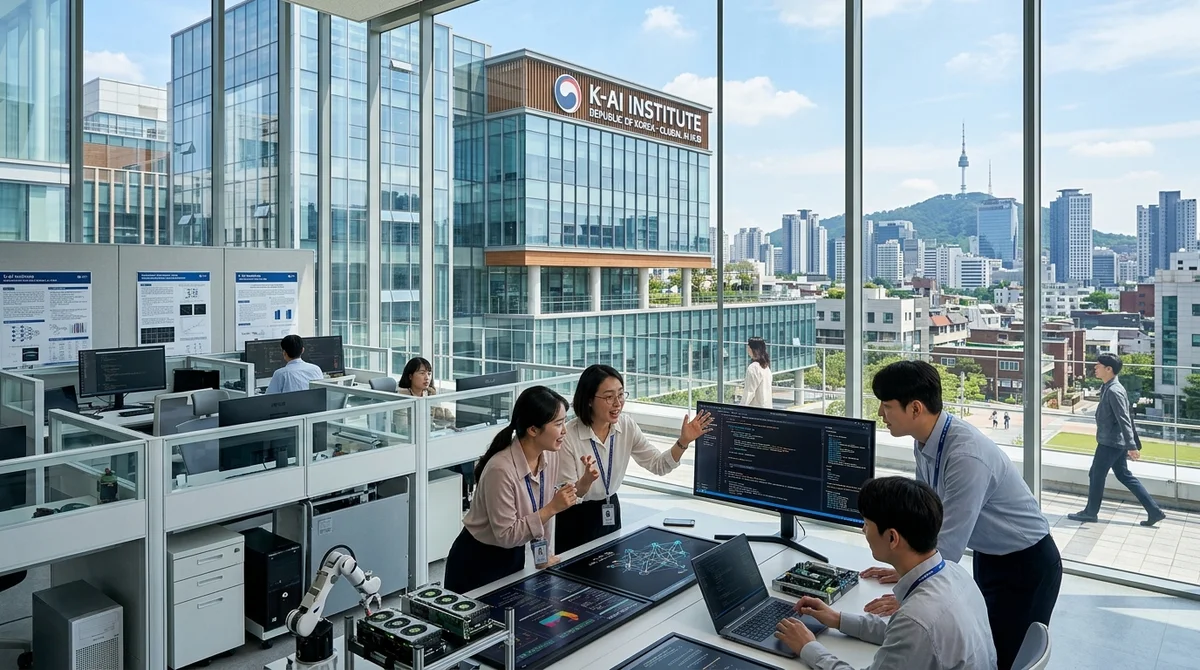
Google DeepMind is preparing to launch the world's first AI campus in Seoul. It is not just a new office but a site where the company intends to combine research, engineering work and cooperation with the government. The project is due to start operating in 2026, which makes South Korea one of the first countries where DeepMind is setting up this kind of infrastructure as a standalone format. For the market, it is a signal: the competition for talent and applied AI development is shifting ever more toward Asia.
The plans were announced after a meeting between Google DeepMind chief Demis Hassabis and South Korean President Lee Jae-myung at the Cheong Wa Dae complex. At the same time, the company signed a memorandum of understanding with the country's Ministry of Science and ICT. According to the available details, the campus will begin operating this year.
The campus format matters in itself: this is not only about a brand presence in the region, but about a permanent base for development, hiring and engagement with the local technology ecosystem.
One separate detail is the South Korean side's request to send at least ten Google engineers from the US headquarters to Seoul, which Hassabis agreed to. It shows that the project is meant to be reinforced at launch not only by local hiring but also by a quick transfer of expertise from the US.
For DeepMind the move is logical: South Korea has long been regarded as one of the strongest markets for engineering education, digital infrastructure and speed of adopting new technologies. For Seoul, a partnership with one of the world's most prominent AI players is a way to accelerate its own ambitions in artificial intelligence.
Seoul also has a practical interest here. For many years South Korea has built its economy around high-tech manufacturing, semiconductors, telecom infrastructure and exports of digital solutions. Against this background, a world-class AI campus gives the country access not only to jobs and investment but also to new chains of cooperation, from university science to corporate labs and pilot deployments in business. The denser these links, the greater the chance that local developments stay in the country and turn into products, not just research.
The symbolic gesture of the meeting was a gift to the president: a Go board with signatures. The episode fits DeepMind's history: it was the AlphaGo system that made the company known far beyond the scientific community and showed how quickly AI can reach a level that until recently was considered unreachable for machines. Against this background, the campus launch in Seoul does not look accidental. South Korea is a country where technological achievements, national strategy and public interest in AI easily come together in a shared agenda.
The company has not yet disclosed the full list of the campus's areas of work, but it is already clear that the format is broader than an ordinary representative office. Such sites are usually needed for joint research, adapting products to the regional market, and working with universities, startups and government programs. If DeepMind really does start building a long-term presence in Asia through Seoul, it may intensify competition for engineers and partnerships among global AI companies, which are increasingly building regional centers closer to sources of talent and demand.
The main takeaway is simple: Google DeepMind is betting on South Korea not as one more sales market but as an assembly point for future AI development. For the country itself, it is a chance to establish itself as one of Asia's key AI hubs. For the industry, it is further confirmation that the next phase of competition is no longer only about models, but also about people, research sites and political alliances around AI.
- Nov 2, 2026Karpathy builds a YouTube clone with 6454 videos from Hacker News recommendations in two hours
- Nov 2, 2026Karpathy used Claude to build HackerTube from 6,454 videos recommended on Hacker News
- Nov 2, 2026Anthropic needs to grow revenue 32% a year to cover $850 billion in contracts
- Nov 2, 2026Bun creator uses Claude Code to port 750K lines from Zig to Rust in 11 days
Test Frontier LLMs & Autonomous Agents in One Workspace
Run Claude Opus 5.5, GPT-6, Gemini 3.1, and DeepSeek side-by-side in Nomad AI (nomadnet.ai) — unified model routing, deep research, and multimodal workflows under one subscription.
The AI world, distilled — once a week
Seven stories that actually mattered, hand-picked. No noise, no reposts, no press releases.
Done! Check your inbox for a confirmation.