Oakland court to hear Elon Musk's suit against OpenAI and Sam Altman over the company's mission
A trial begins in Oakland over Elon Musk's lawsuit against OpenAI and Sam Altman. The court must decide whether the company violated the terms of its nonprofit mission when it became one of the most valuable players in the AI market. At the center of the dispute are the project's original promises, OpenAI's commercial pivot, and internal records that may affect how much weight the jury gives each side's account.
AI-processed from TNW; edited by Hamidun News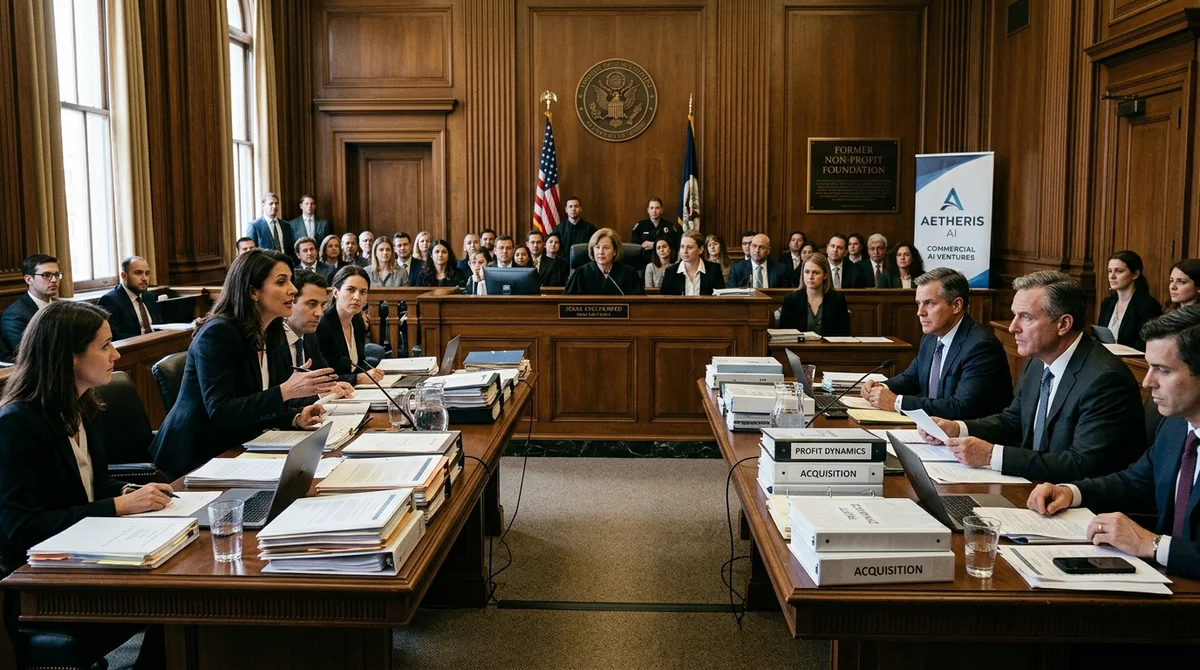
One of the most important trials for the AI industry is starting in Oakland: jurors must decide whether OpenAI broke its own nonprofit mission when it grew from a research organization into one of the most valuable players in the technology market. The suit was filed by Elon Musk, a co-founder of OpenAI who donated at least $38 million to the project and now argues that its original promises were broken. Jury selection begins Monday in federal court.
The central question is more than an ordinary corporate dispute between former partners. The court must determine whether OpenAI's move from a structure built on charitable logic to a model closely tied to commercial growth breached the obligations of a charitable trust, that is, obligations to the mission, to donors, and to the very reason the organization exists. Unlike typical suits over control and money, this one also requires examining original intent: what was promised to the project's participants and to the public when OpenAI was created as an alternative to the closed research labs of large corporations.
The format matters too. Jurors, not a judge alone, will weigh the question, so both sides will have to translate a complex corporate and legal structure into plain terms of promises, motives, and violations.
Musk helped launch OpenAI in 2015 alongside several prominent Silicon Valley figures. At the start, the project was presented as a nonprofit lab that would develop artificial intelligence for the public good, not to maximize profit. Later, a hybrid structure with a commercial arm was built around OpenAI, and the success of generative models and ChatGPT made the company one of the main symbols of the AI boom. This shift, from a research mission to an enormous market valuation, is the core of the current conflict. The higher the company's valuation and the greater its influence on the market, the sharper the question: can a governance model be changed this radically without breaching the original commitments?
The defendants are Sam Altman, OpenAI, and affiliated entities. Although the main arguments will only emerge in court, it is already clear that the dispute will concern not just the formal corporate architecture but also the reliability of the company's internal history. Based on the headlines around the trial, the focus will fall on records, including Greg Brockman's diary notes and other early documents, which may show a gap between public statements and what was discussed internally. If jurors find these materials convincing, a dispute over strategy will quickly turn into a dispute over how far to trust the accounts of the co-founders themselves.
For OpenAI, the risks reach well beyond the reputations of individual executives. A ruling could affect not only relations among former participants in the project but also the governance logic of companies that grew out of nonprofit initiatives. OpenAI's success has long shaped the whole market: AI startup valuations, investment structures, regulators' expectations, and the approach to the safety of frontier models. So any court finding on where mission ends and commercial interest begins will be closely studied well beyond this case, by investors, lawyers, competitors, and foundations that back technology projects with public-minded rhetoric.
The main point of this trial is that it tests more than a personal conflict between Musk and Altman. Jurors effectively have to answer a broader question: can a project be built on a promise to work in society's interest and then be rebuilt into an extremely valuable commercial business without legal consequences? For the entire AI industry, this is a test of how seriously the market and American courts are prepared to take the original commitments of companies building technology of systemic scale.
- Nov 2, 2026Arca gives AI agents finance tasks lasting up to 10 days, but leaves the trades to humans
- Nov 2, 2026Meta's Muse assistant keeps dossiers on loved ones and gets root on Ubuntu by default
- Nov 1, 2026Local models lose to Opus and Codex: 0.21 on a MacBook versus 1.00 for Codex
- Nov 1, 2026Kimi scores 96.2% on a 1C database analytics test and emerges as a fallback if Claude access is blocked
Test Frontier LLMs & Autonomous Agents in One Workspace
Run Claude Opus 5.5, GPT-6, Gemini 3.1, and DeepSeek side-by-side in Nomad AI (nomadnet.ai) — unified model routing, deep research, and multimodal workflows under one subscription.
The AI world, distilled — once a week
Seven stories that actually mattered, hand-picked. No noise, no reposts, no press releases.
Done! Check your inbox for a confirmation.