Musk v. Altman Reaches Court: An Oakland Trial Will Weigh OpenAI's Future
A federal trial in Musk v. OpenAI and Sam Altman has opened in Oakland. Musk is seeking up to $150 billion, OpenAI's return to nonprofit status and Altman's removal from leadership. The court will examine whether OpenAI broke its original agreements when it grew from a research lab into one of the most valuable players in the AI market. The jury will deliver an advisory verdict, and the judge will make the final decision.
AI-processed from TNW; edited by Hamidun News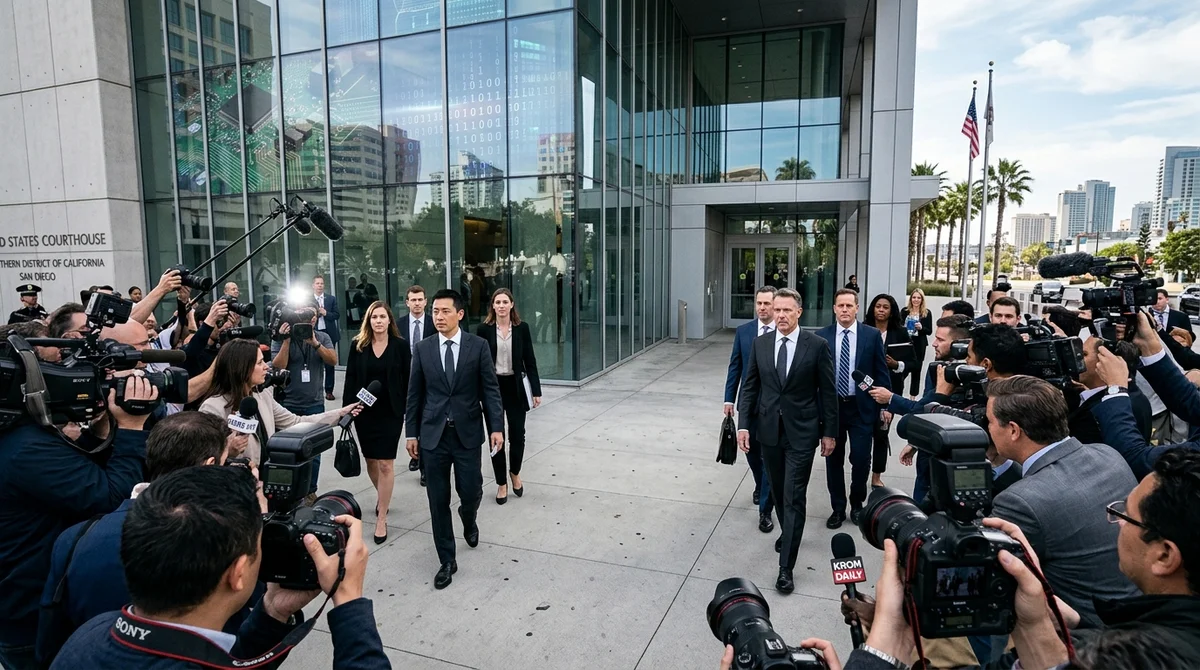
On April 27, 2026, what may be the most important trial in OpenAI's history opened in a federal court in Oakland. Elon Musk is trying to prove that the company, created as a nonprofit research lab, abandoned its original mission and turned into a commercial machine. At stake is more than the personal conflict between Musk and Sam Altman: the case asks whether an organization that promised to work for the benefit of humanity can legally restructure itself into a business valued in the hundreds of billions of dollars.
Formally, the dispute concerns events from 2015 to 2019. Musk, Altman, Greg Brockman and others launched OpenAI as a nonprofit project meant to advance strong AI in the interest of society, not investors. Later, in 2019, a commercial structure appeared inside OpenAI, followed by large sums of money and a strategic partnership with Microsoft. Musk says he was either not warned about this turn or was misled, which means the original agreements were violated.
OpenAI tells a different story. According to the company, Musk knew about the search for a more commercial model, himself proposed radical options such as a merger with Tesla, and left when he did not get control.
The lawsuit was filed in August 2024 and reached a full federal trial by spring 2026. At its center are Musk's demands to return OpenAI to nonprofit status, remove Altman from leadership, and recover up to $150 billion from OpenAI and Microsoft, with the money directed to the organization's charitable arm.
Before the trial began, the case was narrowed: instead of a long list of claims, the court kept the key questions of unjust enrichment and breach of charitable trust.
The jury plays an advisory role in this trial, and the final decision will be made by Judge Yvonne Gonzalez Rogers. Under the approved schedule, sessions run from April 27, opening statements may begin no earlier than April 28, and on the current timetable the trial could stretch to almost four weeks.
Documents and witnesses add to the interest. One notable episode is a 2017 internal note by Greg Brockman, which the parties read in opposite ways: for Musk it is possible evidence that he was deliberately pushed away from OpenAI, while for the defense it shows that leadership feared his drive for control.
Musk himself, Sam Altman and, according to American media reports, Microsoft CEO Satya Nadella are expected to testify. That turns the dispute from an ordinary corporate fight into a public examination of OpenAI's entire construction: how decisions were made, who set the balance between mission and capital, and what role investors and partners played in the transformation.
The timing adds another layer. OpenAI enters court as one of the most valuable players in the AI market, with a valuation of about $852 billion. The dispute has long since moved beyond a personal feud between two billionaires.
If the court accepts Musk's key arguments, the legal logic that allowed OpenAI to grow from a nonprofit project into an extremely valuable commercial company could come under attack. If the company holds its position, it will send a strong signal to the whole market: promises of a mission and public benefit can coexist with aggressive fundraising, provided the structure is drawn up carefully enough.
The point of the Oakland trial is not which former ally lands the sharper jab in the courtroom. The court is effectively testing where the line runs between a startup's idealistic manifesto and legally binding promises. For OpenAI, this is a case about the right to its own evolution. For the whole industry, it is an early test of how AI companies will be judged when their original mission collides with money, power and the race for leadership.
- Nov 2, 2026Meta's Muse assistant keeps dossiers on loved ones and gets root on Ubuntu by default
- Nov 1, 2026Local models lose to Opus and Codex: 0.21 on a MacBook versus 1.00 for Codex
- Nov 1, 2026Kimi scores 96.2% on a 1C database analytics test and emerges as a fallback if Claude access is blocked
- Nov 1, 2026OpenAI Rewrites GPT Behavior Rules: Five Values and a Chain of Command
Test Frontier LLMs & Autonomous Agents in One Workspace
Run Claude Opus 5.5, GPT-6, Gemini 3.1, and DeepSeek side-by-side in Nomad AI (nomadnet.ai) — unified model routing, deep research, and multimodal workflows under one subscription.
The AI world, distilled — once a week
Seven stories that actually mattered, hand-picked. No noise, no reposts, no press releases.
Done! Check your inbox for a confirmation.