Judge in OpenAI case urges Elon Musk and Sam Altman to stop sparring on X
The judge overseeing the case between Elon Musk and OpenAI has asked the parties to stop trading barbs on social media. The trigger was a series of new Musk posts on X taking shots at the leadership of the company behind ChatGPT. In effect, the court made clear that public attacks can interfere with the proceedings and keep the dispute burning outside the courtroom.
AI-processed from Bloomberg Tech; edited by Hamidun News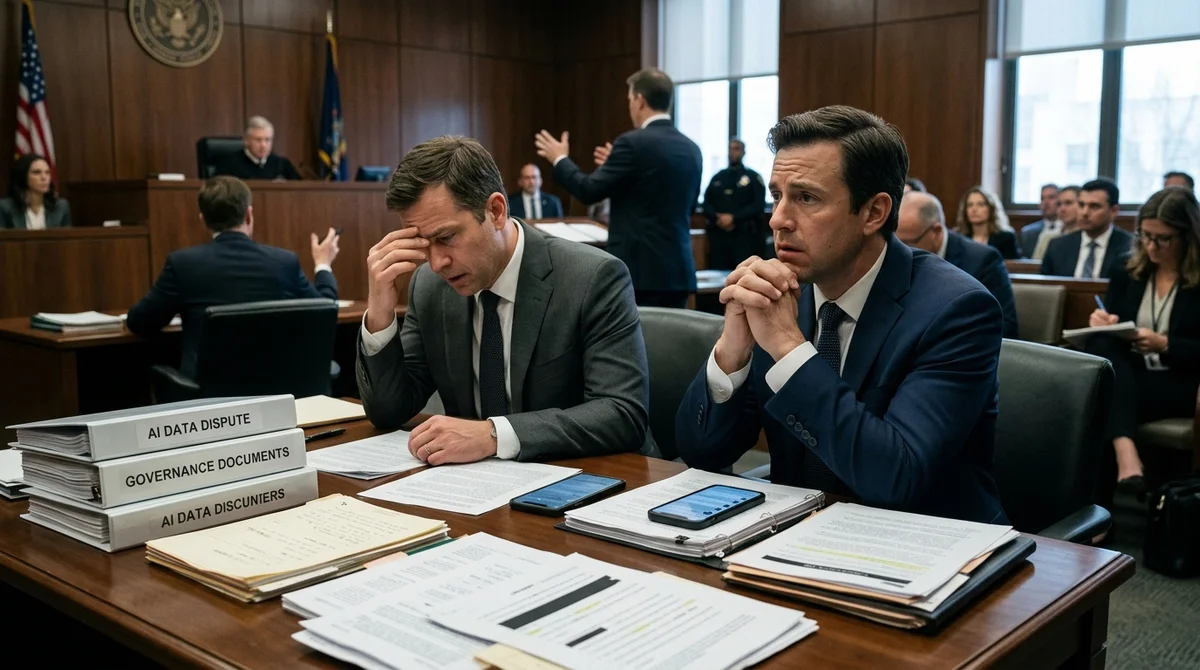
The judge presiding over the high-profile case between Elon Musk and OpenAI has asked the parties to tone down their social media activity. The trigger was a series of new attacks by Musk on X aimed at the leadership of the company behind ChatGPT.
What happened
At the hearing, the judge addressed the executives involved in the case directly and asked them not to turn the legal dispute into an endless stream of posts. This came the day after Musk published several barbed messages about OpenAI's leadership.
The signal was aimed not only at Musk but also at Sam Altman: the court clearly wants the parties to argue in court filings and in the courtroom, not through public quips.
For a case of this scale, that is an important detail. The conflict between Musk and OpenAI long ago moved beyond a purely legal dispute and became part of a larger public drama over control of one of the most influential AI companies. Every new post instantly becomes its own news story, and every sharp remark raises the temperature of the debate. That is why even a short request from the judge reads as an attempt to bring the conversation back within more formal bounds.
Why the court stepped in
When participants in a case comment on the dispute in real time, they are effectively continuing the fight outside court. That affects not only the news agenda but also how the public perceives the conflict itself, its motives and the parties' positions. For the judge, it is extra noise around an already high-profile case.
Social media accelerates any escalation: one sarcastic post easily sets off a chain of replies, retellings and new interpretations that live separately from the case materials.
- Public attacks increase pressure on the opponent outside the courtroom
- Every remark instantly becomes part of the media agenda
- An online spat provokes new replies and pulls the dispute into the PR arena
- It is harder for the court to keep attention on the facts and procedural arguments
According to the published description, this was a call for restraint, not a full ban on speaking publicly. But even such a soft signal is usually read unambiguously: the judge is unhappy that the dispute is being stoked in front of millions of users. For the parties, it is a reminder that each message on X is now seen not as an ordinary comment but as part of their overall conduct in the proceedings.
What this changes for the parties
For Musk this is especially sensitive, because his public communication style often becomes an extension of his business and legal conflicts. In the OpenAI case, that style delivers an instant effect in the news but also raises the risk that the court sees needless showmanship and an unwillingness to lower the tone.
For Altman the logic is the same: the fewer personal replies and barbed remarks, the easier it is to keep focus on the official position and avoid widening the dispute.
The story is also telling for OpenAI itself. The company is already under constant scrutiny from the market, regulators and users, and any conflict with Musk automatically gets global coverage. When a judge asks participants to argue less on social media, he is in effect trying to cut off a parallel media trial. That does not resolve the dispute itself, but it lowers the chance that the next viral post will shape perceptions of the case more than the parties' actual arguments.
What it means
The major AI conflicts now play out on two fronts at once: legal and media. The judge's request to Musk and Altman shows that courts are already having to react not only to filings and testimony but also to how the participants behave in the public feed.
- Nov 2, 2026Arca gives AI agents finance tasks lasting up to 10 days, but leaves the trades to humans
- Nov 2, 2026Meta's Muse assistant keeps dossiers on loved ones and gets root on Ubuntu by default
- Nov 1, 2026Local models lose to Opus and Codex: 0.21 on a MacBook versus 1.00 for Codex
- Nov 1, 2026Kimi scores 96.2% on a 1C database analytics test and emerges as a fallback if Claude access is blocked
Key Questions Answered
What happened?
At the hearing, the judge addressed the executives involved in the case directly and asked them not to turn the legal dispute into an endless stream of posts. This came the day after Musk published several barbed messages about OpenAI's leadership. The signal was aimed not only at Musk but also at Sam Altman: the court clearly wants the parties to argue in court filings and in the courtroom, not through public quips. For a case of this scale, that is an important detail. The conflict between Musk and OpenAI long ago moved beyond a purely legal dispute and became part of a l
Why the court stepped in?
When participants in a case comment on the dispute in real time, they are effectively continuing the fight outside court. That affects not only the news agenda but also how the public perceives the conflict itself, its motives and the parties' positions. For the judge, it is extra noise around an already high-profile case. Social media accelerates any escalation: one sarcastic post easily sets off a chain of replies, retellings and new interpretations that live separately from the case materials. Public attacks increase pressure on the opponent outside the courtroom Every r
What this changes for the parties?
For Musk this is especially sensitive, because his public communication style often becomes an extension of his business and legal conflicts. In the OpenAI case, that style delivers an instant effect in the news but also raises the risk that the court sees needless showmanship and an unwillingness to lower the tone. For Altman the logic is the same: the fewer personal replies and barbed remarks, the easier it is to keep focus on the official position and avoid widening the dispute. The story is also telling for OpenAI itself. The company is already under constant scrutiny f
Test Frontier LLMs & Autonomous Agents in One Workspace
Run Claude Opus 5.5, GPT-6, Gemini 3.1, and DeepSeek side-by-side in Nomad AI (nomadnet.ai) — unified model routing, deep research, and multimodal workflows under one subscription.
The AI world, distilled — once a week
Seven stories that actually mattered, hand-picked. No noise, no reposts, no press releases.
Done! Check your inbox for a confirmation.