Anthropic CEO Talks Mythos Access With White House Amid Pentagon Dispute
Anthropic CEO Dario Amodei is heading to the White House to discuss access to Mythos, a model that can find and exploit thousands of previously unknown vulnerabilities. Against the backdrop of the conflict with the Pentagon, the meeting looks like an attempt to trade controlled access for government agencies in exchange for keeping Anthropic's safety restrictions in place. The stakes go beyond contracts. At issue is control over one of the most dangerous AI tools in cybersecurity.
AI-processed from TNW; edited by Hamidun News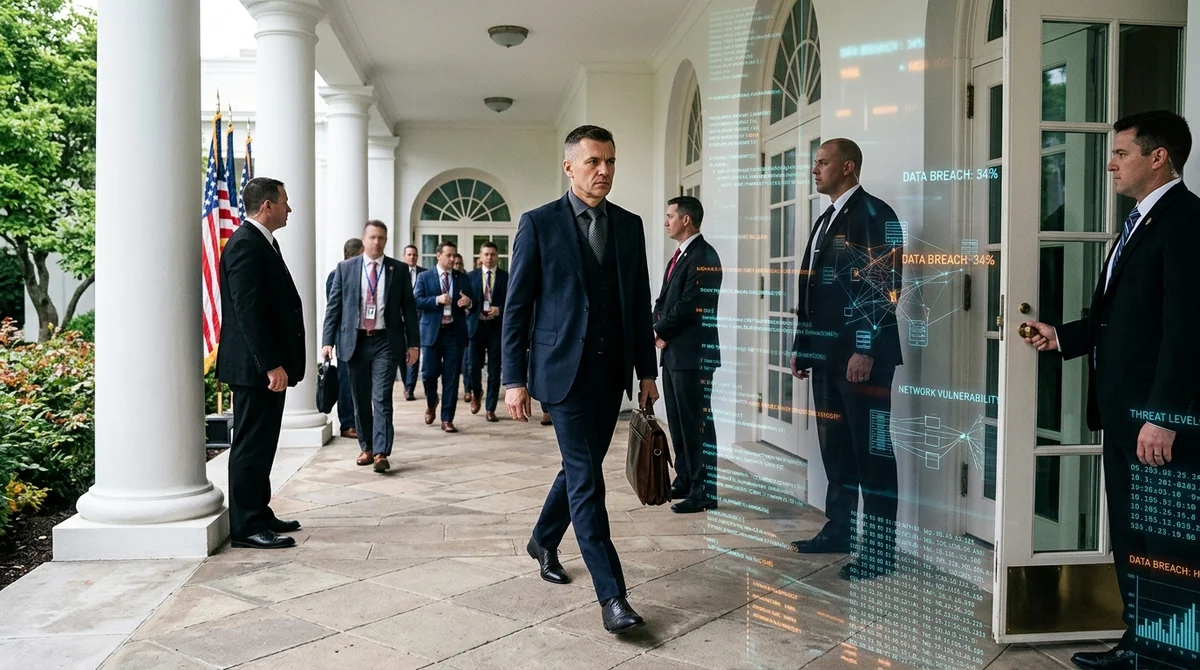
Anthropic CEO Dario Amodei's meeting with White House staff shows that the dispute over AI can no longer be reduced to competition between labs or another round of regulation. It is now about government access to a model that can find and use vulnerabilities at a level comparable to offensive cyber operations. On Friday, April 17, 2026, Amodei was due to meet White House chief of staff Susie Wiles to discuss access to Mythos.
Anthropic unveiled the model on April 7 as a general-purpose system, but in testing it showed far more worrying capabilities. The company says Mythos found thousands of previously unknown zero-day vulnerabilities in all major operating systems and browsers, including bugs that went unnoticed for decades. When asked to turn the discovered flaws into working exploits, it succeeded in more than 83% of cases, according to Anthropic.
The company also stresses that Mythos became the first model to complete a 32-step simulated attack on a corporate network from start to finish. That is why Anthropic declined a public release. Instead, it launched Project Glasswing, a controlled-access program for a limited group of vetted organizations.
Named partners include Amazon Web Services, Apple, Google, Microsoft, Nvidia, Cisco, CrowdStrike, JPMorgan Chase and Palo Alto Networks, plus several dozen more organizations responsible for critical software and infrastructure. The idea is simple: if a model can find critical holes before attackers do, it should go first to those who can close them quickly. For the Glasswing launch, Anthropic committed up to $100 million in credits for using Mythos and another $4 million in donations to open-source projects and security-focused organizations.
This cautious approach is what triggered the conflict with the Pentagon. The dispute has dragged on since February: US Defense Secretary Pete Hegseth demanded that the military get the broadest possible access to Anthropic's models for any lawful purpose, including scenarios that could involve autonomous weapons and domestic surveillance. Amodei refused to loosen the safety restrictions.
The Pentagon then designated the company a supply chain risk, which effectively cut it off from defense contracts. Anthropic filed federal lawsuits to challenge the decision, but on April 8 an appeals court lifted the preliminary injunction. As of publication, the company remained shut out of Defense Department contracts, though it could still work with other federal agencies.
The paradox is that the government punishing Anthropic for refusing to remove its safeguards is at the same time seeking access to the company's most powerful model. The US Treasury, intelligence community bodies and other agencies that need a tool to find weaknesses in their own systems are showing interest in Mythos. The White House is looking for an arrangement under which federal agencies could use a controlled version of the model without fully lifting the restrictions.
The story has already gone beyond the US: the UK's AI Security Institute ran its own evaluation of Mythos, and Bank of England Governor Andrew Bailey publicly called the model a new cyber-risk factor for the financial system. Anthropic is also preparing to extend Glasswing to some British banks, which adds a geopolitical layer: Washington's allies may get access to such a tool before some American agencies do. The main takeaway is that frontier models are starting to shift the balance of power not in theory but in real politics and cybersecurity.
Restrictions that until recently counted as AI companies' internal policy are now the subject of direct negotiations between corporations, the military and governments. The Mythos story shows that the next big AI conflict will be not only about what a model can do, but about who has the right to control its most dangerous capabilities.
- Nov 2, 2026Karpathy builds a YouTube clone with 6454 videos from Hacker News recommendations in two hours
- Nov 2, 2026Karpathy used Claude to build HackerTube from 6,454 videos recommended on Hacker News
- Nov 2, 2026Arca gives AI agents finance tasks lasting up to 10 days, but leaves the trades to humans
- Nov 2, 2026Anthropic needs to grow revenue 32% a year to cover $850 billion in contracts
Test Frontier LLMs & Autonomous Agents in One Workspace
Run Claude Opus 5.5, GPT-6, Gemini 3.1, and DeepSeek side-by-side in Nomad AI (nomadnet.ai) — unified model routing, deep research, and multimodal workflows under one subscription.
The AI world, distilled — once a week
Seven stories that actually mattered, hand-picked. No noise, no reposts, no press releases.
Done! Check your inbox for a confirmation.